Analyzing NestWorksC500: Elephant Robotics' Bid for $10M in CNC Crowdfunding
Crowdfunding Analysis · · PledgeRadar Editorial
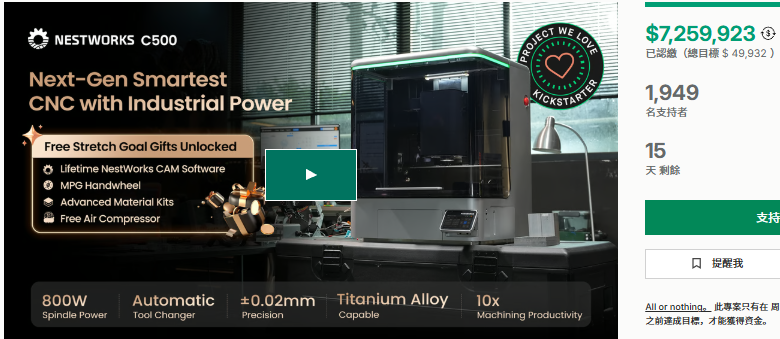
The NestWorksC500 has achieved remarkable success on Kickstarter, quickly establishing itself as a top-tier CNC project. Within 30 days, the campaign has already secured over $7.26 million in funding from nearly 1,950 backers.
Campaign Performance and Backer Concerns
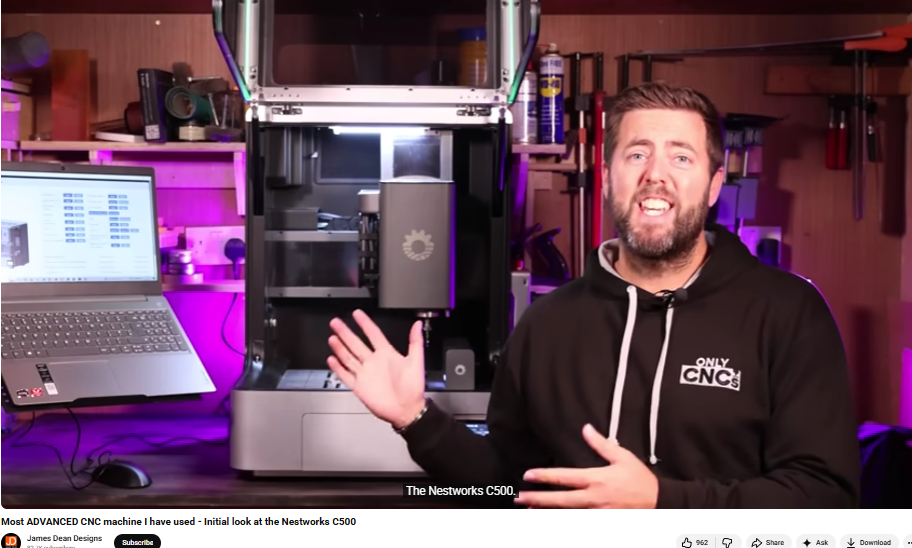
Official demonstration and test videos have garnered significant attention from creators and tech reviewers, including prominent studios like JamesDeanDesigns and SamiLuoTech. The project's precise influencer marketing and substantial advertising budget, evident in ad library data, have effectively amplified its reach.
Community feedback indicates that backers are primarily focused on several key areas: the consistency of the machine's industrial-grade construction in mass production, the long-term reliability of the automatic tool changer (ATC) and Minimum Quantity Lubrication (MQL) systems, and the brand's ability to provide comprehensive after-sales service and spare parts support.
Core Product Features
The NestWorksC500 distinguishes itself from competitors through five core functionalities.
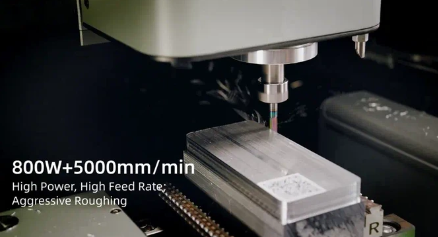
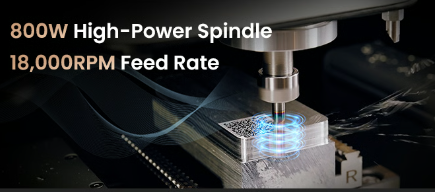
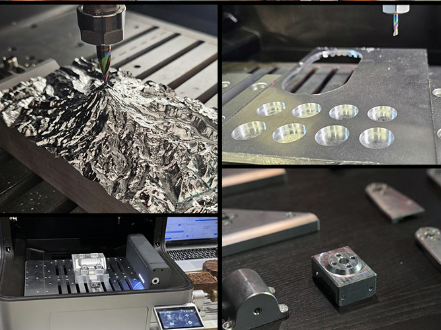
The 800W/18,000 RPM industrial-grade spindle is a primary highlight. This brushless spindle's power specifications are top-tier for desktop CNC machines, balancing light-to-medium cutting with precision machining thanks to its 18,000 RPM speed and 800W torque. However, realizing its full potential hinges on the spindle's cooling system and bearing longevity, particularly when machining hard materials like stainless steel and titanium alloys. The torque curve must reliably prevent overload during high-intensity operations. While official demos showcase its capability on 304H stainless steel, long-term tool life and workpiece thermal deformation require validation in real-world production environments.
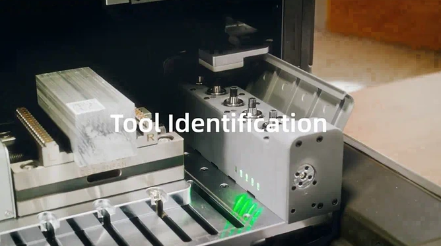
The Automatic Tool Changer (ATC) combined with an RFID smart tool library significantly boosts production efficiency. The ATC's tool identification, self-inspection, and automatic measurement capabilities are designed to minimize manual tool change errors and reduce downtime. The system's real-world performance will depend on the repeatability of the mechanical tool change mechanism and the consistency of tool clamping. Post-mass production, critical metrics to monitor will include repeatability error data and overall failure rates.
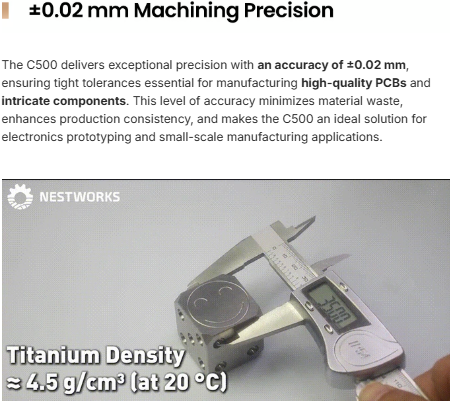
With ±0.02mm precision and 3D probe auto-zeroing, the NestWorksC500 aims for the upper echelon of desktop CNC accuracy. Sustaining this precision in long-term batch production would give the C500 a significant edge in PCB manufacturing, precision hardware, and micro-mold applications. Achieving this level of precision relies on a rigid machine structure (whether cast or an aluminum-steel composite design), high-precision guide rails, and the synergistic operation of closed-loop servo and encoder systems. While official and reviewer demonstrations feature high-precision samples, comprehensive third-party long-term test data is essential to truly validate its stability.
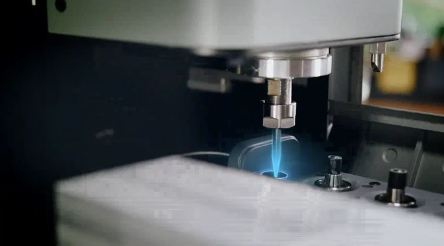
The NestWorksC500 integrates an MQL (Minimum Quantity Lubrication) atomized cooling system with efficient air cooling for comprehensive thermal management. MQL technology reduces chip and coolant contamination, extends tool life, and enhances workpiece surface quality, making it ideal for small-batch manufacturing environments that prioritize clean operations and rapid changeovers. However, the manufacturer must provide detailed guidance on spray uniformity, consumable management, and exhaust filtration to ensure proper maintenance and environmental compliance.
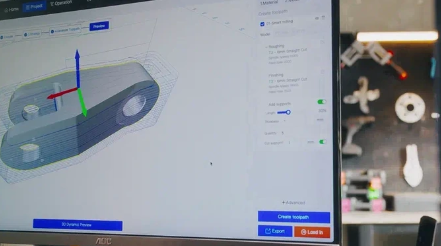
Four-axis expansion, automated vision calibration, and SmartCAM represent key hardware-software innovations. The four-axis expansion and vision-based closed-loop measurement system automate the manufacturing of complex parts, such as cylindrical or double-sided components, significantly lowering the skill barrier for CAM operations. If SmartCAM reliably converts 3D/2D files into optimized toolpaths, it could drastically reduce trial-and-error costs for new users. Nevertheless, the robustness of automated toolpath generation for complex geometries and hard material processing still requires further validation.
Behind the Project: Elephant Robotics
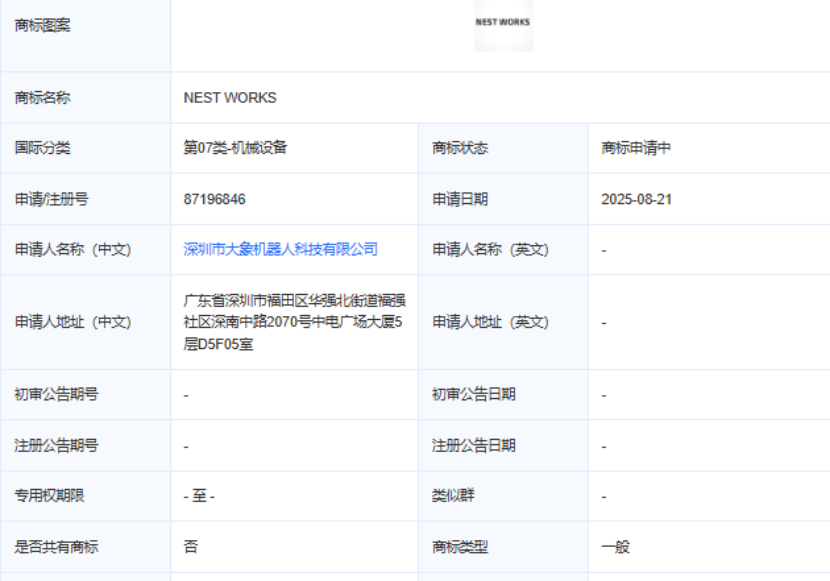
Public information reveals that NestWorks is an incubated project by Elephant Robotics, a Shenzhen-based company.
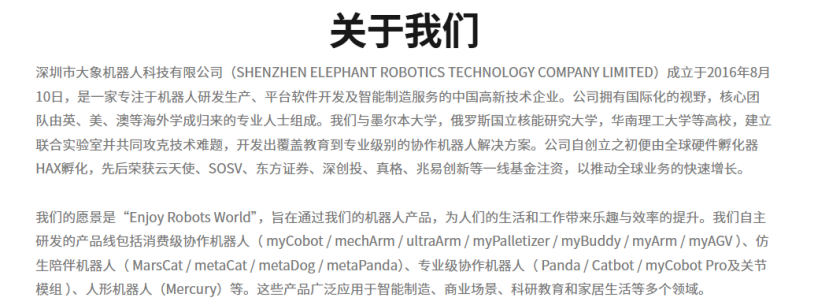
Established in Shenzhen in 2016, Elephant Robotics specializes in the research, development, and sales of educational and lightweight collaborative robotic arms. The company has developed robust manufacturing capabilities and established global sales channels.
The product direction of NestWorks clearly leverages Elephant Robotics' extensive experience in motion control, mechanical integration, and manufacturing management.
Market Landscape and NestWorks' Position
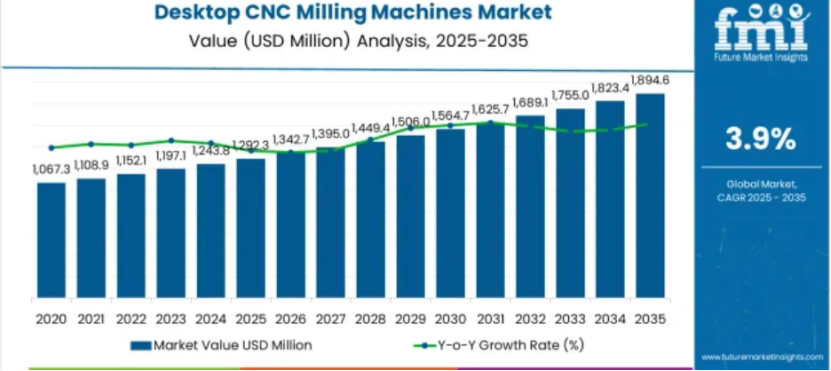
Desktop CNC milling machines are part of the broader digital manufacturing tools market. According to various authoritative market research firms, this niche segment is projected to experience stable growth between 2024 and 2030, with a Compound Annual Growth Rate (CAGR) of 4-8%. FutureMarketInsights, using a broader scope, estimates the entire desktop digital manufacturing tools market will reach $1.29 billion by 2025.
This growth is fueled by several factors, including the demand for hands-on tools in education, the trend toward small-batch in-house manufacturing, the burgeoning maker culture, and the commercial opportunities arising from industrial-grade capabilities becoming accessible at the desktop level.
The competitive landscape in this sector is well-defined, with participants generally falling into three categories: enthusiast and educational brands like Carbide3D, BantamTools, and PocketNC, which dominate the high-end maker and academic markets; emerging Chinese manufacturers such as xTool and FoxAlien, competing on a blend of cost-effectiveness and integrated features; and traditional industrial miniaturization firms like Tormach, serving professional workshops with higher-power solutions.
NestWorks' differentiation strategy involves integrating industrial-grade features—such as automatic tool changing, MQL, four-axis capabilities, and a high-power spindle—into a desktop form factor, complemented by intelligent CAM software. This unique positioning carves out a distinct niche between 'light industrial/prototype workshops' and 'high-end makers.' Industry reports suggest that combining industrial-grade functionality with desktop convenience is emerging as a natural evolutionary path for small-batch manufacturing tools.
Community feedback indicates that backers are primarily focused on several key areas: the consistency of the machine's industrial-grade construction in mass production, the long-term reliability of the automatic tool changer (ATC) and Minimum Quantity Lubrication (MQL) systems, and the brand's ability to provide comprehensive after-sales service and spare parts support.