Nura: An Early Crowdfunding Case Study and Its Backer Challenges
Crowdfunding Analysis · · PledgeRadar Editorial

Nura and its team were founded in Australia in 2015, boasting founders with deep backgrounds in acoustics, neuroscience, and digital signal processing. Their Kickstarter campaign successfully raised over $1.8 million from 7,730 backers. Nura pioneered an 'otoacoustic emission (OAE)-adapted' calibration method, combining precise sensors with AI algorithms, and has secured multiple patents. The company also collaborated with various audio media and industry reviewers, including Gizmag, CNET, and TechCrunch, for in-depth product evaluations. Nura's product line includes the 'nuraphones' over-ear headphones and later-released true wireless earbuds. The company has continuously pushed firmware optimizations and new app features, aiming to build an auditory community and an open platform for hearing data.
Nura: Core Selling Points
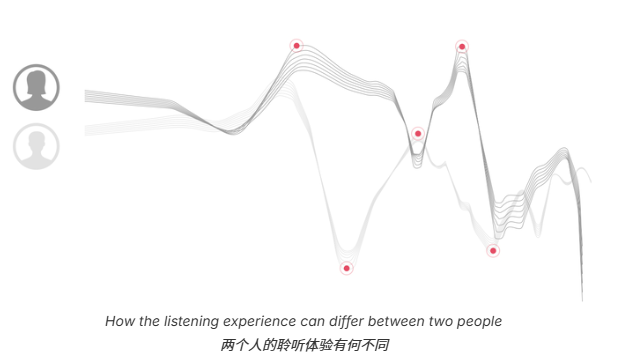
Personalized Hearing Calibration: Utilizing otoacoustic emissions (OAE) from the ear canal to the brain, Nura automatically generates a unique hearing profile for users within 30 seconds. This eliminates the need for questionnaires or complex tests, offering a 'tailored-to-your-ears' sound experience.
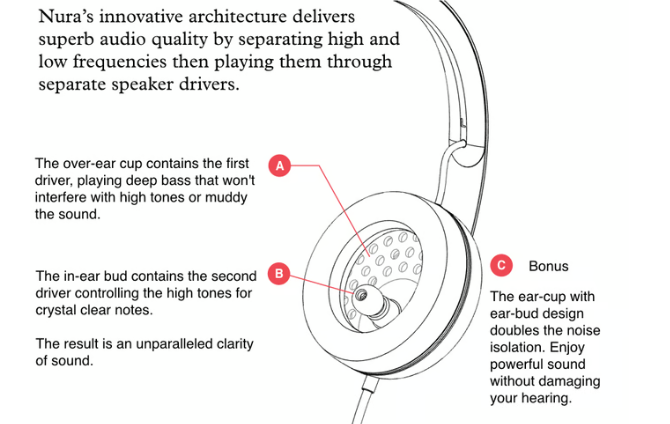
Dual-Driver Crossover Design: Combining the clear high frequencies of in-ear monitors with the powerful bass of over-ear headphones, Nura delivers a sound that is both nuanced and dynamic, providing an immersive 'listen-and-feel' experience.
Wear-and-Recognize Technology: Built-in biometric recognition automatically recalls personal profiles and loads sound preferences upon wearing. This allows for seamless multi-user switching with no waiting, supporting shared use across multiple devices without profile mix-ups.
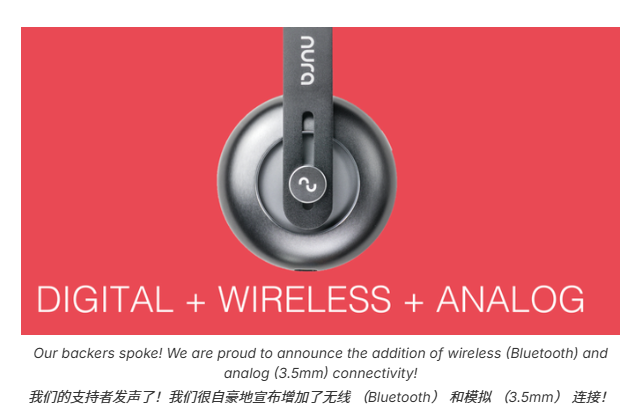
Seamless Wired/Wireless Dual Mode: Supporting 3.5mm, USB-C, and Bluetooth connections simultaneously, Nura is compatible with all major smartphones, computers, and high-fidelity audio devices, offering greater flexibility in usage scenarios.
Industry and Market Analysis
The global headphone market was valued at approximately $37.7 billion in 2023, with a projected Compound Annual Growth Rate (CAGR) of 10.6% from 2024 to 2032, reaching an estimated $93.6 billion by 2032. Within this, the smart headphone sub-segment is estimated at $12.5 billion in 2024, with a CAGR of 20.5% from 2025 to 2030, driven by high-value features like AI calibration, health monitoring, and noise cancellation.
The high-end custom market, particularly for audiophile and professional monitoring headphones, was approximately $4.1 billion in 2024, with a projected CAGR of 5-8% from 2025 to 2032, indicating stable demand growth.
Key drivers include: 1) Post-consumption upgrade, where mid-to-high-end users demand improved wearing comfort and personalized sound quality, willing to pay a premium for 'tailor-made' features. 2) Accelerated technological integration, with advancements in neurophysiology, AI algorithms, and high-precision microphones/driver units leading to faster and more accurate calibration. 3) Diversification of application scenarios, from mobile music listening to 3D audio for gaming, VR immersion, fitness, and noise-canceling calls, all generating demand for personalized audio.
Industry Competitive Landscape
Currently, the industry is dominated by giants like Apple, Sony, and Bose in the TWS (True Wireless Stereo) and large-driver noise-canceling markets, primarily adopting an 'algorithm + ecosystem' model. Emerging disruptors such as Nura, Audeze Mobius, and OSSIC X differentiate themselves by focusing on personalized calibration and spatial audio.
The industry trend is shifting from 'passive' sound quality enhancement to 'active' hearing adjustment. In the future, more brands are expected to integrate features like AI calibration and HRTF (Head-Related Transfer Function) customization into mid-range models.

After six years, over 3,000 backers voice their frustration, asking if Nura remembers the initial $200 pledges that launched the project.