Sense: A Post-Mortem on the $2.41M Kickstarter Sleep Monitor
Crowdfunding Analysis · · PledgeRadar Editorial
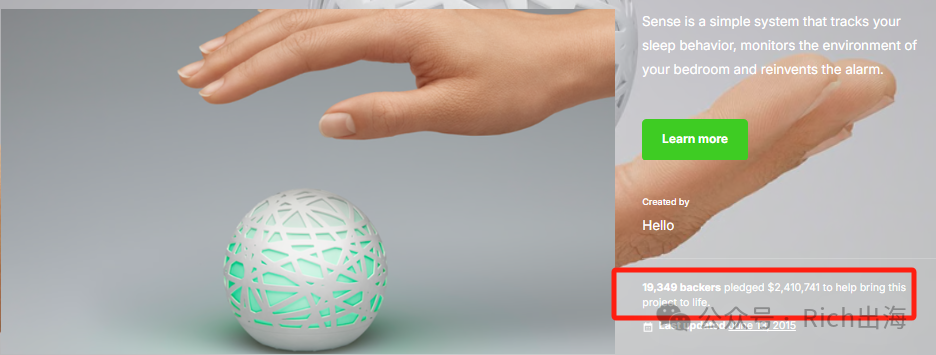
Sense, an intelligent sleep monitoring system, was launched on Kickstarter in 2014 by San Francisco startup Hello. It captivated 19,349 backers, raising $2.41 million—2410% of its funding goal—with its three core innovations: non-wearable, non-intrusive sleep tracking, multi-dimensional environmental monitoring, and smart alarm capabilities.
Product Overview
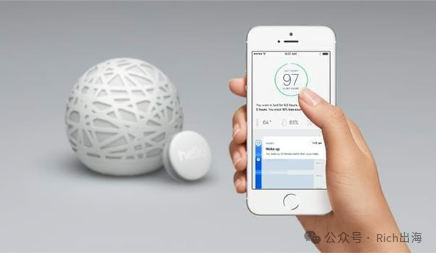
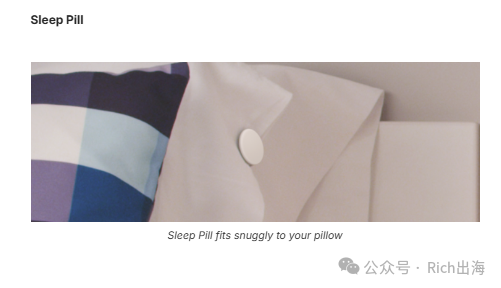
The Sense system comprised two main components: the Sense Bedside Sphere and the SleepPill pillow sensor. The Bedside Sphere monitored the bedroom's light, noise, temperature, humidity, and air particulate levels, providing real-time environmental feedback via a companion app. The SleepPill, a discreet sensor placed under the pillow, featured a six-axis accelerometer and gyroscope to automatically capture sleep stages. Remarkably, it operated for a full year without needing a recharge.
By integrating environmental and sleep data, Hello Sense not only generated a 'Sleep Score' but also allowed users to review nocturnal disturbances and wake up at their optimal sleep point using white noise, pink noise, or natural sounds, helping to alleviate morning grogginess.
Key Innovations
**Non-Intrusive Tracking & Multi-Dimensional Environmental Monitoring:** The SleepPill could be discreetly clipped to a pillow, eliminating the need for wearables and offering up to a year of battery life. It automatically synced sleep data with the Sense Bedside Sphere via BLE/ANT. The Sense Bedside Sphere itself was equipped with a white light sensor, microphone, temperature, humidity, and particulate sensors, enabling comprehensive monitoring of room light, noise levels, temperature, humidity, and air quality.
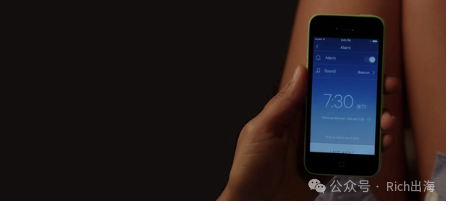
**Smart Alarm & Sleep Scoring:** The SmartAlarm feature woke users during their natural light sleep phase, optimizing the wake-up experience and reducing post-sleep grogginess. The Sleep Score, a rating from 0–100, synthesized environmental and sleep quality data, breaking down influencing factors such as light, noise, and interruption frequency to help users identify and improve sleep issues.
**Visualized Disturbance Playback & Self-Optimization:** The app offered a 'Disturbance Playback' feature, allowing users to listen to key nocturnal sounds, such as garbage trucks or snoring, providing insight into real-time sleep interruptions. Furthermore, 'Environmental Alerts' proactively notified users if increased air particulate matter, humidity, or noise levels deviated from optimal ranges, prompting timely adjustments.
**Simplicity & Open Data:** Sense eliminated the need for additional accounts, automatically linking via WiFi (Sense) and BLE/ANT (SleepPill), simplifying setup and usage. Hello also provided an open API, allowing backers to access raw data for custom visualizations or integration with third-party applications.
Company Journey and Market Context
Hello was founded in 2012 by Peter Thiel Fellow James Proud, with a focus on developing sleep technology products. Following its successful $2.4 million crowdfunding campaign in 2014, the company secured an additional $10 million in Silicon Valley investment, valuing it at $25-30 million. Sense began shipping in 2015 and garnered attention from prominent media outlets like Wired, Forbes, and Inc. However, due to controversies surrounding product pricing and functionality, Hello announced its shutdown in 2017, with attempts to sell its assets ultimately proving unsuccessful.
The global consumer wearable sleep tracking market is projected to reach approximately $1.6 billion in 2024, with a Compound Annual Growth Rate (CAGR) of about 9.2% from 2024–2030, expected to hit $2.75 billion by 2030. Within this market, bedside monitoring devices are gaining favor due to their non-wearable nature and ease of use, with an anticipated annual market growth of 9.7% from 2025–2028. Smart alarms and environmental monitoring solutions are also seeing increased popularity, driven by their integration with home automation systems and a growing public awareness of indoor air quality, noise, and light pollution.
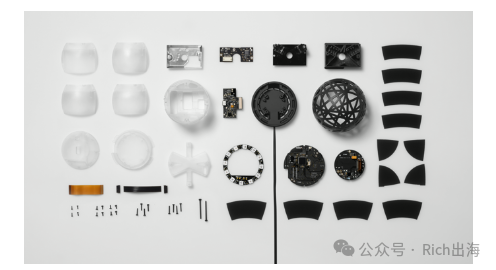
With its four core innovations—non-wearable tracking, multi-environmental sensing, smart wake-up, and open data—Hello Sense built a complete sleep optimization loop, rapidly attracting nearly 20,000 crowdfunding supporters.