UGREEN's $6.17 Billion Revenue: Still Reliant on Amazon's Lifeline
Crowdfunding Analysis · · PledgeRadar Editorial
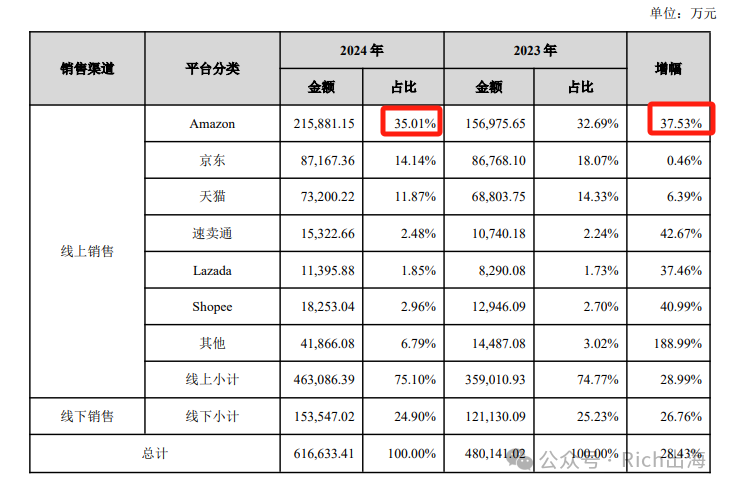
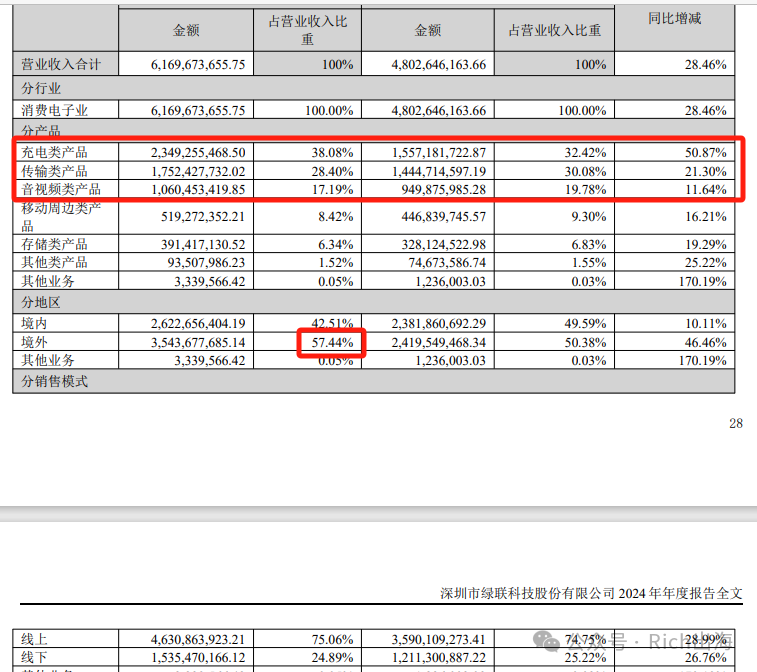
UGREEN Technology, a company that has carved a significant path in the fiercely competitive cross-border e-commerce market, announced impressive financial results for 2024. The company reported 6.17 billion RMB in revenue, marking a 28.46% year-over-year increase, and a net profit of 462 million RMB, up 19.29%. Notably, the average employee compensation reached 196,600 RMB, with average revenue generated per employee at 1.7006 million RMB.
Amazon Remains UGREEN's Lifeline
UGREEN's IPO prospectus reveals that Amazon has consistently accounted for approximately one-third of its revenue since 2021. In 2024, Amazon remained UGREEN's largest sales channel, contributing 2.158 billion RMB, a 32% increase year-over-year.
While Amazon's share of platform sales, at 35.01%, is lower than the 60% seen by some major sellers, it still represents UGREEN's single largest channel, significantly surpassing the combined revenue from all other platforms. Industry analysts emphasize that Amazon remains the core pillar of UGREEN's overseas operations. "If Amazon accounts experience issues or policies tighten, UGREEN's overseas business will face immense risks," one analyst noted.
This "head effect" or dominant platform position offers scale advantages, streamlining traffic, logistics, and payment processes. However, it also means UGREEN's performance is highly vulnerable to fluctuations in platform policies, competitive landscapes, or logistics costs. For instance, any increase in Amazon's commission rates or advertising costs would immediately impact profitability. The policy changes and account suspensions in 2021, which led to the downfall of countless sellers and widespread job losses in the cross-border e-commerce sector, still serve as a chilling reminder of these risks.
Other Overseas Platforms Play a Supporting Role
Although UGREEN has a presence on platforms like Shopee, Lazada, and AliExpress, their sales volumes are considerably smaller than Amazon's.
In 2024, Shopee contributed 182 million RMB, only 8.4% of Amazon's revenue, despite a 40.99% year-over-year growth. AliExpress generated 153 million RMB, about 7.1% of Amazon's, with a 42.67% growth. Lazada brought in 113 million RMB, less than 5.3% of Amazon's, growing by 37.46%. While these platforms show impressive growth rates, their current scale is too small to serve as a viable backup should Amazon encounter significant issues.
Domestic Revenue Grows, But Share Declines
UGREEN's domestic market revenue reached 2.623 billion RMB in 2024, accounting for 42.53% of its total annual revenue. This marks a notable decrease from 49.59% in 2023.
The domestic market's revenue growth rate was 10.11%, appearing steady and conservative when compared to the high 46.46% growth rate achieved in overseas market expansion.
Expanding into Offline Markets
Unlike many cross-border sellers who remain solely online, UGREEN is following in the footsteps of predecessors by aggressively entering the offline market. Public information indicates that UGREEN products are now available in major European and American retailers such as Walmart, Sam's Club, and Micro Center, aiming to enhance brand credibility through physical channels. The company has also established local subsidiaries in the United States, Germany, Japan, and Hong Kong, building a "global headquarters + regional centers" localized service matrix.
However, the annual report did not disclose specific sales data for these channels, suggesting their current contribution to overall revenue is limited. While UGREEN has launched its own independent e-commerce stores in the US, Canada, and European markets, their operational effectiveness remains unclear. Offline channels, despite requiring substantial initial investment and having longer return cycles, are considered crucial for long-term brand development. "The sense of trust that physical retail provides consumers is something pure e-commerce struggles to match," an industry observer commented.
Investing in Product Innovation to Shed the 'Accessory Maker' Label
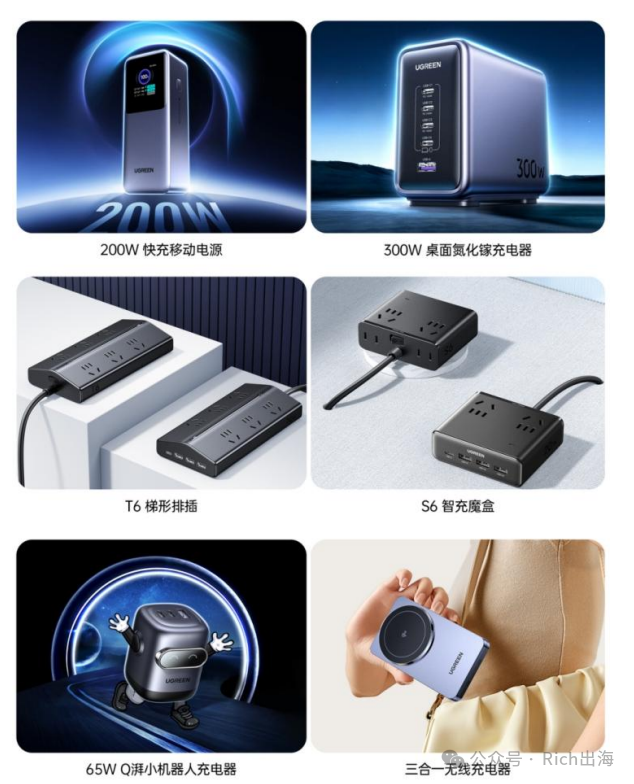
Initially known for digital accessories like charging cables and chargers, UGREEN is now gradually upgrading its product lines. In 2024, the company invested 304 million RMB in research and development, a 40.87% increase year-over-year, steadily strengthening its technological barriers.
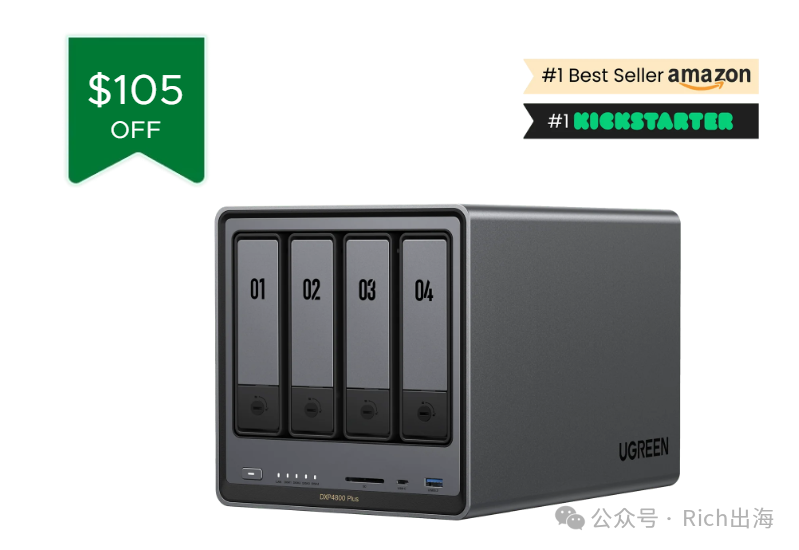
At CES 2024, UGREEN collaborated with Intel to launch its NASync storage products, showcasing its technical prowess. Furthermore, the DXP series NAS products successfully raised over $6.6 million USD through crowdfunding on Kickstarter, gaining significant recognition from overseas consumers.
Despite these innovations, high-end new products like the NASync and DXP series private cloud storage devices primarily rely on Amazon as their main sales channel. This further reinforces UGREEN's dependence on a single platform. UGREEN appears to be facing a classic "chicken-and-egg dilemma": new products need Amazon's traffic and trusted endorsement to achieve initial sales, but over-reliance on Amazon simultaneously restricts the brand's independent development.
UGREEN's Challenges Reflect Common Platform Seller Pain Points
UGREEN's predicament is not an isolated case. According to data from cross-border e-commerce research institutions, over 75% of Chinese brands expanding overseas still derive more than 50% of their revenue from a single platform. This platform dependency has become a bottleneck restricting the long-term development of enterprises.
"The era of platform dividends has ended, yet platform dependency remains undiminished. This is a common dilemma for current cross-border e-commerce enterprises," an industry expert analyzed. Most cross-border sellers enjoy the convenience of traffic brought by platforms but are simultaneously constrained by platform policies and commissions.
Multi-Channel Strategy: A Long and Challenging Road Ahead
For UGREEN, a truly diversified multi-channel strategy is still in its nascent stages. The annual report indicates that the subsidiaries established in the United States, Germany, Japan, and Hong Kong have not yet made significant revenue contributions. The "global headquarters + regional centers" service matrix primarily supports existing platform operations rather than actively developing new channels.
Social commerce initiatives, such as TikTok Shop, appear to be in a trial phase, with no related information found in the annual report, suggesting their current scale is limited.
The Path Forward
To quote a seasoned cross-border e-commerce veteran: "UGREEN's revenue growth is commendable, but if it cannot truly achieve channel diversification and establish its own product barriers, this growth is like dancing on the edge of a cliff—seemingly spectacular but fraught with hidden dangers."
As competition in cross-border e-commerce enters its latter half, this issue appears to be a common challenge for most cross-border enterprises with revenues exceeding 100 million RMB.
UGREEN's revenue growth is commendable, but if it cannot truly achieve channel diversification and establish its own product barriers, this growth is like dancing on the edge of a cliff—seemingly spectacular but fraught with hidden dangers.