AirDog's Flight Path: From $1.36M Crowdfunding Success to Defense Applications
Crowdfunding Analysis · · PledgeRadar Editorial
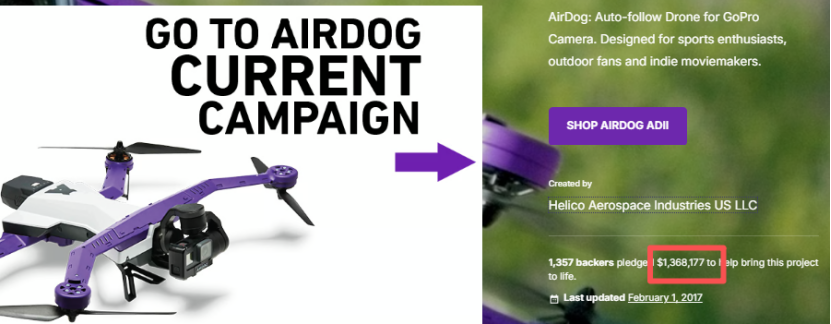
AirDog, a high-profile drone hardware and photography project, successfully raised $1.36 million on Kickstarter. Initially launched in 2014-2015, the project entered its production and delivery phase, followed by continuous iteration between 2015 and 2017, which included the release of upgraded versions like AirDog II. The project garnered extensive media exposure through community engagement, appearances at events like CES, and video reviews, establishing strong market recognition for the product. However, even a company with such significant visibility faced challenges in meeting its original project delivery timelines.
Core Product Features
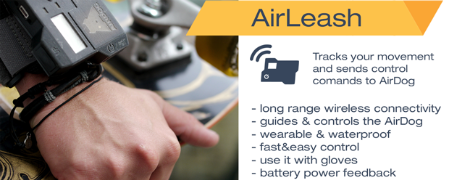
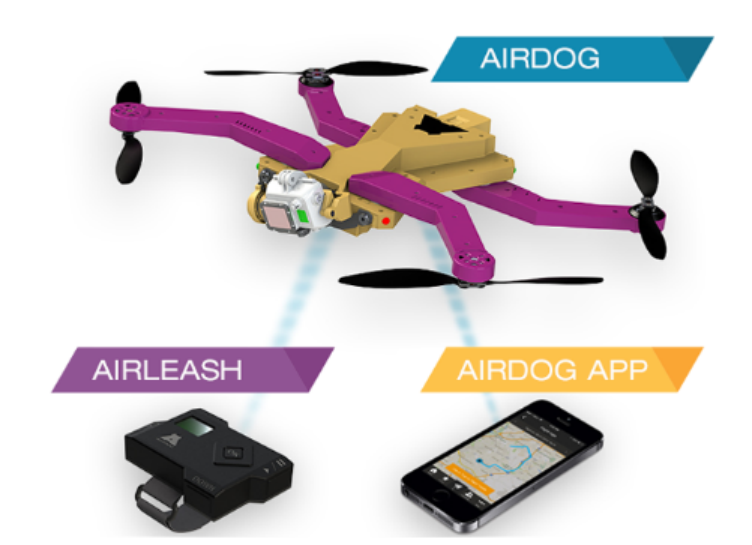
AirDog's core competitive advantage lay in its dedicated AirLeash tracker, combined with an advanced aerial following algorithm. Users simply attached the AirLeash to their wrist, helmet, or vehicle, allowing the drone to automatically locate and follow, completely freeing the user's hands to focus on the action itself. This design precisely targeted extreme sports scenarios like skiing, surfing, and cycling, which demand high maneuverability and long-distance tracking.
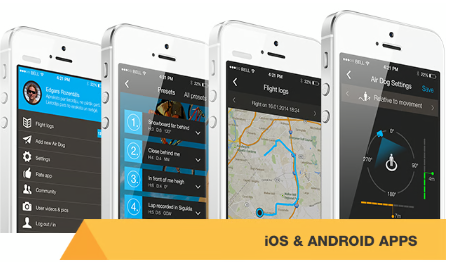
The product supported six distinct following strategies, including auto-follow, relative position, trajectory follow, hover-aim, orbit, and top-down shots. Users could also record and replay flight paths or fine-tune settings via an app, providing creators with 'director-level' shooting control while maintaining automated operation.
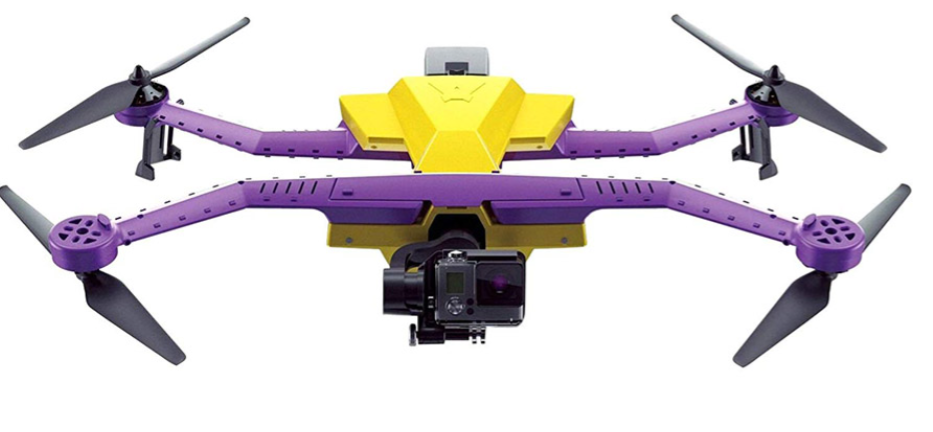
AirDog was equipped with a dedicated two-axis gimbal to protect GoPro cameras, featuring vibration isolation technology, extended battery life, and an automatic return-to-home function. The product's design thoroughly considered waterproofing, wind resistance, and high-speed tracking requirements, claiming the ability to track targets moving at up to 40 miles per hour, outperforming the general follow-me functions of ordinary consumer drones in extreme action scenarios.
The team opted to develop the AirLeash dedicated tracker instead of relying on smartphone GPS, primarily due to concerns about phone usability in water, with gloves, or during high-speed movement, as well as GPS accuracy errors and Bluetooth/Wi-Fi transmission distance limitations. The dedicated tracker offered a more stable following experience in terms of real-time responsiveness, transmission range, and sensor integration.
Company Evolution and Market Landscape
AirDog was developed by the Latvian startup HelicoAerospace and its team, focusing on the action sports videography market. Through Kickstarter, they gained initial market recognition and seed funding. During the early mass production phase, the team encountered reliability issues with core components like electronic speed controllers. By collaborating with industry technical partners (including receiving technical advice from companies like DJI), they ultimately improved production processes and product reliability, fulfilling their delivery commitments to early supporters.
Between 2019 and 2020, AirDog underwent significant corporate development changes, with its related assets being acquired by Alarm.com, a U.S. smart home and security company. This acquisition model is common among small hardware startups, reflecting a development strategy where consumer drone manufacturers, facing intense market competition and funding pressures, choose to integrate into larger corporate platforms. After the acquisition, AirDog's core team members remained active in the drone and autonomous systems field, with some pivoting towards more specialized defense applications, demonstrating the continuity of the team's technical capabilities.
Follow-me drones were a hot niche market between 2014 and 2018, seeing the emergence of several crowdfunding projects such as AirDog, HEXO+, and Lily. However, as the market evolved, this sector gradually became dominated by a few technologically strong enterprises, including DJI and Skydio. This shift was largely due to the fact that advanced auto-follow capabilities heavily rely on sophisticated visual obstacle avoidance technology, powerful computing capabilities, and stable supply chain and after-sales service systems.
Market drivers primarily included continuous advancements in hardware and visual algorithms, with stronger onboard visual processing and deep learning technologies fostering more robust tracking and obstacle avoidance capabilities. Simultaneously, growing consumer demand for content creation—including outdoor sports filming, vlog production, and social media content creation—generated a rigid demand for auto-follow, first-person view (FPV), and stable shooting tools.
However, the market also presented significant risks. Technology giants held clear advantages in aerial imaging, supply chain, and global distribution channels, making it a high barrier for smaller manufacturers to establish a long-term foothold in comprehensive hardware, software, and service competition. Furthermore, a common development gap existed between crowdfunding validation and scalable mass production.
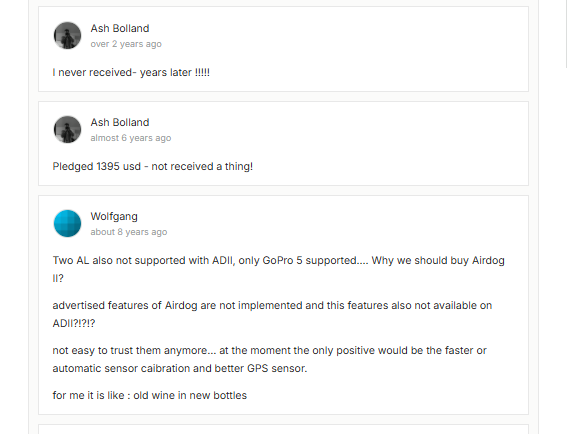
Even for a project with such high visibility, meeting original delivery timelines proved challenging.