AEKE S1 Pro AI Home Gym Secures Nearly $6 Million on Kickstarter
Campaign Teardown · · PledgeRadar Editorial

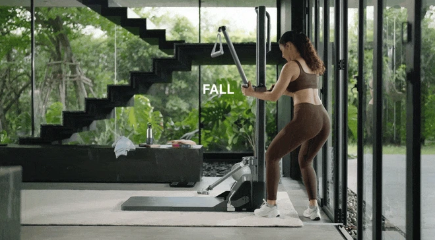
The AEKE S1 Pro is a comprehensive AI-powered smart home gym from AEKE, designed to offer a full-body workout experience. Moving beyond traditional treadmills, exercise bikes, or single-purpose strength machines, the S1 Pro integrates digital resistance, electric pulleys, adjustable robotic arms, visual motion recognition, and AI training plans to support a wide range of exercises, including chest, back, legs, glutes, shoulders, arms, core, rowing, ski machine movements, Pilates, and functional training.
Campaign Overview
The AEKE S1 Pro launched on Kickstarter on May 20, 2026, concluding its campaign on June 29. It successfully garnered approximately 1,865 backers and raised about $5.789 million, significantly surpassing its modest $10,000 goal. With a super early bird price of $2,999 and an official retail price of $4,599, the S1 Pro is positioned as a high-ticket smart fitness hardware. Its multi-million dollar funding makes it one of the few Kickstarter smart hardware projects this year to achieve over $5 million.
Key Product Features
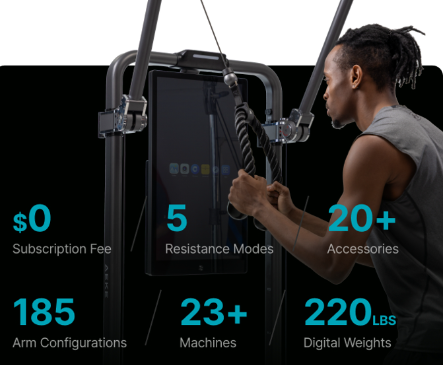
The S1 Pro features a 1300W motor that delivers up to 220 pounds (approximately 100 kg) of digital resistance, adjustable in 1-pound (approximately 0.5 kg) increments. It offers five resistance modes: Constant, Eccentric, Concentric, Elastic, and Rowing, simulating constant resistance, eccentric overload, concentric strengthening, progressive resistance like resistance bands, and rowing motion resistance, respectively.
This digital resistance system is a core differentiator from standard cable machines. While traditional weight plates only change the total load, digital resistance can alter the force distribution at different stages of a movement, allowing the same weight to create varied training stimuli.
However, the 220-pound limit applies to the dual-sided digital resistance system and does not imply that all movements or angles can fully replace free weights. Users performing heavy lifts like squats, deadlifts, and bench presses may still notice differences in stability, free range of motion, and maximum load compared to traditional barbells.
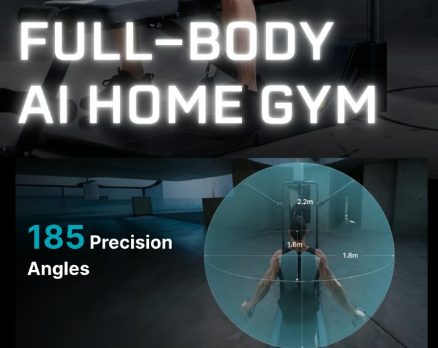
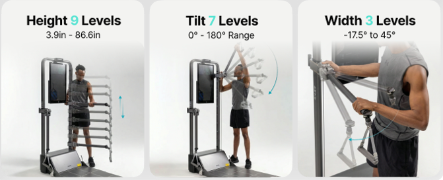
The S1 Pro incorporates robotic arms with 7 tilt angles, 9 height settings, and 3 width combinations, which the company states create 185 force line combinations to accommodate standing, sitting, kneeling, and lying exercises. When folded, the device occupies approximately 0.31 square meters, with an unfolded training area of about 9.7 square feet, and requires no wall mounting.
This design eliminates the need for users to purchase separate equipment like lat pulldown machines, seated rowers, cable crossover systems, rowing machines, and various smaller accessories. It is particularly well-suited for households with limited space that still desire comprehensive strength training.
However, the machine weighs approximately 110 kg (242 lbs). While its folded footprint is small, moving and initially positioning it will not be easy. It is not a portable fitness device that can be easily relocated, but rather functions more like a stationary home training station.
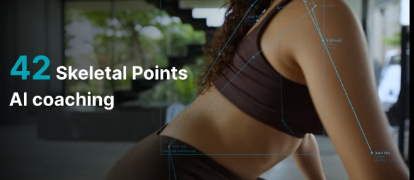
Equipped with a 1080p, 60fps wide-angle camera, the S1 Pro reportedly performs 42-point skeletal tracking, identifying common form issues such as lower back rounding, knee valgus, shrugged shoulders, and forward head posture. The system processes this analysis via a local 6 TOPS processor, generating reports on muscle groups, incorrect movements, training volume, and corrective exercises after each session.
This advanced AI capability goes beyond simple rep counting, incorporating movement trajectory, tempo, range of motion, and posture into its feedback. For home users without a personal trainer, this represents a highly valuable aspect of a digital strength device.
However, the accuracy of AI error correction depends on camera visibility, lighting, body obstruction, and movement angles. The company notes that the camera covers approximately 80% of the body, meaning unusual postures or movements obscured by the equipment might not be consistently recognized.
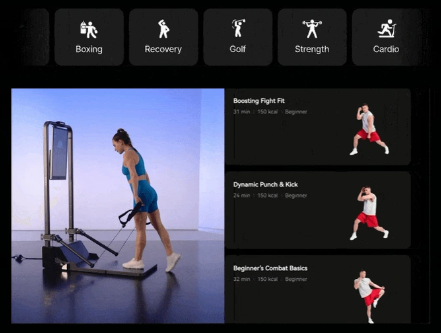
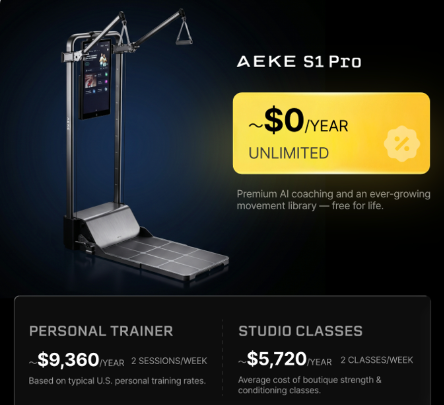
The S1 Pro includes 165 expert-led courses, AI training plans, real-time form correction, and progress tracking as part of the hardware purchase, with the company emphasizing 'Zero Subscription'.
The system generates a six-dimensional assessment based on body composition, strength, flexibility, posture, endurance, and movement patterns, adjusting training plans accordingly.
This addresses a common pain point in the smart fitness device market. Many competing hardware products, already expensive, require ongoing subscriptions for core courses and smart features. For instance, the Tonal 2 costs $4,295 (smart accessories sold separately) and requires a $60 monthly membership fee for full access to its courses and smart functionalities.
However, the long-term viability of a 'lifetime no subscription' model ultimately depends on AEKE's sustained commitment to future software services, cloud content, and company operations. While an attractive promise for crowdfunding backers, it also means the brand must bear the long-term costs of content maintenance and algorithm updates.

Safety and Reliability Features
The S1 Pro incorporates several safety mechanisms, including gradual resistance loading, Smart Assist, and Auto Stop. Resistance gradually increases to the target weight over approximately 2 seconds. If the system detects a significant drop in user output, it provides assistance. In cases of loss of grip or other abnormal situations, tension is automatically released. The device also includes a magnetic privacy cover for the camera and supports 9 individual user profiles.
These safety features are crucial for home strength training. Unlike traditional weight plates, digital resistance lacks inertia and a natural 'drop' mechanism. If the system misjudges user input, the experience could be significantly impacted. Therefore, the true test of these safety mechanisms lies in their long-term stability, not merely their presence on a promotional page.
AEKE is a brand under Qudong Future (Shenzhen) Technology Co., Ltd., and this is not their first smart fitness crowdfunding campaign. Their previous AEKE K1 project on Kickstarter secured 635 backers and raised approximately $1.42 million. This indicates AEKE has some experience in smart strength training hardware, suggesting the S1 Pro is not starting from scratch. However, the S1 Pro emphasizes adjustable robotic arms, a foldable structure, 185 force lines, and more comprehensive full-body training coverage compared to the K1, which inherently increases manufacturing and mass production challenges.
Our current assessment of the project's primary risks is not whether the concept is viable, but rather the complexities of cross-border shipping for a 110 kg device, the durability of the robotic arms, the lifespan of the pulley cables, the stability of AI recognition, after-sales service, and long-term software support. Large smart fitness devices like this are not a one-time hardware delivery; subsequent courses, system updates, and spare parts availability directly impact the product's lifecycle. We wish this project a successful delivery!
Market Landscape and Competitive Positioning
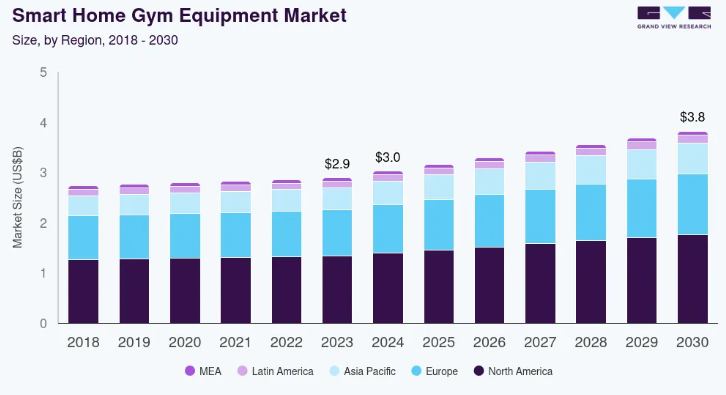
The smart home fitness equipment market continues to expand. Grand View Research estimates the global smart home fitness equipment market to be approximately $2.9 billion in 2023, projected to reach $3.8 billion by 2030, with North America accounting for 46.1% of the revenue share in 2023.
The S1 Pro faces direct competition from other digital strength training devices such as Tonal, Speediance, and Vitruvian. Tonal 2 offers increased resistance up to 250 pounds and enhanced visual AI training; Speediance emphasizes no-wall-mount installation and multi-functional training; while Vitruvian focuses on a platform-style digital resistance system. The S1 Pro differentiates itself by integrating adjustable robotic arms, 220 pounds of digital resistance, AI motion recognition, and subscription-free content into a single device.
Ultimately, the S1 Pro's true test is not whether it can replace a gym, but whether it can keep home users consistently engaged in training long-term. While hardware specifications drive initial appeal, sustained usage depends on course quality, motion recognition accuracy, mechanical structure stability, and after-sales support. If AEKE can deliver on its promise of subscription-free AI training and stable product delivery, the S1 Pro could become a highly competitive option in the premium smart home strength equipment segment. However, if software updates and repair services fall short, the high barrier to entry for such heavy hardware will be amplified.
Ultimately, the S1 Pro's true test is not whether it can replace a gym, but whether it can keep home users consistently engaged in training long-term.