Prisma Ultrawide Monitor Raises $270K in First Week on Kickstarter
Campaign Teardown · · PledgeRadar Editorial

The Prisma is a 40-inch curved ultrawide monitor that integrates a 5K2K display, USB hub, SSD expansion, dual-PC switching, and wireless charging. Designed for programmers, designers, video creators, and high-end desktop users, it aims to eliminate the need for multiple peripheral devices around the display.
Campaign Launch and Brand History
Launched on October 6, 2026, the Prisma monitor quickly secured $270,000 in its first seven days. While this growth is steady compared to some monitor projects that have surpassed a million dollars in just a few days, its higher unit price means over 200 backers have already contributed more than $220,000. The campaign offered a $5 reservation activity, guiding early adopters and potential buyers to the crowdfunding page by locking in launch prices.
A significant advantage for Prisma is the established brand behind it: Mobile Pixels. Their previous Geminos dual-screen monitor raised $2.16 million from 3,042 backers on Kickstarter, and the Trio 3 series in 2025 garnered approximately $298,000 from 719 backers.
Key Product Features
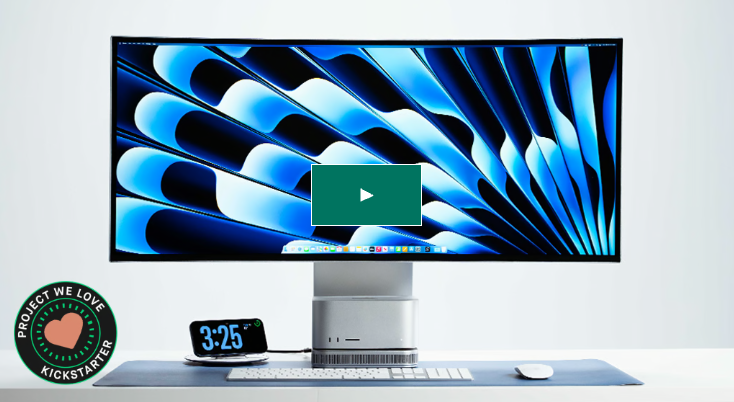
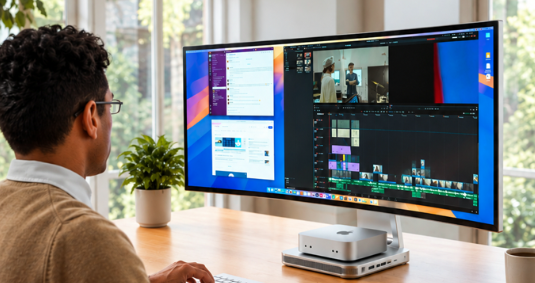
The Prisma features a 40-inch 5K2K curved display, utilizing an LG IPS Black panel with a resolution of 5120×2160, a 120Hz refresh rate, and support for approximately 1.07 billion colors. It boasts an official DCI-P3 color gamut coverage of 99%. This 21:9 ultrawide aspect ratio is particularly well-suited for simultaneously displaying multiple work windows, such as a code editor, browser, and debugging window, or for expanding a timeline horizontally during video editing.
Unlike two separate monitors, it eliminates the central bezel and the need to constantly adjust screen positions. However, 5K2K does not equate to a traditional 5120×2880 16:9 5K screen; Prisma offers a wider workspace rather than higher vertical pixel density. Additionally, with an officially stated typical gray-to-gray response time of 14ms, while 120Hz is sufficient for smooth office work, this monitor is not primarily designed for high-speed competitive gaming.
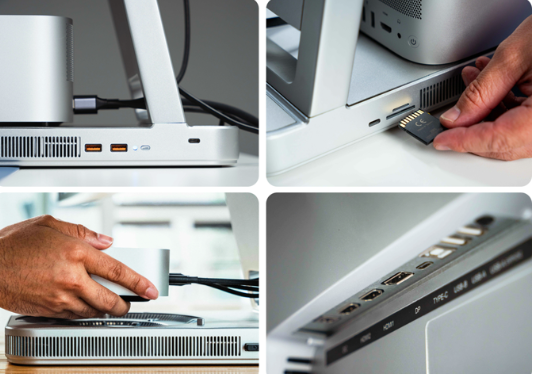
The Prisma integrates a USB4 hub, consolidating USB-A, USB-C, SD, and microSD ports within the monitor, providing up to 40Gbps of bandwidth via a USB4 connection. This allows users to connect keyboards, mice, storage devices, and card readers directly to the display, reducing desktop clutter from external hubs and adapter cables.
However, a detail often overlooked in promotional materials is clarified in the official FAQ: Prisma's display signal and high-speed data expansion utilize two independent connections. The monitor's USB-C video interface only offers USB 2.0 data speeds; to fully leverage SSD and other high-speed peripheral performance, a separate USB4 connection is required.
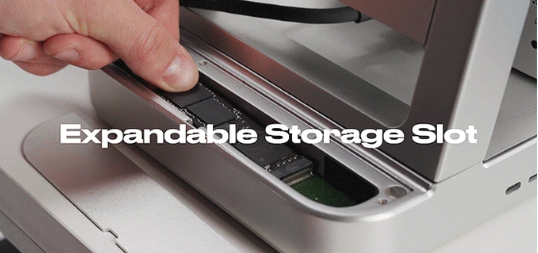
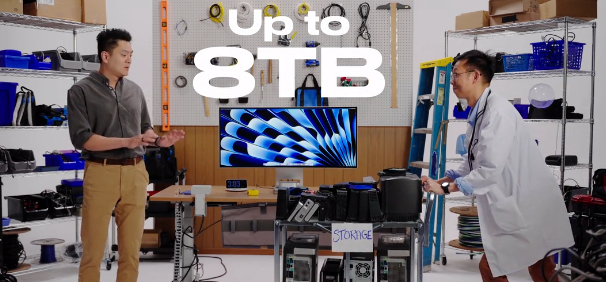
The Prisma includes an internal M.2 SSD slot, allowing users to add storage for video footage, raw photos, and large project files. This feature is particularly useful for Mac mini and Mac Studio users, enabling external media to be stored directly within the monitor without needing a separate external drive enclosure.
The official FAQ states SSD transfer performance of approximately 900-1000MB/s under relevant connections, though actual speeds will depend on the interface, SSD, and host configuration. It's important to note that this storage capacity does not automatically increase the computer's internal drive space; it functions as external storage.
The Prisma supports Picture-by-Picture (PBP) split-screen functionality and built-in KVM switching, allowing it to display output from two computers simultaneously and control them with a single keyboard and mouse. For example, a user could connect a Mac Studio on the left for video processing and a Windows PC on the right for data analysis, eliminating the need for an additional monitor or a separate KVM device. This is especially convenient for developers who frequently use two operating systems.
However, KVM switching does not enable direct sharing of files, memory, or computing resources between the two computers; it addresses display and peripheral switching, while software data still needs to be transferred via network or other methods.
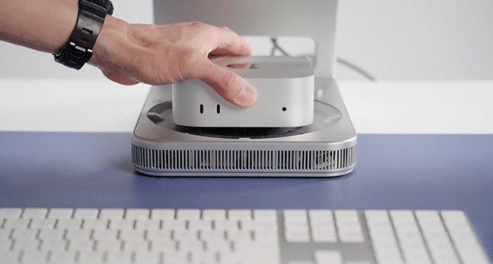
The Prisma features a dedicated placement structure for Mac mini and Mac Studio within its stand, complete with a temperature-controlled fan for auxiliary cooling. The primary benefit isn't a sudden boost in Mac performance, but rather the ability to neatly integrate the computer's main unit, which typically occupies desktop space, into the monitor's base, while keeping ports and power buttons easily accessible.
While this design aligns well with the needs of Mac Studio users, the auxiliary fan does not equate to verified improvements in sustained Mac performance. Long-term third-party testing is still needed to confirm its cooling effectiveness, operational noise, and compatibility with different Mac models.
The Prisma supports up to 65W USB-C laptop power delivery and integrates a 15W wireless charging pad. It also includes a mounting structure compatible with iPhone's Continuity Camera feature, allowing phones to charge conveniently near the display and be used as webcams for video conferencing.
While this integrated solution offers a cleaner setup compared to separate wireless chargers, phone stands, and hubs, the 65W power delivery may be insufficient for some high-performance Windows laptops, which might still require their original power adapters under full load.
Mobile Pixels: A Track Record in Crowdfunding
Mobile Pixels first entered the market with the DUEX laptop-attached display, subsequently launching the TRIO, Geminos, and various other portable display devices. Unlike many hardware teams new to Kickstarter, Mobile Pixels has established a mature system for crowdfunding, production, and retail. Since 2018, they have successfully delivered 11 Kickstarter projects, accumulating over 50,000 backers.
This extensive experience helps mitigate uncertainties in basic manufacturing and fulfillment. However, the Prisma's structure is significantly more complex than typical portable displays, involving a large-format panel, USB4, high-speed storage, and a cooling system. The reliability of these diverse modules operating simultaneously still requires validation.
Market Context and Competition
Grand View Research projects the global electronic display market to reach approximately $175.8 billion in 2026, growing to $199.8 billion by 2030, with a compound annual growth rate of about 3.4% from 2024-2030. This broad market encompasses consumer electronics and commercial displays and does not directly represent the market size for 40-inch ultrawide monitors. Prisma operates within the professional office monitor segment, where competition is already mature.
For instance, the Dell UltraSharp U4025QW also features a 40-inch class IPS Black panel, supporting 5120×2160 resolution and a 120Hz refresh rate. It offers Thunderbolt 4, 140W power delivery, a 2.5GbE network port, and KVM functionality. Its recent price on the U.S. official website ranges from approximately $2,100 to $2,400, varying with configuration and promotions.
In comparison, Prisma's early crowdfunding price is lower, and it adds an SSD slot, Mac host storage, and wireless phone charging. However, Dell maintains clear advantages in high-power laptop delivery, network port configuration, and single-cable expansion experience.
Prisma's true appeal isn't in reinventing display technology, but in offering users a professional monitor that also streamlines desktop organization and upgrades some peripherals. The challenge lies in the increased maintenance costs associated with such high integration. If the USB expansion module, SSD interface, or cooling fan fails in the future, addressing it may not be as straightforward as replacing an independent hub.
Anyone who has used a Mac mini or Mac Studio has likely experienced the gradual accumulation of peripherals: starting with just a computer and a screen, then adding external drives, card readers, and hubs, until cables inevitably clutter the desktop. A 40-inch 5K2K screen is inherently attractive to professional users, and if its integrated expansion ports, storage, and cooling system prove consistently reliable long-term, it indeed has the potential to be a more streamlined desktop solution.
Of course, once in actual use, the real test for such integrated products will be how many cables are eliminated versus how many operational limitations are introduced.
Prisma's true appeal isn't in reinventing display technology, but in offering users a professional monitor that also streamlines desktop organization and upgrades some peripherals.