Smokery: Combining Smoking and Dehydration for the Home Food Market
Campaign Teardown · · PledgeRadar Editorial
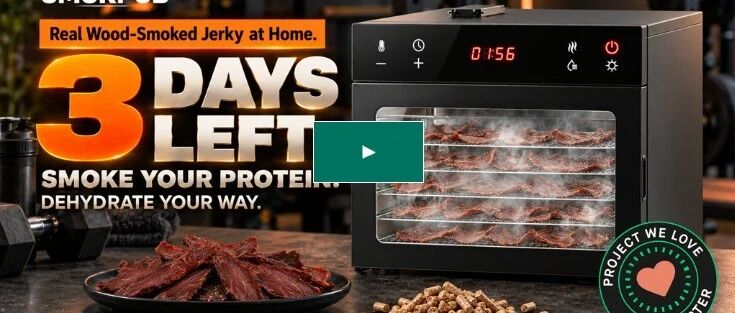
Making jerky, smoked cheese, dried fruit, or pet treats often requires distinct processes. SMOKPUB's Smokery aims to integrate wood chip smoking with hot air dehydration into a single countertop appliance, enabling users to create smoked and dried foods at home. This product targets home users interested in DIY snacks, culinary experimentation, and food preservation. Its core concept is straightforward: add a smoking function to a traditional food dehydrator while retaining temperature control, multi-layer trays, and extended operation capabilities.
Campaign Overview and Initial Success
Smokery launched on Kickstarter on August 25, 2026, concluding its campaign last week with nearly $800,000 raised. The project's initial growth strategy was clear: foods like jerky, dried fruit, and smoked ingredients are highly visual and easily showcased in short videos. The visual effect of smoke and the finished product's color quickly convey the device's utility. With an introductory price of $159, it presented a more accessible option for home users than purchasing separate smoking and dehydrating units. The brand leveraged extensive social media exposure to generate significant leads, accumulating a substantial backer base for the project.
Integrated Smoking and Dehydration
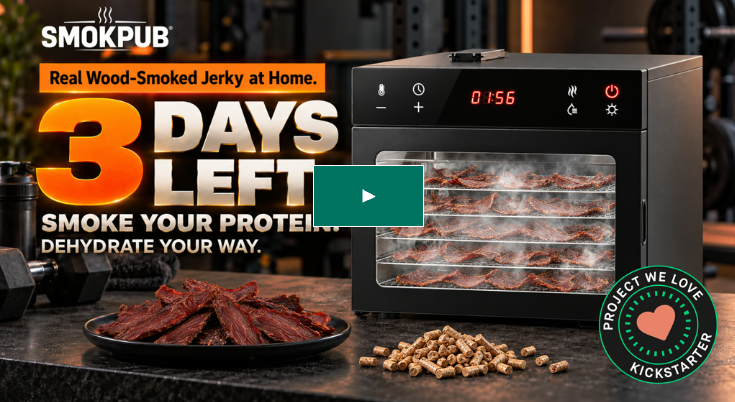
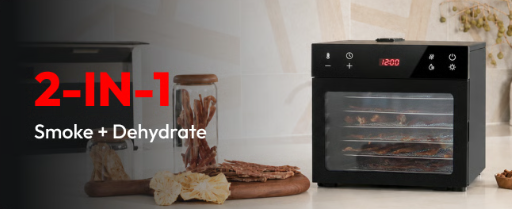
Smokery combines smoke generated from wood pellets with hot air dehydration, with official claims of supporting flavors like hickory and applewood. Traditional dehydrators primarily remove moisture, while smoking typically requires a separate unit or additional steps.
For those who enjoy making homemade jerky, smoked cheese, and flavored snacks, this integrated approach reduces equipment footprint and simplifies the process of achieving smoked flavors during drying. However, smoke intensity, flavor penetration, and final texture still depend on ingredient thickness, moisture content, wood type, and processing time, meaning visual smoke demonstrations alone cannot fully predict the final outcome.
Precise Temperature Control and Capacity
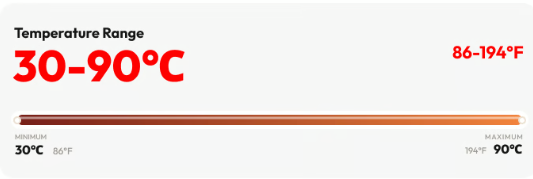
The brand's official website states a temperature range of 30-90°C (86-194°F), detailing its application for various dehydration and smoking needs.
Lower temperatures are suitable for delicate items like fruit leathers, herbs, and ingredients requiring slow moisture removal, while higher temperatures can accelerate certain dehydration processes.
The six-layer tray design allows users to process multiple ingredients simultaneously, with official claims of accommodating approximately 2.3 kg (5 lbs) of meat per batch. Actual loading capacity will vary based on slice thickness, spacing, and moisture content. It's important to note that stated capacity does not directly translate to finished product weight, and dehydration temperatures are not equivalent to food-safe pasteurization temperatures.
Versatile Multi-Layer Trays and Long-Duration Operation
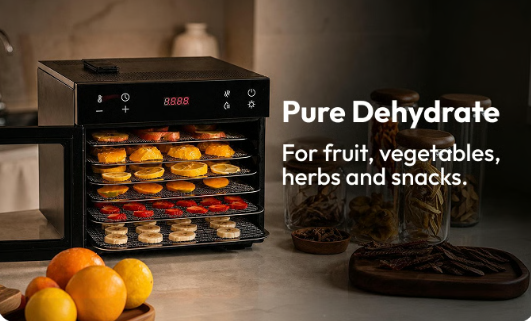
Smokery features six pull-out trays within an approximate 10-liter internal capacity.
The brand showcases uses for jerky, dried fruits, herbs, vegetables, and pet treats, expanding the device's utility beyond just meat smoking. For households accustomed to batch-making snacks, processing garden harvests, or preparing homemade pet food, multi-layer trays can enhance single-batch efficiency and allow different ingredients to be processed according to their specific needs.
However, maintaining uniform dehydration across multiple layers depends on actual temperature and airflow performance at different tray positions. Publicly available information currently lacks sufficient independent test data to confirm consistent drying results across all trays when fully loaded.
The official claims support dehydration programs up to 72 hours, accommodating slow food processing.
The practical value of such a feature lies in reducing manual intervention rather than necessarily shortening processing times for all ingredients. Dehydration speed still depends on slice thickness, load volume, ambient humidity, and target moisture content. For devices designed for extended operation, temperature stability, energy consumption, noise levels, and long-term safety design are equally crucial, and independent test data on these aspects is currently limited.

Cleaning Convenience and Brand History
With simultaneous smoking and dehydration, food oils, smoke residue, and marinades are more prone to adhering to trays and the device interior. Smokery features non-stick trays and a removable drip tray, which the brand claims are easy to clean. For households frequently processing meats, the removable structure can reduce hard-to-reach cleaning spots and help manage dripping fats. However, the durability of the non-stick coating, potential odor retention after prolonged smoking, and whether the trays are dishwasher-safe are aspects not sufficiently covered by current project information, and are important considerations for consumers.
SMOKPUB's previous ventures have focused on electric whiskey smokers, beverage flavor enhancement, and home cooking products. The brand's earlier electric cocktail and whiskey smoker project, which concluded crowdfunding in 2024, garnered 9,019 backers and raised $770,000. The SmokpubPro project, launched in 2025, attracted 2,027 backers and raised $210,000.
These prior projects share technical and user-scenario connections with Smokery's smoking system, indicating the brand's accumulated experience in crowdfunding marketing.
Market Positioning and Future Challenges
Food dehydrators are a mature category of kitchen appliances. In its 2026 dehydrator review, WIRED recommended the Excalibur DH08SCSS13, which retails for approximately $153, features 8 trays, a 700W motor, and digital timer functions, primarily addressing the dehydration needs for fruits, vegetables, meats, and other ingredients. Another Excalibur 9-tray dehydrator, priced between $240-$300, emphasizes a larger tray area and horizontal airflow design.
Compared to these products, Smokery differentiates itself by adding a wood pellet smoking function. Users can experiment with making smoked jerky, flavored dried fruits, and other foods without needing to purchase a separate traditional dehydrator and a smoking unit. Its advertised starting price of $159 also falls within the range of some mid-tier dehydrators.
However, Smokery cannot simply replace all traditional smoking equipment. Large outdoor smokers are better suited for high-volume meat processing and barbecue scenarios, while traditional dehydrators, when solely drying ingredients, already boast mature airflow designs and extensive user experience.
Smokery is best suited for users who wish to experiment with various ingredients in their home kitchen, value smoked flavors, and prefer not to acquire separate devices for both processing methods.
For the brand, several practical questions remain: Will consumers frequently use both smoking and dehydration functions simultaneously? Are smoking consumables readily available? Is cleaning and maintenance sufficiently convenient? And are the energy consumption and odor from prolonged operation suitable for an average household? These factors will influence the product's transition from a novelty purchase to a daily-use appliance.
The appeal of Smokery lies in scenarios like preparing a batch of jerky on the weekend, simultaneously drying apple slices, and experimenting with different wood types to adjust smoke flavor. It combines two previously separate food processing methods into one machine, lowering the equipment barrier for home users to try making flavored foods.
For those already keen on making jerky, dried fruits, and smoked ingredients, this combination might see high usage frequency. However, if used only a few times a year, purchasing a traditional dehydrator might be more economical. Smokery's ultimate ability to establish stable daily demand will depend on whether its finished product quality, cleaning experience, and food safety operations can withstand long-term use.
It combines two previously separate food processing methods into one machine, lowering the equipment barrier for home users to try making flavored foods.