ToolDance X1 Desktop CNC: How a $10M Kickstarter Launch Captured Engineers' Attention
Campaign Teardown · · PledgeRadar Editorial
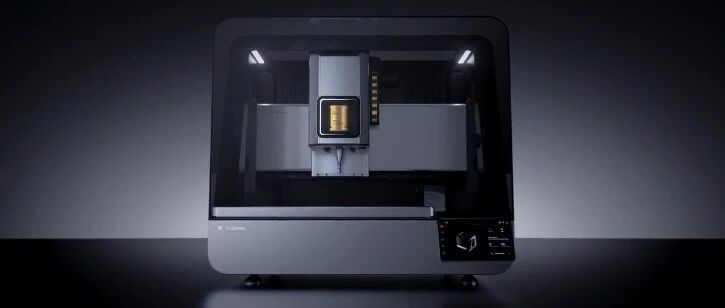
The ToolDance X1, a desktop CNC milling machine from ToolDance Innovation, features a 1500W spindle, a nine-position automatic tool changer, and proprietary AutoCAM software. With optional four-axis and five-axis modules, it targets hardware teams, makers, and small machining workshops needing to prototype parts from aluminum, stainless steel, and even titanium alloys in-house.
Campaign Launch & Strategy
The X1 launched on Kickstarter on October 15, 2026, with a 46-day campaign set to conclude on November 29. Notably, the project surpassed $10 million in funding on its first day. With an average pledge of approximately $5,000 per backer, it's clear that many opted for bundled packages including optional modules.
This rapid funding surge was attributed to an extensive pre-launch strategy. A Hackster editor noted that X1 advertisements had been running on social media for months. The team conducted live cutting demonstrations at events such as IMTS in Chicago, Maker Faire in the Bay Area, and IFA in Berlin. Before launch, they also offered VIP deposit reservations and a limited run of 600 super early bird units for the base model, priced at $2,999 (with an official suggested retail price of $5,999). Payment plans allowing three installments were also available. Bundled options included a five-axis module with dust collection for $4,449, and a five-axis module with liquid cooling for $4,749. Initial reviews primarily focused on hands-on impressions from trade shows and specification analysis.
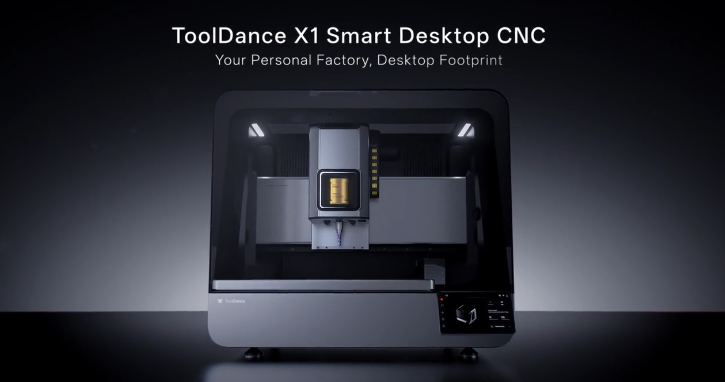
1500W Spindle and Large Machining Volume for Metal Parts
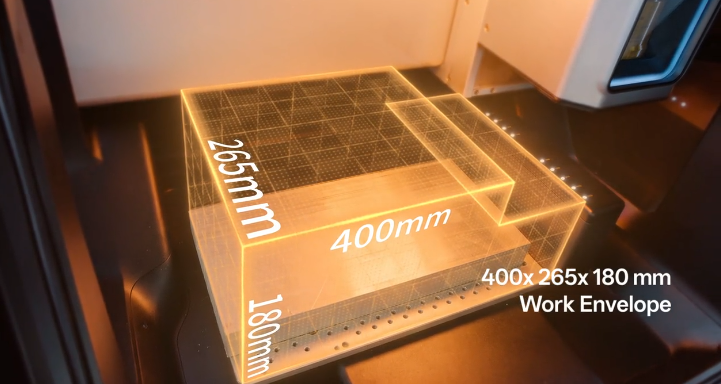
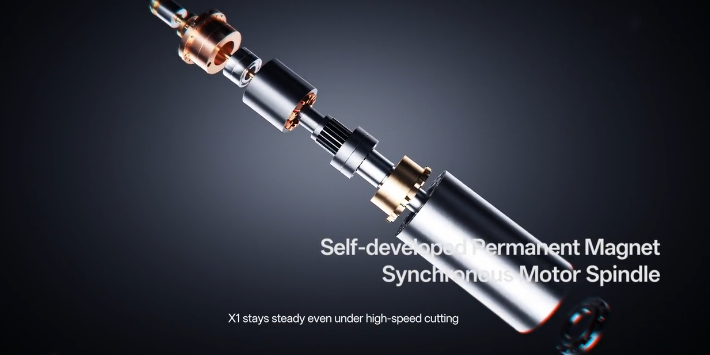
The X1 utilizes a nominal 1500W permanent magnet synchronous spindle, capable of speeds up to 24,000 RPM. It boasts a stated machining range of 400×265×180mm and supports tool shanks up to 10mm.
The official specifications list aluminum, stainless steel, and titanium alloys as compatible materials, indicating this configuration is designed for tasks like creating metal enclosures, fixtures, mechanical brackets, and product prototypes. Compared to desktop machines primarily aimed at wood, plastic, and light-duty machining, the X1 offers a larger machining volume and higher spindle power.
It's important to note that the 1500W is a nominal rated power and does not directly equate to the actual cutting power delivered to the tool. Under 120V power supply, the spindle output is approximately 900-1000W. Actual machining capability also depends on machine rigidity, tooling, cooling, and feed parameters.
Nine-Position Automatic Tool Changer Reduces Downtime
The X1 is equipped with a nine-position automatic tool changer system and RFID tool identification, alongside workpiece probing and tool setting capabilities. This system allows for automatic switching between different tools, minimizing manual tool changes and setup steps during machining.
For small-batch parts requiring continuous milling, drilling, chamfering, and engraving, this design reduces operational burden and helps maintain positional consistency across multiple operations.
However, automatic tool changing is only one part of the machining process. Factors such as tool wear, clamping accuracy, chip evacuation, and the long-term stability of the tool change mechanism all influence the final machining quality. Sufficient real-world data from production units is currently limited.
Four- and Five-Axis Modules Expand Capabilities
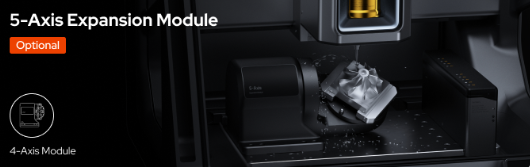
The base X1 model features a three-axis structure, with the fourth and fifth axes available as optional modules. The fourth axis is primarily used for rotary workpiece machining, while the fifth axis handles more complex multi-directional machining requirements, reducing the need for repeated setup and disassembly of intricate parts. This is particularly beneficial for mechanical R&D, small tooling, and complex curved surface parts, allowing more machining faces to be completed in a single setup that would otherwise require multiple adjustments.
However, opting for a five-axis module does not imply automatic programming for all complex parts. Official documentation indicates that some multi-axis automatic programming functions still have development limitations, and simultaneous multi-axis machining of mechanical parts may require third-party CAM software. The five-axis module also occupies machining space, meaning the actual workable dimensions are smaller than the base model's stated range.
AutoCAM Software Lowers Programming Barrier
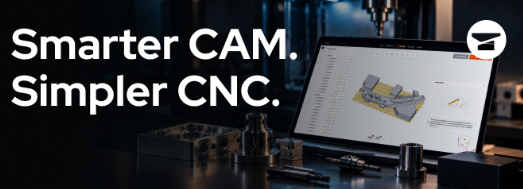
ToolDance Studio offers features such as model checking, machining path generation, parameter settings, and simulation. After users import a model, the software attempts to identify machining features, generate paths, and check for collisions and remaining material. The company states that core CAM functions are subscription-free, while some cloud-based AI features are offered separately.
For engineers with 3D design experience but unfamiliar with CNC programming, this can significantly reduce learning and preparation time. Especially when frequently modifying product structures, the simplification of the software workflow may prove more valuable than merely increasing spindle speed.
However, automatic programming still has its limits. Complex structures, specialized fixtures, and high-precision parts require manual inspection of machining paths, tool selection, and cutting parameters. Software-generated results also cannot replace real-world machining verification.
Liquid Cooling & Chip Evacuation for Continuous Metal Machining
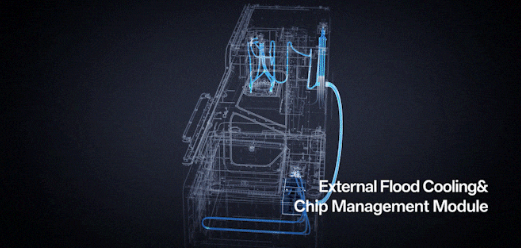
While the X1 comes standard with air blow, liquid cooling and chip evacuation are optional add-ons. The official cooling module features multi-nozzle coolant delivery and is equipped with filtration and chip collection structures, aiming to improve heat dissipation and chip management in the cutting zone.
For machining stainless steel and titanium alloys, proper cooling conditions significantly impact tool life, cutting stability, and surface quality. The modular approach also means users primarily working with wood, plastic, or aluminum don't need to purchase the full configuration upfront.
The trade-off, however, is an increased total investment. Buyers need to consider the cost of cooling modules, tooling, fixtures, shipping, and workspace requirements, rather than solely focusing on the $2,999 base starting price.
Company Background and Market Outlook
ToolDance Innovation (Shenzhen) Technology Co., Ltd. is the operating entity behind ToolDance. Its team comprises talent from DJI, Siemens, and the CNC industry, with the X1 being the company's inaugural product. In August 2026, the company announced the completion of a pre-A round of financing, raising hundreds of millions of RMB. Fangguang Capital led the round, with participation from Yaotu Capital, Jingya Capital, Yuansheng Capital, Look Capital, Jiadao Capital, and continued investment from existing shareholder Source Code Capital. The funds are earmarked for R&D, mass production and delivery of the first product, supply chain optimization, and global market expansion.
Global Growth Insights and Business Research Insights estimate the desktop CNC market to be approximately $550 million to $570 million in 2026, with an overall compound annual growth rate (CAGR) between 7.5% and 8.6%. Five-axis desktop equipment is projected to grow faster, with Dataintelo and QYResearch forecasting 12.1% and 13.1% respectively. The X1 targets the professional desktop CNC and metal prototyping market, a niche with relatively clear purchasing demand: R&D teams seeking faster design validation, small workshops aiming to reduce outsourcing wait times, and engineers wanting to complete small batches of metal parts in-house.
In terms of competition, the NestWorks C500 also positions itself as a desktop metal machining device. Its previous Kickstarter backer price ranged from approximately $2,799 to $3,199, with an official stated retail price of $4,699. Compared to the C500, the X1 offers a larger stated machining range, higher nominal spindle power, and optional five-axis expansion. However, the full configurations and delivery stages of both are not entirely identical, so performance cannot be solely judged by specifications. Another competitor, the Makera Z1, has a public retail price of approximately $1,399, a machining range of 200×200×100mm, a nominal spindle power of 150W, and uses manual quick-change tools. It is better suited for smaller, lighter-duty machining tasks, whereas the X1 increases the price to $2,999 in exchange for a larger workspace, automatic tool changing, and a design geared towards harder metals.
This explains the X1's commercial opportunity: it doesn't need to cater to all desktop CNC users. By effectively serving those who require metal prototyping, frequent revisions, and small-batch production, it has the chance to establish a relatively clear product positioning. It also faces specific pressures: the more complex the equipment, the harder it is to keep down costs for mass production assembly, precision calibration, after-sales maintenance, and software support. If users need to purchase multiple additional modules, the final cost will also be significantly higher than the advertised base price. For R&D teams frequently modifying mechanical brackets, metal enclosures, or small tooling, an in-house machining device can indeed save time spent on outsourcing communication and repeated waiting. The ToolDance X1's appeal lies in integrating a larger machining volume, automatic tool changing, and multi-axis expansion into a desktop machine.
The ToolDance X1's appeal lies in integrating a larger machining volume, automatic tool changing, and multi-axis expansion into a desktop machine.