AI Sleep Monitor Lamp Nears $500K on Kickstarter
Campaign Teardown · · PledgeRadar Editorial
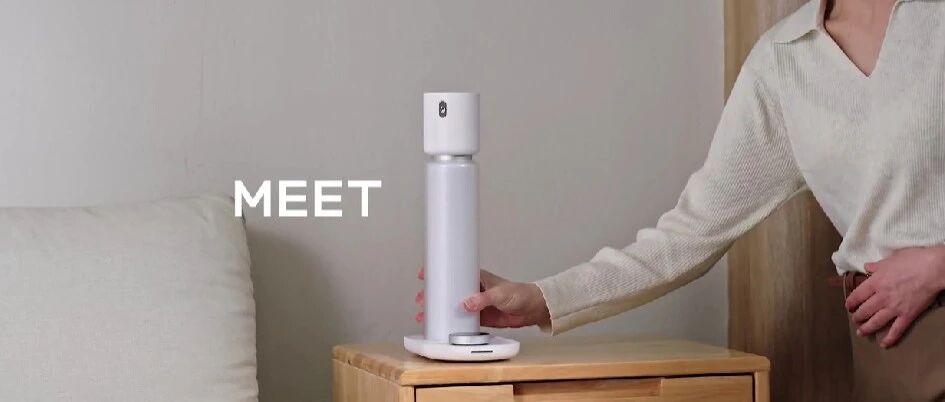
The Sleepal AILamp, developed by Beijing XSmart Technology Co., Ltd., is a non-contact AI-powered bedside lamp designed for comprehensive sleep monitoring. It integrates 60GHz millimeter-wave radar, thermal array sensors, and microphone arrays to provide multi-modal sensing, tracking sleep stages, breathing rate, heart rate, sleep position, and snoring without requiring any wearables. The device also features adaptive light and sound interventions, along with an LLM-driven AI sleep coach, making it ideal for users who prefer not to wear devices to bed or for monitoring the sleep of elderly family members.
Campaign Overview & Credibility
Launched on Kickstarter on May 19, 2026, Sleepal quickly secured $250,000 within its first 10 days and is now approaching the $500,000 funding mark. Notably, the product garnered three CES 2026 Innovation Awards—in Digital Health, Accessibility & Longevity, and Smart Home categories—prior to its crowdfunding launch, which likely significantly boosted backer confidence.
While this marks Beijing XSmart Technology Co., Ltd.'s inaugural crowdfunding campaign with no prior delivery record, the brand completed polysomnography (PSG) comparative validation with hospital sleep labs before launch. It also received professional coverage in medical industry media outlets like SleepReview, an uncommon level of academic endorsement for a consumer-grade sleep device on a crowdfunding platform.
Advanced Sensing Technology
Sleepal's core sensing architecture integrates three distinct detection methods into a single device. A 60GHz millimeter-wave radar monitors chest respiratory movements, heart rate, and micro-movements. A patented light-occluding thermal array sensor tracks heat distribution across the bed surface without emitting visible light, identifying sleep positions and turns. Meanwhile, a microphone array continuously monitors snoring sounds and their patterns.
Data from these three sensor sets is fused in real-time by an on-device AI processor, with sleep stage determination performed by a proprietary cloud-based deep learning model featuring over 100 million parameters. The advantage of multi-modal fusion is that signals prone to interference from a single sensor can be cross-validated and compensated by data from other sensors, theoretically enhancing robustness in complex sleep environments involving bed partners, pets, or room vibrations. However, the standby power consumption of three concurrently operating sensors and their long-term hardware reliability are engineering sustainability metrics that warrant attention in practical use.
Sleepal's algorithm validation utilized polysomnography (PSG), the clinical gold standard for sleep diagnosis. This comparative validation was conducted in collaboration with hospital sleep labs, including those at the Affiliated Nanhua Hospital of Nanhua University, with a joint paper currently in preparation.
Notably, the validation dataset included not only healthy subjects but also patients with mild-to-moderate Obstructive Sleep Apnea (OSA), Periodic Limb Movement Disorder (PLMD), and sleep fragmentation. This directly addresses a long-standing criticism of consumer-grade sleep trackers—that their algorithms are often tested only on healthy populations and fail when encountering real sleep disorders. While the joint paper is not yet formally published, peer review by the independent academic community will be a critical threshold for ultimately validating these accuracy claims.
Advanced Features and Privacy Design
The thermal array sensor identifies a user's sleep position (supine, side, prone, and transitions) and correlates this data with snoring events. This generates a position-respiratory quality correlation report, offering tailored recommendations for positional improvements.
As supine sleeping is a primary factor in exacerbating most snoring cases, the ability to automatically identify and record the association between position and snoring represents a significant functional differentiation from most consumer sleep trackers. However, the adaptability of thermal imaging to sheet thickness, duvet coverage, and distinguishing heat sources on either side of a double bed are variables that could impact positional tracking accuracy in real-world home use.
The device features built-in full-spectrum adjustable lighting, supporting automatic color temperature and brightness adjustments based on circadian rhythms. It gradually dims to warm light during the sleep onset phase and brightens to simulate a sunrise wake-up during light sleep stages. The sound module offers natural white noise and guided audio, actively intervening when specific sleep stages are detected.
The smart wake-up function triggers an alarm within a set time window upon detecting light sleep or REM stages, aiming to avoid abrupt awakenings from deep sleep. The actual user experience of these intervention features heavily relies on the hardware quality of the light and sound components, as well as the algorithm's accuracy in determining wake-up timing. Inaccurate light sleep detection could lead to mistimed awakenings, potentially impacting sleep quality.
All foundational sensing data is processed locally on the device's AI processor, meaning raw radar and thermal imaging data are not uploaded to the cloud. Only processed sleep stage results and analysis reports are synchronized to the companion app. The device is equipped with a physical privacy switch, allowing users to disconnect all sensors at any time.
The absence of a camera is a fundamental distinction between Sleepal and some competing solutions on the market, serving as a direct response to user privacy concerns. While the cloud-based model (with over 100 million parameters) handles more complex personalized analysis, this segmented data processing approach strikes a relatively reasonable balance between user privacy protection and algorithmic capability.
Company Profile and Expertise
The Sleepal AILamp is developed by Beijing XSmart Technology Co., Ltd., a company founded in Beijing in 2022.
The founder, a Tsinghua University graduate, was an original employee of Xiaomi's IoT Platform Department, serving as its General Manager and Head of Cloud Services. Subsequently, they led IoT platform operations at a Fortune 500 smart home company. The industrial design for the Sleepal product was crafted by VISTARTDesign studio, led by Li Ningning, a recipient of iF Gold, Red Dot Best Design, and IDEA awards.
Public information indicates the team comprises nearly 100 individuals, specializing in millimeter-wave radar engineering, RF design, algorithms, and AI systems. The company has previously shipped over 1 million millimeter-wave radar modules, demonstrating mass-production level manufacturing experience.
Market Landscape and Competitive Analysis
The overall sleep technology device market is experiencing rapid growth, valued at approximately $24.85 billion in 2024 and projected to reach around $134.6 billion by 2034, with an estimated CAGR of 18.5%. Within the specific niche of non-contact sleep monitoring, the market is in a critical transition phase, moving from hospital-grade equipment to consumer devices. Traditional PSG devices are expensive and restricted to clinical settings, while consumer wearables, though widely adopted, face accuracy debates. Non-contact radar solutions represent an underexplored middle ground between these two. While several non-contact sleep monitoring products in a bedside lamp form factor exist, including under-mattress pressure sensors, ResMed S+, and some radar-based devices, a solution integrating 60GHz millimeter-wave radar, thermal imaging, and acoustic sensing into a single bedside lamp, validated by PSG, currently lacks a mature direct competitor in the market.
In terms of the competitive landscape, the Withings Sleep Analyzer uses an under-mattress sensor, offering some accuracy in heart rate and breathing detection but lacking positional tracking. Smart home devices like the Samsung SmartThings Station provide partial sleep sensing but are not primary sleep tracking devices. The Google Nest Hub offers non-contact sleep monitoring via radar sensors, but its accuracy and report depth are relatively limited. Sleepal's differentiation lies in its complete closed-loop system of multi-modal sensing fusion, PSG validation, and integrated intervention features, alongside its camera-free privacy-preserving design. The latter is a genuine purchasing driver for users hesitant to place camera-equipped devices in their bedrooms.
Non-contact sleep monitoring is a sub-segment of the sleep technology market characterized by high technical barriers and an evolving competitive landscape. Sleepal has made significant investments in both the depth of its sensing architecture and its clinical validation pathway, distinguishing it from comparable crowdfunding products. Whether it can truly become the definitive solution in this category hinges on the independent academic community's evaluation of its accuracy claims after the joint paper's publication, and the sensing stability performance of the mass-produced product in real-world home environments.
Sleepal's algorithm validation utilized polysomnography (PSG), the clinical gold standard for sleep diagnosis.