MaverickAI AR+AI Smart Glasses Achieve Rapid Kickstarter Success
Crowdfunding Analysis · · PledgeRadar Editorial
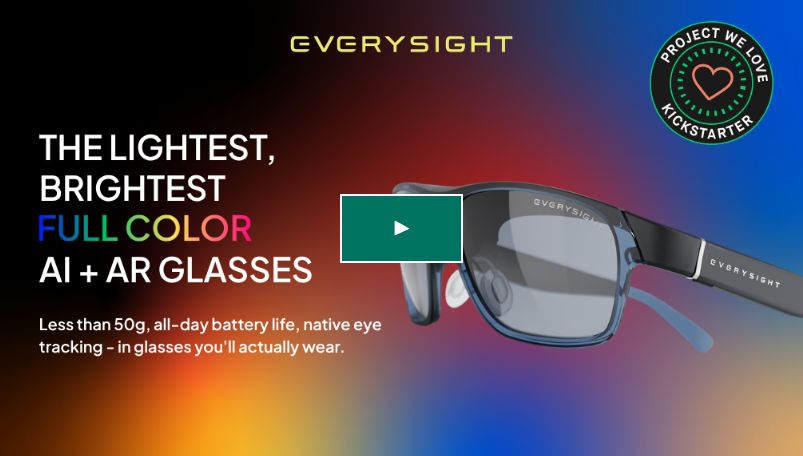
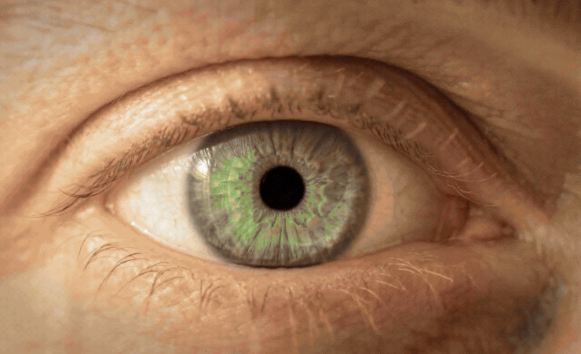
The MaverickAI is a new generation of full-color AR+AI smart glasses engineered for extreme lightness and all-day wear. Designed for multi-modal interaction, it offers users real-time cross-language translation, first-person AI-powered Q&A, and contextual information overlays, making it ideal for daily commutes, international travel, and professional use.
Kickstarter Performance and Early Backer Insights
The MaverickAI project has demonstrated a remarkable crowdfunding performance on Kickstarter. Within just four days, the campaign successfully attracted approximately 1,200 backers, pledging a total of $460,000.
Feedback from the Kickstarter comments section and overseas Reddit communities indicates high expectations among Western backers for the device's native eye-tracking capabilities and future developer SDK, especially given its price point. However, some backers have also raised practical concerns regarding its ability to maintain an 8-hour battery life within its ultra-light 47-gram frame, as well as its long-term thermal management during extended wear.
Core Features Breakdown
MaverickAI's product design showcases a meticulous balance of engineering trade-offs, prioritizing hardware reduction and enhanced user interaction.
By eliminating the redundant heavy local computing and large thermal management modules typical of traditional AR devices, MaverickAI has achieved an impressive total weight of just 47 grams. This significant physical reduction not only addresses the long-standing issue of AR glasses being too cumbersome for daily wear but also provides the essential hardware foundation for its advertised all-day battery life.
The device incorporates an in-lens full-color OLED display with a 28° Field of View (FOV). Rather than aiming for an immersive, light-blocking giant screen, it focuses on overlaying high-contrast information directly within the user's natural field of vision. Crucially, it natively supports custom prescription lenses, resolving the common issue of users with myopia needing to wear multiple pairs of glasses.
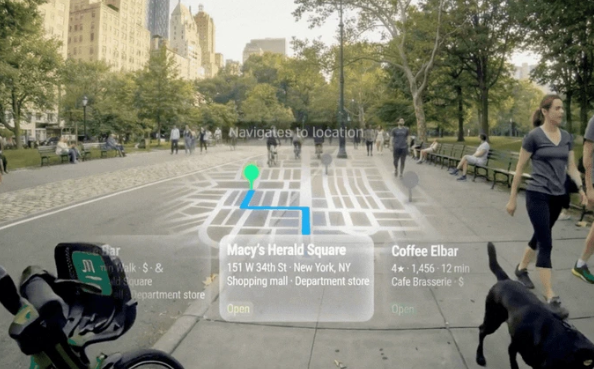
Eye-tracking technology, usually reserved for high-end, bulkier headsets like the Apple Vision Pro, has been integrated into these lightweight glasses. This enables users to select and confirm UI elements through natural eye movements, establishing a truly hands-free, intuitive interaction paradigm.
A built-in AI camera grants the device first-person spatial awareness. Combined with low-latency, cross-language real-time translation algorithms, the glasses evolve beyond a simple display peripheral. They transform into an embodied intelligent agent capable of seeing what the user sees, understanding multiple languages, and providing real-time feedback.
Behind MaverickAI: Everysight's Pedigree
MaverickAI is developed by Everysight, a company founded in 2014 and headquartered in Haifa, Israel. Everysight is a spin-off from Elbit Systems, a global defense technology giant, inheriting military-grade Head-Up Display (HUD) technology. Before venturing into all-scenario AI glasses, Everysight successfully launched Raptor, professional AR glasses for cycling, and secured early institutional funding, demonstrating mature hardware development experience and a robust supply chain.


Market Landscape and MaverickAI's Position
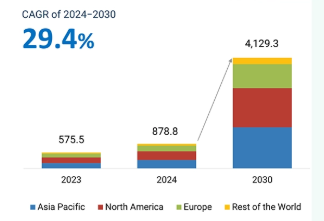
The global smart glasses market is currently at an inflection point. According to industry forecasts, this market is projected to exceed several billion US dollars in the coming years, with a compound annual growth rate exceeding 20%.
The current competitive landscape shows a clear polarization. On one end are devices like Ray-Ban Meta, which have achieved millions in sales with their display-less design, focusing on AI assistants and first-person photography. On the other end are AR manufacturers such as XREAL and Rokid, specializing in immersive holographic big-screen entertainment.
MaverickAI strategically avoids the 'red ocean' of audio-visual entertainment. Instead, it carves out a differentiated competitive niche by targeting 'geek' and business vertical markets with lightweight information prompts, robust AI assistance, and eye-tracking. This approach positions it uniquely in the market.
The deep integration of lightweight full-color AR displays with multi-modal AI perception (such as eye and visual tracking) is poised to be the strongest potential and core driver accelerating the transformation of smart glasses from niche 'geek toys' into mainstream, all-day 'second brains' for the general public.
The deep integration of lightweight full-color AR displays with multi-modal AI perception... is poised to be the strongest potential and core driver accelerating the transformation of smart glasses from niche 'geek toys' into mainstream, all-day 'second brains'.