PledgeRadar Analysis: Wearable Circulation Aid Targets Sedentary Office Workers in Overseas Crowdfunding
Crowdfunding Analysis · · PledgeRadar Editorial
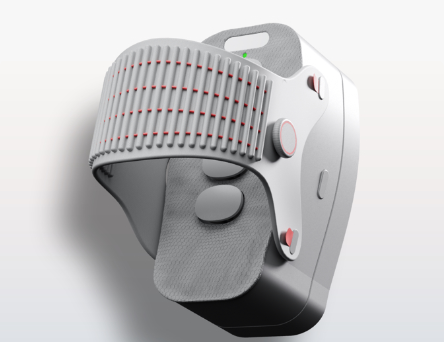
The ARCH wearable circulation aid has currently raised nearly $90,000 from 119 backers on crowdfunding platforms. While the backer count is modest compared to similar projects, a higher average pledge per backer suggests early adopters are making considered purchasing decisions for this medical-grade health wearable.
Key Product Features
ARCH's core technology, dubbed WalkingCycle™, employs micro-actuators to simulate the ankle and calf muscle pump rhythm experienced during walking. It achieves this through alternating positive and negative pressure cycles, with a claimed maximum frequency of 60 'steps' per minute.
Traditional intermittent pneumatic compression (IPC) devices typically operate at lower frequencies with broad pressure application. ARCH's approach, however, emphasizes localized, high-frequency, and directionally controlled pressure. Theoretically, this design more closely mimics physiological venous return mechanisms, aiming to alleviate lower limb venous stasis and tissue edema during prolonged periods of sitting.
While this technical approach has a sound theoretical basis, optimal parameter settings and clinical efficacy still require validation through controlled trial data. The product is currently in its early prototype testing phase.
Adaptive System: Real-time Physiological Feedback and Machine Learning
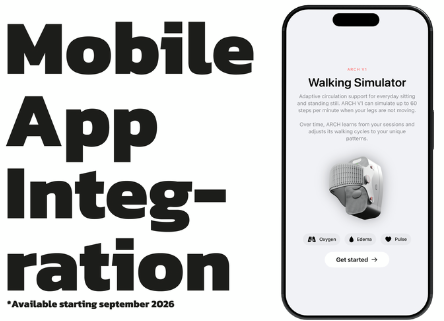
The ARCH device integrates heart rate, blood oxygen (SpO2), and bioimpedance sensors. The bioimpedance sensor specifically monitors edema levels in real-time, while a machine learning model dynamically adjusts the device's rhythm intensity and intervention patterns.
If the underlying algorithms are thoroughly trained and validated, this closed-loop system could provide on-demand intervention, automatically intensifying support upon detecting signs of venous stasis or early edema. However, critical implementation risks include sensor signal stability in wearable contexts (e.g., contact noise, posture changes) and the quality and breadth of the model's training data. These factors are paramount to the adaptive function's safe and reliable operation.
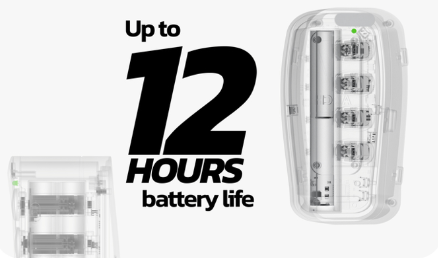
Portable, All-Day Design with 12-Hour Battery Life
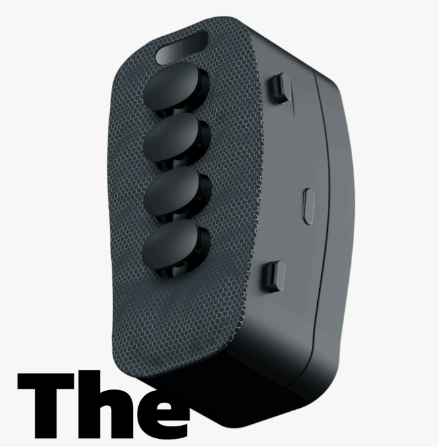
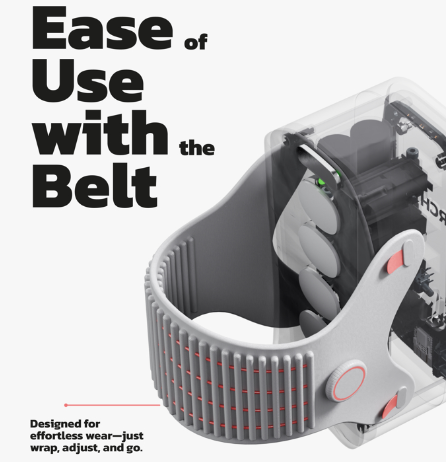
ARCH is designed as a lightweight, wireless wearable, boasting a nominal 12-hour battery life. Its design objective is to support all-day use in prolonged sedentary environments, including office work, air travel, and daily commutes.
Integrating high-frequency actuators, multi-mode sensors, and a long-lasting battery within such a compact form factor presents significant engineering challenges for mass production. Key concerns include thermal management and mechanical durability (e.g., vibration wear, sealing), which will require rigorous testing to ensure long-term product reliability.
ARCH was founded by an interdisciplinary team with backgrounds spanning vascular health and biomedical engineering, who have completed multiple rounds of prototype iteration during the R&D process.
Market Overview
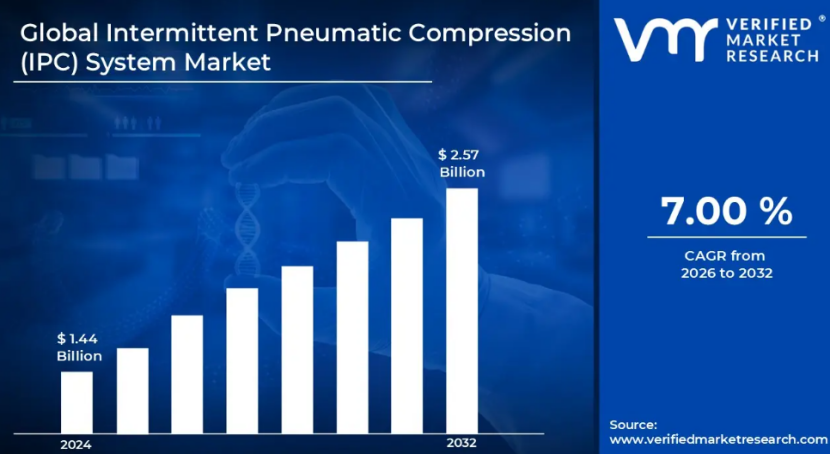
The broader market for wearable medical and health management devices is experiencing rapid growth, with various institutions projecting a double-digit compound annual growth rate throughout the 2020s. Within ARCH's specific niche — circulation-promoting/intermittent pneumatic compression devices — the current market size is estimated to be in the hundreds of millions to a billion dollars. Demand is fueled by several factors, including increased consumer spending on sports recovery, prevention and treatment of chronic venous diseases, an aging global population, and the prevalence of sedentary office work. The overall market trend is favorable.
The competitive landscape for these devices is currently dominated by established players in the sports recovery sector. Hyperice's Normatec series and Therabody's JetBoots are highly recognized products, primarily inflatable compression boots for the thighs and calves, designed for post-exercise recovery and professional rehabilitation, requiring users to remain stationary during use. ARCH, however, targets a distinct niche: 'use-while-sitting' functionality combined with micro high-frequency actuators and ML-driven adaptivity. This specific segment currently lacks large-scale direct competitors, indicating a clear differentiation opportunity. However, this also implies higher market education costs and the necessity of establishing a robust chain of clinical effectiveness evidence to earn mainstream user trust.
Wearable circulation assistance devices represent a sub-market with genuine demand and untapped potential. ARCH's ultimate success will hinge on its ability to provide compelling clinical data, demonstrating that its 'walking while sitting' concept offers tangible, proven benefits beyond a promising idea.
Proving that 'walking while sitting' is more than just a good concept.