Mendi Brain Trainer: A $2.14 Million Crowdfunding Campaign's Unfulfilled Pledges
Crowdfunding Analysis · · PledgeRadar Editorial
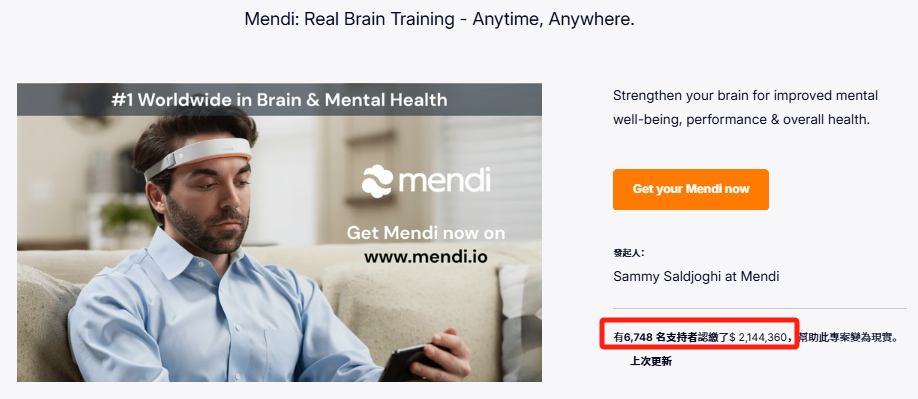
The Mendi brain trainer, launched on Kickstarter in 2020, successfully raised $2.14 million from 6,748 backers. This significantly exceeded its initial goal, indicating strong market demand and backer confidence. However, backer feedback suggests the project largely failed to deliver, with numerous complaints about unreceived products. Our ongoing analysis of crowdfunding campaigns reveals that approximately 70% either completely fail to ship or only partially fulfill orders, with only a small fraction fully honoring their commitments.
Key Selling Points
Mendi aimed to bring clinical neurofeedback training, traditionally costing hundreds or even thousands of dollars per session, into the home. It promised clinical-grade brain function enhancement through a wearable headset and a companion app, eliminating long waits and high consultation fees.
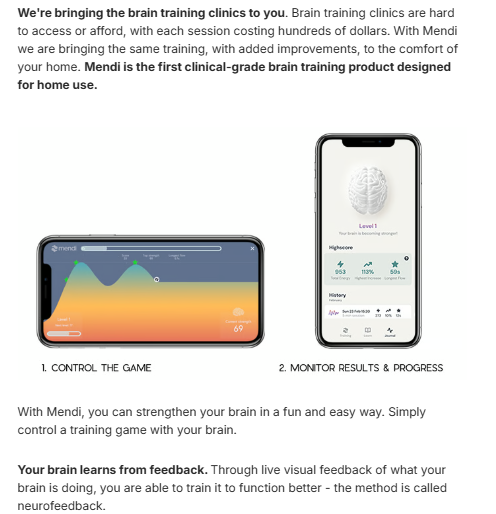
The headset utilized functional near-infrared spectroscopy (fNIRS) technology to monitor blood flow and oxygenation levels in the prefrontal cortex in real-time. By visualizing 'brain fuel levels,' it aimed to help users actively regulate and enhance brain activity through specially designed games for relaxation or focus.
Training was gamified, allowing users to control in-game spheres with 'brainpower.' This approach aimed to make 5-10 minute sessions enjoyable and easy to maintain, with an in-app training diary and progress curves to encourage long-term adherence.
Compared to offline neurofeedback therapy costing hundreds of dollars per session, Mendi offered a one-time device purchase with no recurring subscription fees. It also included a '30-day money-back guarantee' for dissatisfaction, significantly lowering the barrier to entry.
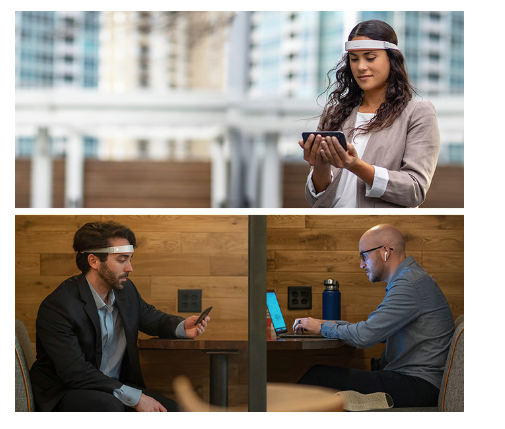
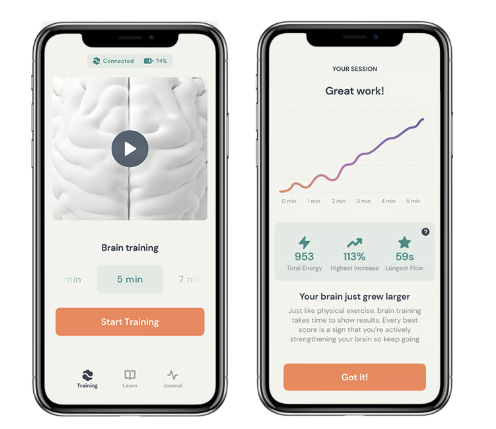
Brand Analysis: Deconstructing the Mendi Campaign's Narrative
Mendi's stated mission was to make advanced brain training technology accessible, bringing neurofeedback services typically reserved for elite athletes, executives, and astronauts to every household.
The core team was presented as comprising experts in neuroscience, signal processing, and hardware engineering, with years of focus on the research, development, and clinical validation of wearable neurofeedback devices.
Mendi positioned itself with the slogan 'clinical-grade quality, home-use convenience,' targeting individuals concerned with cognitive performance, emotional regulation, and overall brain health. It aimed to be a pioneer in the home brain fitness market.
Industry and Market Analysis
The global neurofeedback systems market is projected to reach approximately $1.4 billion by 2025, growing to $2.03 billion by 2030, with a compound annual growth rate (CAGR) of about 7.7% from 2025-2030. Another report suggests the overall neurofeedback market (including various devices and software) could reach $1.44 billion in 2025 and grow to $2.37 billion by 2032, with an average annual growth rate of 7.3%.
Key drivers for this product category include three main factors: increased mental health awareness, coupled with rising incidence rates of neuropsychiatric conditions like depression, anxiety, and ADHD, drives users to seek non-pharmacological interventions; demand for non-invasive therapies, as neurofeedback is perceived as safe, without side effects, and offers quantifiable, visualizable training processes, leading to high user acceptance; and the penetration of home wearable devices, with the widespread adoption of wearable health trackers and smartwatches providing a technological and user habit foundation for the promotion of home-use neurofeedback devices.
The application scenarios for these products have expanded from traditional areas like ADHD, PTSD, and insomnia to include cognitive enhancement, emotional regulation, and prevention of age-related cognitive decline. Geographically, North America represents the largest market, Asia-Pacific shows the fastest growth, and adoption is accelerating in Europe and the Middle East.
Current major players include NeurOptimal, NeuroSky, and EMOTIV. Mendi differentiated itself with its fNIRS technology and home-use positioning, contrasting with competitors primarily using EEG. As technology advances and user awareness grows, home neurofeedback devices are expected to become a standard for brain health management, with market size and penetration continuously increasing. Products like Mendi, if they can deliver on their advertised product effects, possess the potential to quickly capture consumer interest through a clinical-grade experience and gamified training model.
Our ongoing analysis of crowdfunding campaigns reveals that approximately 70% either completely fail to ship or only partially fulfill orders, with only a small fraction fully honoring their commitments.