The $1.18 Million Wearable Hydration Tracker: A Kickstarter Case Study
Crowdfunding Analysis · · PledgeRadar Editorial
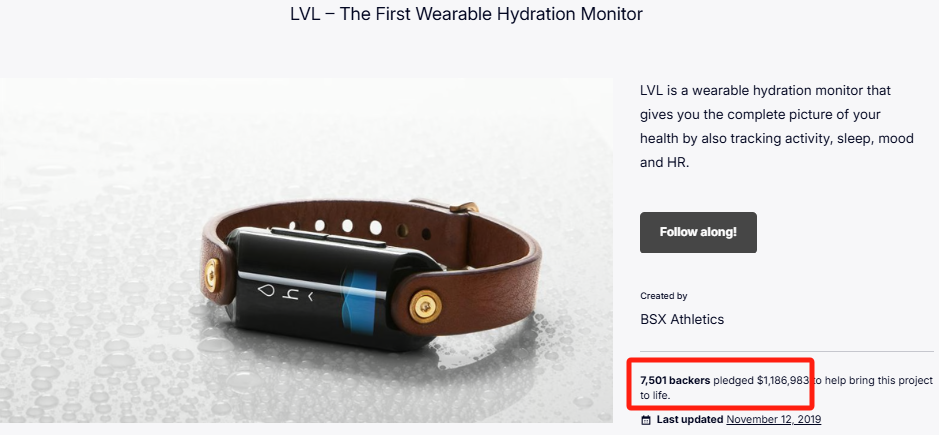
LVL, the inaugural wearable hydration monitor launched by Austin-based sensor company BSX Athletics, debuted on Kickstarter on September 13, 2016. Over 44 days, it garnered support from 7,501 backers, ultimately raising $1.187 million. The campaign concluded on October 26, 2016, with updates continuing until November 11, 2019. In total, 30 updates were posted, alongside 4,380 comments, many of which expressed user frustration over unfulfilled orders and accusations of the project being a scam.
Key Features and Value Proposition
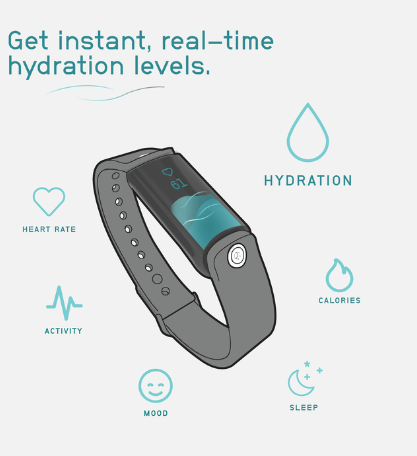
LVL's core innovation was its real-time hydration monitoring, utilizing Near-Infrared Spectroscopy (NIRS) sensing technology. This method involved infrared light penetrating subcutaneous tissue to generate spectral maps, instantly calculating internal hydration levels and distribution. It also provided personalized rehydration recommendations based on sweat loss.
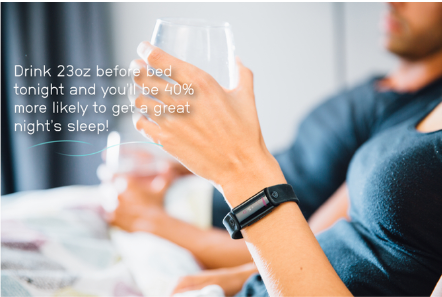
Beyond hydration status, LVL offered comprehensive tracking of multiple health metrics, including heart rate, activity levels, sleep quality, and mood. This aimed to provide users with a holistic health profile and tailored advice.
The device boasted precise heart rate measurement, with its infrared light sensor capable of penetrating tissue up to 10 times deeper than green light technology. This resulted in medical-grade monitoring accuracy, with a heart rate error margin of just ±2.7 BPM.
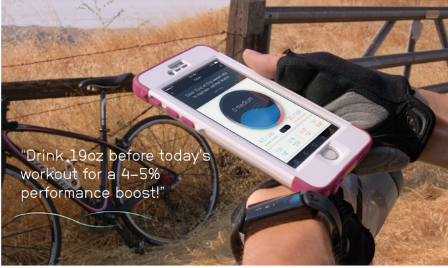
LVL featured an OLED touchscreen display with a 4-day battery life, showing real-time status. It supported Bluetooth Low Energy (BLE) connectivity, allowing it to link with smartphones, smartwatches, and even in-car computers to push real-time rehydration reminders and performance optimization suggestions.
During the crowdfunding campaign, backers who shared the project were rewarded with a limited-edition wristband, designed to boost social spread and user engagement.
BSX Athletics: A Vision Born from Experience
Founded in Austin, Texas, BSX Athletics initially focused on Lactate Threshold (LT) sensing technology. In 2015, the company launched its first product, the BSX insight lactate threshold sensor, becoming the world's first manufacturer to achieve real-time wearable lactate monitoring.
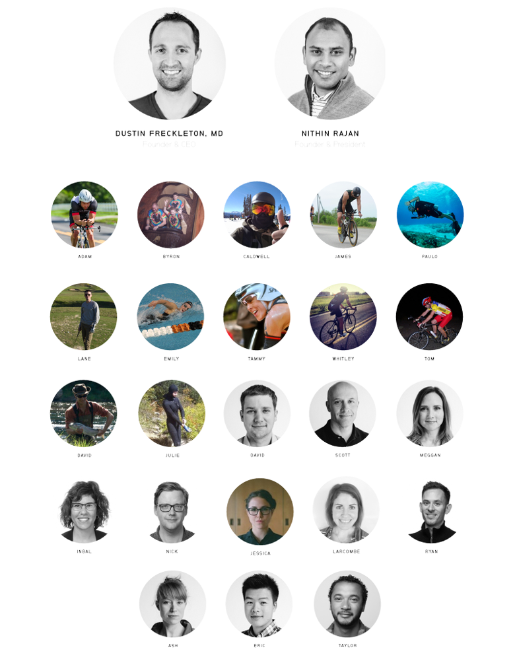
The inspiration behind BSX's focus on hydration came from a deeply personal experience of founder and CEO Dustin Freckleton. While in medical school, he suffered a stroke due to dehydration, enduring partial paralysis before making a full recovery. This incident ignited his passion for integrating medical-grade optical sensing technology into wearable devices.
The project's design was handled by the internationally renowned design firm frog, ensuring the product combined cutting-edge technology with mass production feasibility. Despite initial delays due to technical complexity, BSX continuously iterated its algorithms and conducted comparative sweat and blood experiments with over 250 subjects to validate the accuracy of its hydration monitoring.

Market Landscape for Wearable Technology
The global wearable technology market was valued at approximately $84.2 billion in 2024, with projections to reach $98.47 billion in 2025. It is expected to grow at a Compound Annual Growth Rate (CAGR) of approximately 13.6% between 2025 and 2030.
Within this broader market, the global wearable sensor market is estimated at $4.88 billion in 2025, projected to grow to $10.54 billion by 2030, with a CAGR of 16.65%. Health and wellness monitoring accounts for nearly 46% of this sub-market, while smartwatches hold a 51% market share. Biosensors are identified as the fastest-growing segment within the sensor domain.
The global wearable sweat sensor market was valued at approximately $4.41 billion in 2024, expected to reach $4.93 billion in 2025, and grow at an 11.82% CAGR to $13.47 billion between 2025 and 2034. Furthermore, the overall hydration monitoring system market is anticipated to grow at a CAGR of 7.1% from 2025 to 2031, with applications spanning medical, sports, military, and general consumer markets.
Competitive Edge and Future Prospects
Traditional wearable brands like Apple, Fitbit, and Garmin primarily focus on heart rate, sleep, and activity tracking. BSX aimed to carve out a differentiated competitive advantage through its exclusive NIRS-based hydration monitoring.
Looking ahead, as demand for precise health management and personalized medicine continues to rise, specialized hydration monitoring devices are poised to capture significant market opportunities.
BSX's brand vision was 'to enable everyone to monitor and optimize their physical condition at any time.'