Loona Deskmate: AI Desktop Robot Aims for $1 Million on Kickstarter
Crowdfunding Analysis · · PledgeRadar Editorial
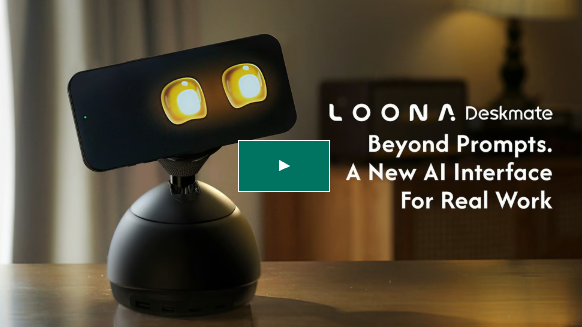
The Loona Deskmate, a desktop AI collaboration robot integrating a multimodal large model with precision servo control, is making waves on Kickstarter. By utilizing a user's smartphone as its 'brain,' it aims to automate office tasks across applications and provide an emotionally engaging, ever-present companion. The device targets heavy desktop users, content creators, and tech enthusiasts seeking novel experiences.
Crowdfunding Momentum and Community Reception
Upon launching on Kickstarter, the Loona Deskmate project immediately garnered significant attention. The development team benefits from substantial prior popularity within the crowdfunding community, backed by a track record of successfully delivering million-dollar campaigns. This new desktop version has attracted considerable interest from professionals and tech aficionados. Feedback from overseas tech communities indicates high expectations for its claimed capabilities, such as understanding on-screen content and automating cross-software workflows, which many believe represents the future of AI hardware.
However, some backers have raised practical concerns regarding the long-term impact on smartphone battery health and heat generation from continuous screen-on operation and visual/voice computation. The design's clever approach, however, bypasses the need for independent processing power by leveraging the smartphone, thereby maximizing the integrated hardware and software experience.
Core Product Features
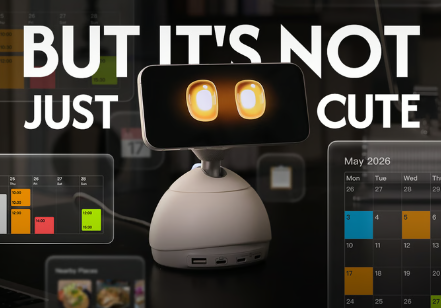
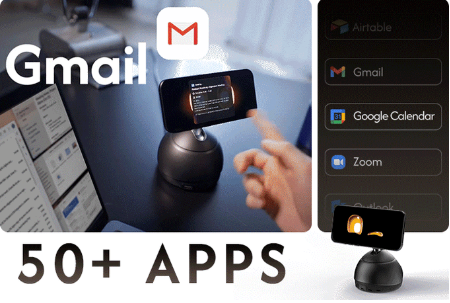
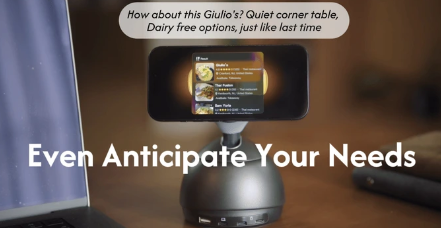
The Loona Deskmate is positioned not merely as a conversational interface but as a genuine digital colleague. Its cross-application AI workflow engine is designed to understand vague commands and automate tasks across over 50 mainstream applications, including Gmail, Slack, and calendars. It focuses on direct intent fulfillment, transforming a single request into multiple concrete actions and eliminating the repetitive task switching between different software.
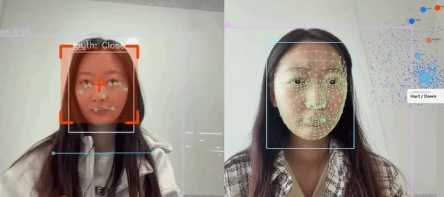
The device offers screen-level contextual awareness and seamless interaction. Users can hover their mouse over on-screen content and ask questions directly. Loona uses desktop synchronization to interpret documents or web pages and displays answers within the user's workspace. With integrated lip-reading and eye-tracking technology, it boasts an average response time of 0.5 seconds, capable of handling interruptions and topic shifts fluidly.
Internally, three quiet brushless servo motors enable precise yaw, pitch, and roll movements. Notably, its expressions, eye movements, and body tilts are not pre-recorded animations but are dynamically generated in real-time by the large AI model running on the smartphone, based on the current context and user's emotional state. This dynamic and lifelike feedback creates the impression of a truly interactive entity on the desk.
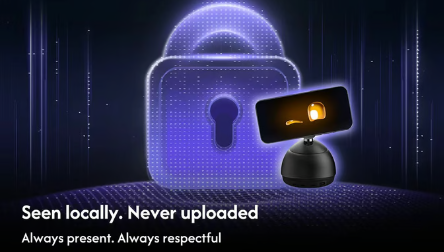
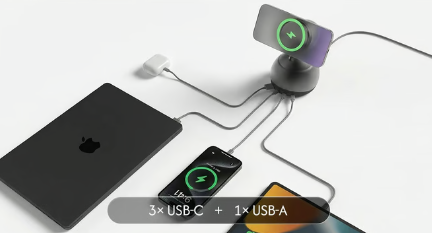
The magnetic docking of the smartphone serves as both its face and brain, addressing processing power needs while prioritizing privacy. All biometric data, including facial expressions and emotional states, are processed locally on the phone, never uploaded to the cloud. Furthermore, the base incorporates GaN charging technology, featuring three USB-C and one USB-A port. This allows for simultaneous charging of two MacBooks and a smartphone with a single power cable, also helping to declutter the workspace.
Market Context and Strategic Positioning
Loona Deskmate represents another significant crowdfunding project in the consumer robotics sector, with its development team being seasoned players. The company's previous product, the first-generation Loona robot dog, achieved millions of dollars on Kickstarter and gained global popularity among tech enthusiasts. Their expertise lies in integrating complex mechanical algorithms with intuitive emotional interactions. Combined with established hardware mass production experience and supply chain management, the commercialization prospects for this new productivity tool are considered highly probable.
The current AI hardware market is at a critical juncture. Portable AI devices like the Rabbit R1 and Humane AiPin have faced challenges due to limitations in size, battery life, and thermal management. In contrast, desktop AI hardware, benefiting from stable power and focused work environments, is emerging as a promising new market segment.
Loona Deskmate strategically avoids the high costs of developing proprietary chips and operating systems. Instead, it leverages the abundant processing power of smartphones. By merging embodied AI, automated office functions, and a desktop charging hub, it addresses key user needs and establishes a strong competitive advantage over generic desktop accessories. The integration of idle smartphone processing power, deep multimodal AI inference, and precise servo systems has the potential to elevate desktop AI hardware from mere efficiency tools to entities offering both emotional value and productivity, opening up new possibilities in the desktop economy.

The Loona Deskmate cleverly avoids the pitfalls of building its own processing power, instead utilizing the smartphone's capabilities to deliver an optimized hardware and software experience.