VIZOZ1Pro AR Glasses: Can TOZO's Ultra-Light Design Reach $1M on Kickstarter?
Crowdfunding Analysis · · PledgeRadar Editorial
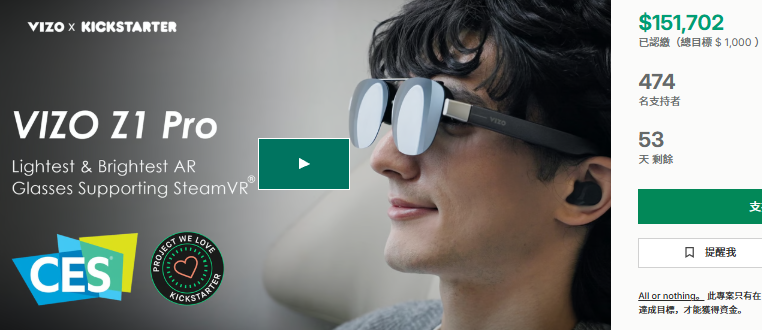
The VIZOZ1Pro is an ultra-lightweight AR near-eye display designed for both entertainment and productivity. It emphasizes extremely high brightness, portability, and a high refresh rate, making it suitable for commuting, private cinema experiences, and extending laptops or game consoles into a personal large screen. Launched on Kickstarter, the VIZOZ1Pro campaign has already raised over $100,000 in just three days. While this figure is modest within the AR glasses category, it signals strong market enthusiasm for such products. The project's physical demonstration at CES likely built trust, but its current marketing efforts appear underdeveloped, leaving the path to its potential $1 million goal uncertain.
VIZOZ1Pro: Core Product Features
The VIZOZ1Pro is positioned as a versatile AR near-eye display, developed by TOZO, an established Amazon vendor known for its TWS (True Wireless Stereo) products. Prior to its crowdfunding launch, the team showcased the device at major exhibitions like CES, a common strategy for consumer electronics startups to gain media attention and market validation.
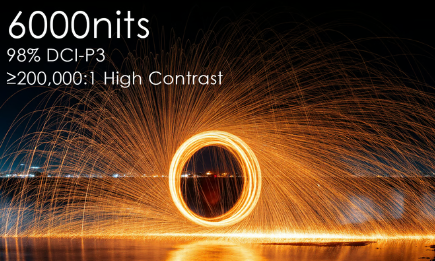
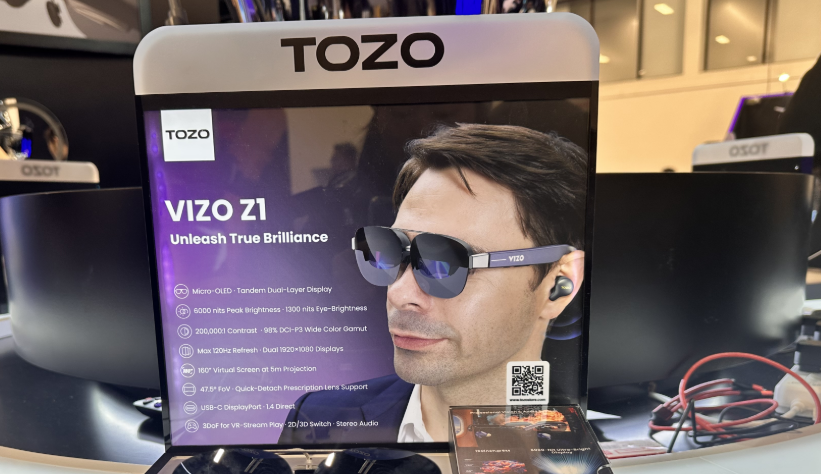
**Extreme Brightness and Color Fidelity:** The device boasts a peak brightness of 6000 nits (with approximately 1500 nits reaching the eye) and a color gamut of 98% or higher. This brightness aims to address a critical pain point of near-eye displays: visibility in bright environments. If actual measurements approach these claims, it would significantly enhance outdoor viewing during commutes and preserve high-light details in HDR content.
Achieving such high brightness presents engineering trade-offs. Sustained extreme brightness generates significant heat, posing challenges for the device's heat dissipation, thermal management strategies, and battery life. While short bursts of high brightness are feasible, prolonged use would accelerate battery drain and trigger thermal throttling, necessitating a practical balance in product design.
**Ultra-Lightweight Design and Comfort:** Weighing approximately 63 grams, the VIZOZ1Pro offers a feel closer to traditional eyeglasses. This ultra-light body significantly reduces neck and nose bridge fatigue during extended wear, enhancing portability and encouraging daily use. Achieving this weight while maintaining high brightness and effective heat dissipation requires aggressive material engineering and module design. Such lightweighting often implies compromises in battery life or sustained maximum brightness, representing a typical hardware design balance.
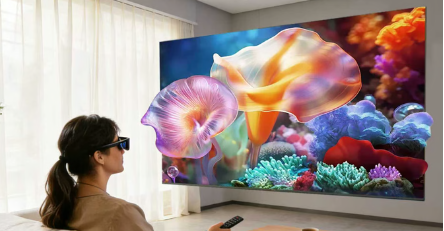
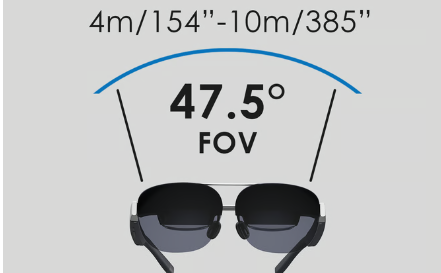
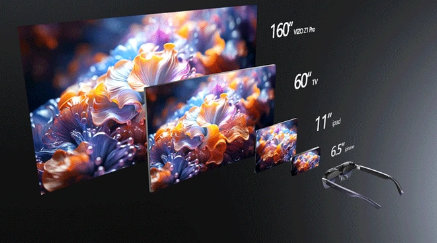
**High Refresh Rate and Wide Field-of-View Full HD:** The device combines Full HD resolution with a 120Hz refresh rate and an approximate 47.5° field of view, aiming to deliver an immersive viewing experience equivalent to a 100-inch screen or larger. This parameter combination offers a distinct advantage in visual fluidity and scene immersion, particularly for fast-paced content like games and sports videos.
However, the clarity of details also depends on factors such as lens design, pixel density, and optical distortion control. Actual comfort levels across scenarios like reading text, watching movies, and gaming will vary significantly based on the quality of optical tuning—a crucial variable for consumer experience.
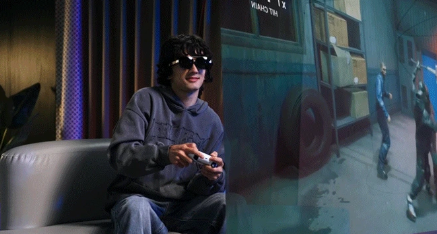
**Multi-Platform Compatibility and SteamVR Support:** The VIZOZ1Pro is advertised to support plug-and-play connectivity across multiple platforms, including SteamVR, game consoles, and mobile phones, allowing users to flexibly switch usage scenarios. SteamVR support means it can serve as a lightweight entry point into the VR/AR ecosystem, significantly lowering the barrier to entry.
While multi-platform support is a clear advantage, it also necessitates ensuring consistency in control and tracking solutions, managing input latency, and maintaining driver compatibility across different platforms. These factors directly impact actual playability and system stability, requiring manufacturers to invest substantial engineering resources in driver development and compatibility testing.
**Diopter Adjustment and Optical Adaptation:** The device offers independent myopia adjustment, allowing users with nearsightedness to achieve a clear visual experience without additional corrective lenses. This design detail enhances the product's usability and broadens its market appeal.
Market Landscape and Competition
The wearable display and near-eye augmented reality market is experiencing rapid growth, though market size estimates from different research institutions vary significantly, primarily depending on whether they include enterprise/industrial AR, consumer smart glasses, head-mounted displays, and mixed reality segments.
According to multiple industry reports, the smart glasses and AR-related market is projected to expand at a very high compound annual growth rate in the coming years. Research from MarketsandMarkets indicates this market is rapidly growing from a near-billion-dollar scale to multi-billion dollars. From a shipment perspective, Xreal has achieved hundreds of thousands of units in certain quarters, capturing a significant market share in consumer AR devices, demonstrating the existence of scaled players in the lightweight, affordably priced consumer AR market.
In terms of the competitive landscape, the VIZOZ1Pro faces multi-layered rivals. Xreal, with its focus on lightweight consumer AR and portable screen mirroring, has established a strong market position and brand recognition. Manufacturers like Vuzix and Rokid lean more towards enterprise and industrial applications. Meanwhile, Meta's Ray-Ban series, rumored Apple products, and head-mounted devices from HTC and Pico exert greater competitive pressure at the ecosystem and upstream technology levels.
The growth of the consumer portable AR market is driven by scenarios such as commuting entertainment, personal cinema, and light gaming—areas perfectly aligned with the VIZOZ1Pro's product positioning. In contrast, enterprise and industrial AR, focused on professional applications and higher profit margins, constitute a different market segment.
Portable near-eye displays present clear growth opportunities in commuting entertainment, personal large screens, and light immersive gaming. However, their potential to become mainstream hinges on real-world performance in terms of sustained outdoor high visibility, battery life, thermal management, and low-latency interactive compatibility with ecosystems like SteamVR.
While the physical demonstration at CES likely built trust, the project's marketing currently appears underdeveloped.