Avegant Glyph: The 2014 Personal Cinema Concept That Raised $1.5 Million
Crowdfunding Analysis · · PledgeRadar Editorial
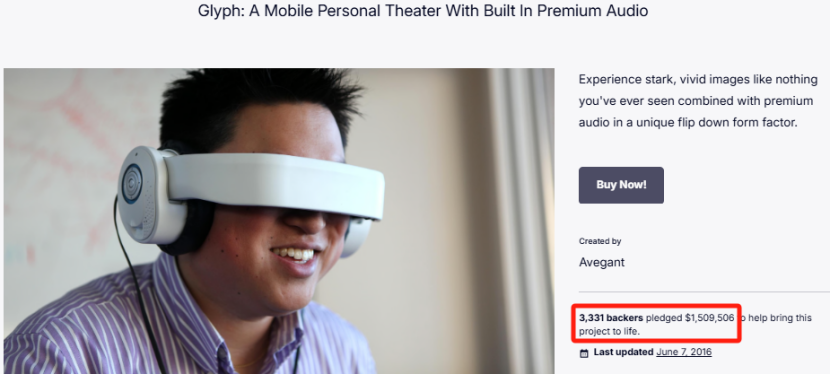
The Avegant Glyph's performance on Kickstarter was nothing short of phenomenal. Initially setting a funding goal of $250,000, the project far exceeded expectations, attracting 3,331 backers and raising over $1.5 million – more than six times its original target. This impressive achievement was attributed to the product's unique flip-down portable design, high-definition projection technology, and exceptional audio quality. Upon its launch, the project quickly garnered widespread attention from tech media and digital enthusiasts, with numerous tech bloggers and review sites offering high praise. The crowdfunding success not only validated a strong market demand for innovative personal entertainment devices but also laid a solid financial foundation for Avegant's subsequent product development and market expansion.
Key Product Features
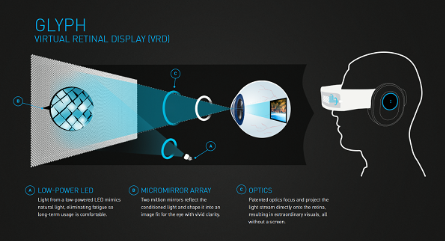
The Avegant Glyph featured Virtual Retinal Display (VRD) technology, which utilized millions of micromirrors to project images directly onto the user's retina. This innovative approach aimed to eliminate the pixelation found in traditional displays, providing sharp, clear visuals with vibrant colors and a viewing experience designed to reduce eye strain.
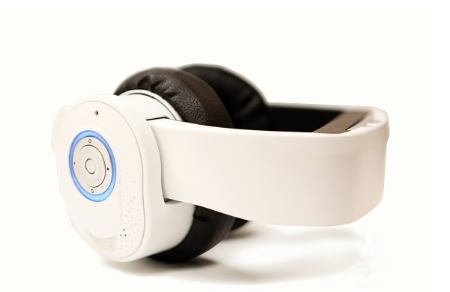
A key design innovation was its flip-down mechanism, offering a dual-mode experience. In 'Personal Cinema Mode,' the visor flipped down for an immersive video viewing experience. When raised, it converted into 'High-End Headphone Mode,' functioning as a professional-grade audio device with active noise cancellation and a 20Hz-20kHz frequency response, maximizing utility and portability.
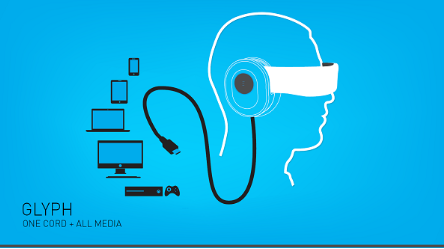
The Glyph boasted broad compatibility, supporting standard HDMI without requiring proprietary converters. It was designed to work with a wide array of devices, including iPhones, Android devices, PCs, game consoles, and even drones. Its plug-and-play functionality meant no special software or drivers were needed, making it versatile for everything from daily entertainment to professional FPV (First-Person View) flying.
For optimal viewing comfort, the Glyph included professional-grade visual adjustment features. It supported personalized Interpupillary Distance (IPD) adjustment and offered a diopter compensation range from +2 to -6, allowing myopic users to enjoy clear imaging without their glasses. A detachable headband further enhanced comfort for extended viewing.
The Glyph's portable design emphasized modularity, with a detachable headband for easy storage and transport. It was optimized for mobile scenarios, catering to the needs of travelers and outdoor enthusiasts. Industrial-grade materials and manufacturing processes were employed to ensure long-term durability and stable performance.
Market Landscape and Industry Analysis
Headquartered in Redwood City, California, Avegant began as an innovative startup focused on visual display technology. Following its significant Kickstarter success, the company secured approximately $9.4 million in subsequent venture capital funding, providing substantial financial backing for advanced product development and market expansion. However, despite initial success and funding, the project ultimately faltered, drawing considerable criticism from backers on Kickstarter regarding its delivery.
From an industry positioning perspective, the Avegant Glyph was not a traditional fully immersive VR device. Instead, it focused on delivering a personal cinema and high-quality audio consumption experience. Its target demographic comprised digital consumers who frequently traveled and demanded superior audiovisual experiences. The product's light field display and retinal projection technologies also laid important technical groundwork for future Extended Reality (XR) and Augmented Reality (AR) applications, demonstrating significant foresight.
Regarding market opportunities, the limitations of smartphones and tablets for travel entertainment were becoming increasingly apparent, driving a growing consumer demand for portable, high-quality audiovisual devices. The Glyph's cinema-grade viewing experience aimed to fill this market gap, offering a clear differentiated competitive advantage. Its strong Kickstarter performance and positive media reviews underscored a genuine and robust market appetite for such innovative personal entertainment devices.
However, the product also faced several challenges. Firstly, its weight: a relatively heavy chassis could impact long-term wearing comfort, potentially affecting mainstream user adoption. Secondly, the price point was a significant factor; early bird pledges on Kickstarter started at $499, with the official retail price reaching $699. This pricing was considered high for average consumers, which could limit the product's market penetration.
A decade later, the market has become increasingly competitive, with challenges from traditional VR devices, AR glasses, drone FPV equipment, and other personal cinema head-mounted displays. In summary, the Avegant Glyph, as a groundbreaking media wearable from 2014, excelled in technological innovation, market positioning, and user experience. Even with the subsequent commercial success of similar devices a decade later, the Glyph highlighted the ongoing need for continuous improvement in product comfort, pricing strategy, and market education.
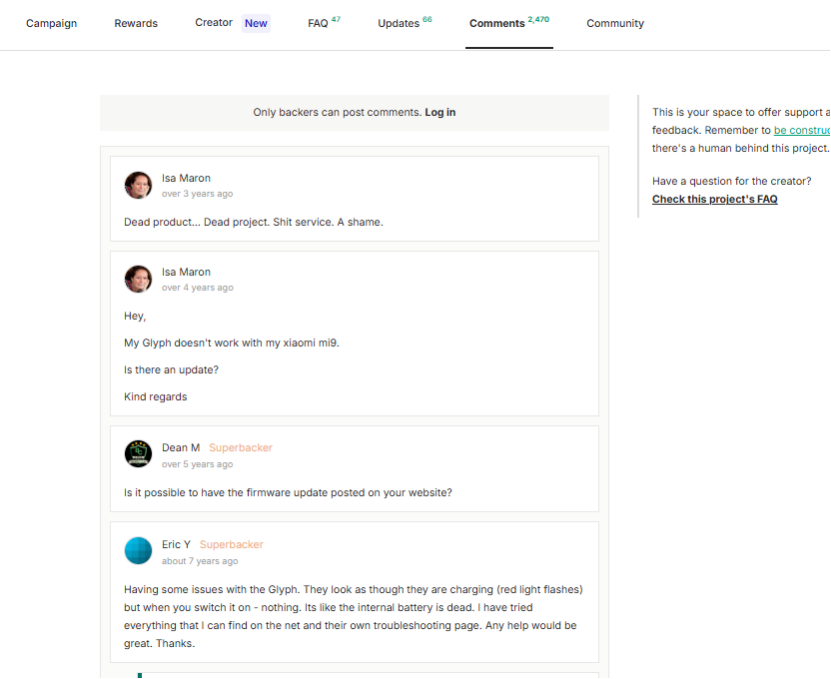
Despite initial success and funding, the project ultimately faltered, drawing considerable criticism from backers on Kickstarter regarding its delivery.