WiscmakerX1 DTF Printer Exceeds $660K on Kickstarter, Driven by Auto-Maintenance Innovation
Crowdfunding Analysis · · PledgeRadar Editorial
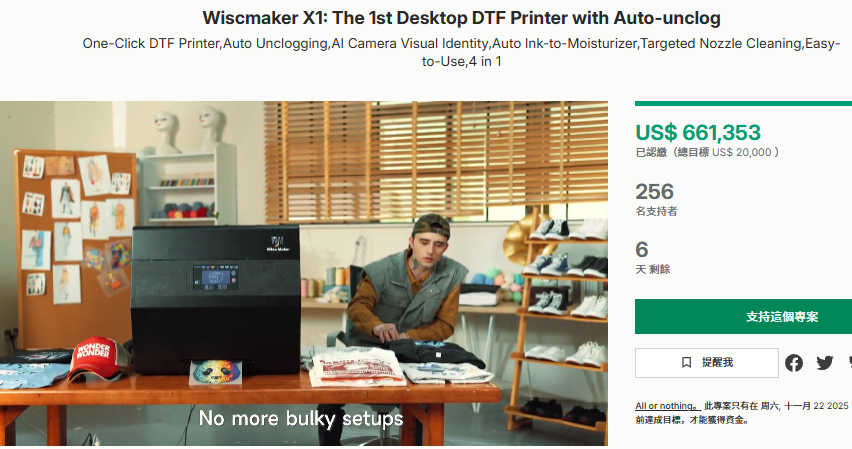
Launched on Kickstarter on October 23rd, the WiscmakerX1 DTF printer quickly amassed approximately $660,000 from 256 backers within 20 days. DTF (Direct-to-Film) printers are currently a hot commodity in the crowdfunding market. Let's delve into the key selling points that propelled this project's success.
Key Product Features
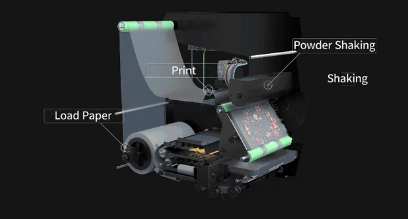
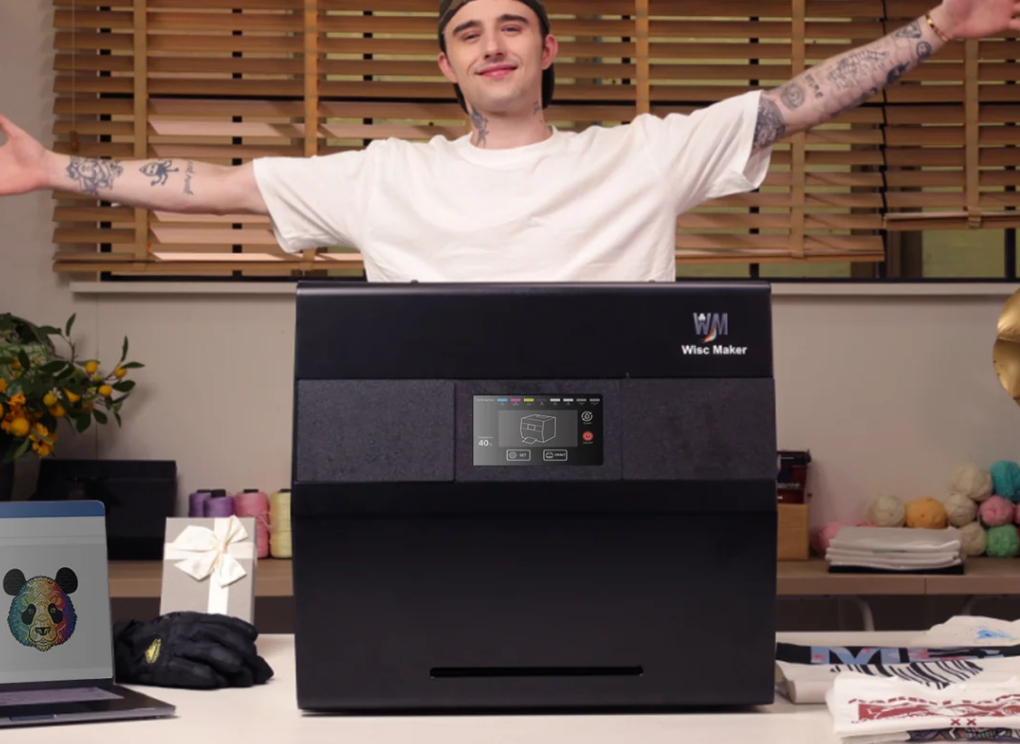
The WiscmakerX1 integrates the four core stages of the DTF (Direct-to-Film) process—printing, curing, powdering, and cutting—into a single desktop unit.
Compared to traditional multi-component DTF setups, this integrated solution significantly reduces footprint and eliminates material transfer steps between devices. The entire workflow, previously requiring multiple machines, is condensed into a one-click operation: print → cure → powder → cut. This dramatically lowers operational complexity and space requirements for home creators and small studios.
Patented Automatic Maintenance System
A core technological highlight of the product is its three-tiered progressive automatic maintenance system.
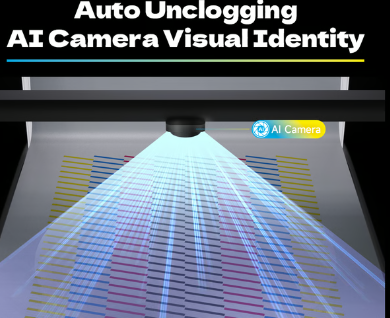
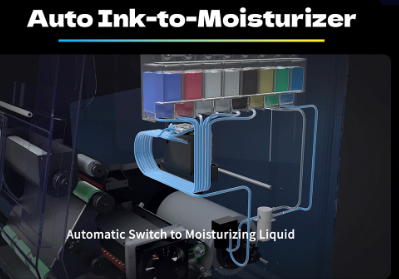
First, a built-in AI camera uses visual recognition to monitor film output in real-time during printing, instantly detecting missing lines or breaks and identifying nozzle clogging. Second, when idle, the device automatically replaces the ink in the printhead tubing with a moisturizing solution, preventing pigment sedimentation and extending printhead lifespan.
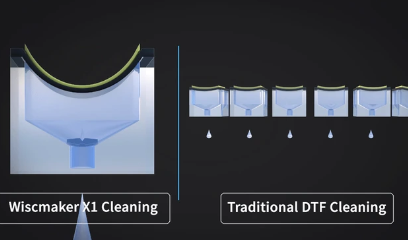
Finally, the system employs a targeted nozzle group cleaning strategy, performing intensive cleaning only on nozzle groups identified as clogged (rather not a full flush). This approach is claimed to boost cleaning efficiency by 6x, while significantly reducing ink consumption and speeding up print recovery time.
This system aims to address a critical pain point for DTF users: downtime caused by printhead clogging and high maintenance costs.
Precise Market Positioning
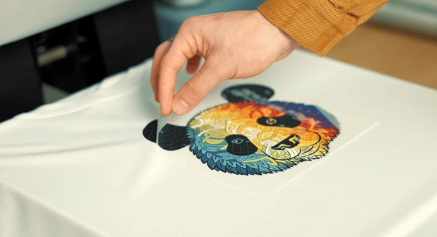
The product's positioning emphasizes lowering the technical barrier (enabling non-professional users to operate it), minimizing ink waste and unplanned downtime, and improving finished product yield (reducing waste from clogged printheads). These objectives directly address the practical needs of small businesses and on-demand customization scenarios.
Wiscmaker was founded by Andy Wu, who possesses a strong R&D background in microfluidics and printing technology, including a Ph.D. and a record of relevant patents and publications.
This technical expertise forms the foundation of the automatic maintenance and visual inspection systems. The brand aims to democratize professional-grade DTF technology, making it more user-friendly, cleaner, and smarter, by creating specialized solutions for desktop users and light commercial applications. Official communications and the crowdfunding page maintain a consistent brand narrative.

Market Analysis
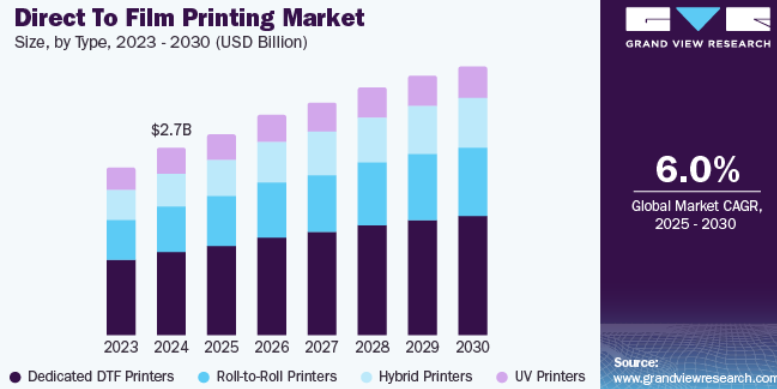
The global DTF (Direct-to-Film) printing market was valued at approximately $2.7 billion in 2024 and is projected to reach $3.9 billion by 2030, with a compound annual growth rate (CAGR) of about 6%.
Key drivers for market growth include the sustained increase in demand for personalized custom apparel and small-batch gifts, as well as the widespread adoption and cost optimization of printing technologies.
This expanding demand creates a clear opportunity for desktop, low-barrier DTF devices. Compared to the high investment of industrial-grade equipment, the WiscmakerX1 targets individual creators and small businesses lacking sufficient space or unwilling to set up complex production lines, by integrating core process steps and automated maintenance. The current market features multiple DTF equipment suppliers covering various price points from small desktop units to industrial systems. Wiscmaker's competitive edge lies in the differentiation provided by its automatic unclogging and visual inspection technologies, which directly address a core pain point for existing DTF users. The product's ultimate competitiveness will depend on its long-term performance regarding printhead clogging rates, printhead lifespan, warranty consumable costs, total cost of ownership, and the completeness of its after-sales network.
As demand for personalized customization continues to grow and printing technologies become more widespread, simplifying professional process flows into integrated, low-barrier desktop solutions is a key direction for the DTF market's expansion from professional to consumer segments.
As demand for personalized customization continues to grow and printing technologies become more widespread, simplifying professional process flows into integrated, low-barrier desktop solutions is a key direction for the DTF market's expansion from professional to consumer segments.