Keychron K3HE and K3 Ultra: New Ultra-Thin Keyboards Exceed $190K on Kickstarter
Crowdfunding Analysis · · PledgeRadar Editorial
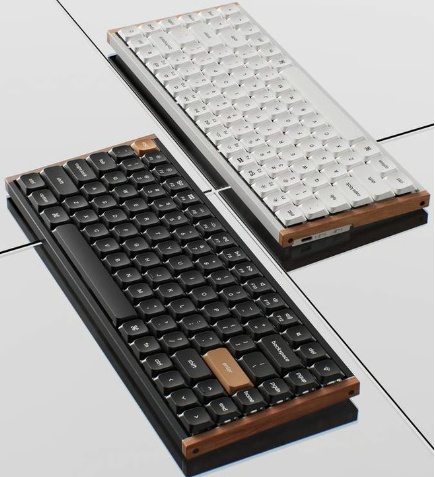
The Keychron K3HE and K3 Ultra are two ultra-thin wireless mechanical keyboards designed for professional typing, creative work, and esports. Both feature a 75% compact layout. The K3HE highlights its precise, adjustable Hall Effect magnetic switches, while the K3 Ultra boasts an 8000Hz polling rate and up to 550 hours of battery life. Their shared goal is to condense the high-performance input experience of a full-sized keyboard into a portable, slim form factor.
Campaign Overview and Backer Reception
This marks Keychron's 17th crowdfunding campaign on Kickstarter. With a track record of 16 consecutive on-time deliveries, backers showed little hesitation in supporting the new project.
The campaign launched on February 17, 2026. As of this writing, it has raised approximately $190,000 USD from around 1,400 backers. This funding level is consistent with Keychron's previous campaigns, indicating a stable core customer base for the brand.
On forums, veteran Keychron users familiar with the brand's past products have engaged in lively discussions about the introduction of Hall Effect switches. Some backers have also expressed concern over the K3HE's comparatively shorter battery life of just 55 hours (compared to the K3 Ultra's 550 hours). The Keychron team addressed this in their FAQ, explaining that the Hall Effect magnetic sensing module requires additional power, representing a known technical trade-off.
Hall Effect Magnetic Switches: 0.1mm Precision Contactless Trigger
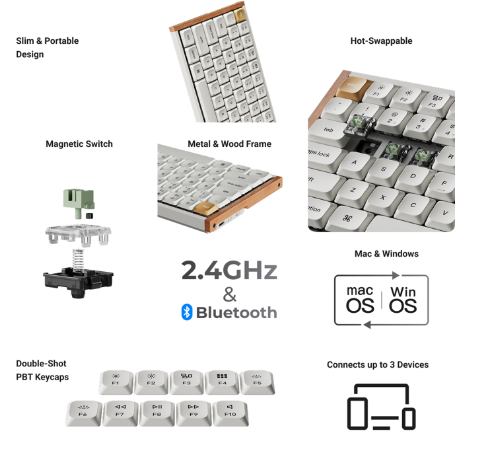
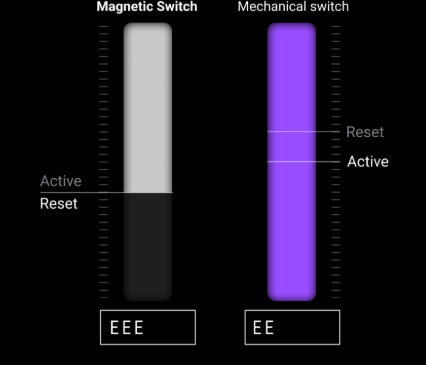
The K3HE features Hall Effect magnetic switches, allowing for individual key actuation point adjustment with 0.1mm precision. The actuation range can be freely set from 0.2mm to 2.9mm. It also supports advanced functions such as rapid trigger, SOCD cleaning, analog input, and DKS (Dynamic Key Strokes) for multi-stage triggering.
Unlike traditional mechanical switches, the Hall Effect design uses magnetic field sensing instead of physical contacts for actuation. This theoretically eliminates contact wear, leading to better key consistency and linearity. It also enables multi-stage actions, where a single key can be mapped to different commands based on actuation depth, offering significant advantages for precise control in esports and customizable shortcuts for creators.
It's important to note that the high-precision magnetic sensing module consumes significantly more power than standard mechanical switches. This directly results in the K3HE's battery life of just 55 hours, which is one-tenth that of the K3 Ultra. Mobile professionals should consider their charging frequency requirements.
8000Hz Wireless Polling Rate + 550 Hours Ultra-Long Battery Life
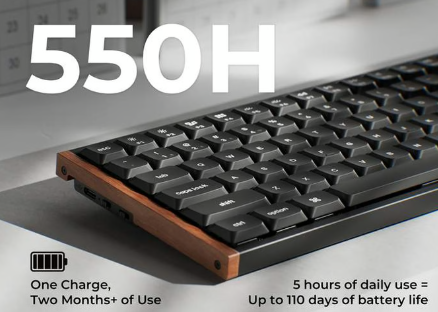
The K3 Ultra offers an 8000Hz wireless polling rate and up to 550 hours of battery life (with backlighting off). This is achieved through ultra-low power consumption, leveraging the ZMK open-source firmware.
An 8kHz polling rate means the keyboard reports its status to the computer 8,000 times per second. This theoretically reduces latency to one-eighth that of a standard 1kHz keyboard, offering a noticeable response advantage in rapid key presses and competitive gaming scenarios. Achieving 550 hours of wireless battery life in 8kHz high-performance mode is an extreme value in the current portable keyboard market. However, enabling backlighting will significantly reduce battery life, and users should balance this based on their usage habits.
Multi-Layer Acoustic Structure: "Thock" Sound from a Low-Profile Body
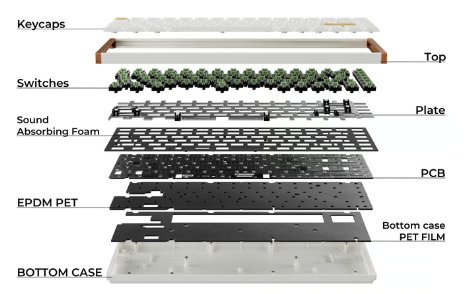
Both keyboards feature a multi-layer sound-absorbing structure specifically designed for their low-profile bodies. This internal stacking includes keycaps, switches, a bottom plate, and sound-dampening foam, all aimed at improving typing acoustics without increasing the overall thickness of the chassis.
Due to limited internal cavity space, low-profile keyboards traditionally struggle to achieve good acoustic dampening. Keychron's multi-layer stacking solution is an engineering compromise to address this structural limitation. It also allows users to disassemble the chassis and adjust the foam configuration, a rare open design in low-profile keyboards at this price point. The actual acoustic performance will ultimately depend on material synergy and manufacturing consistency, with post-delivery community reviews providing the most direct verification.
Natural Rosewood Frame + Precision Aluminum Alloy Body
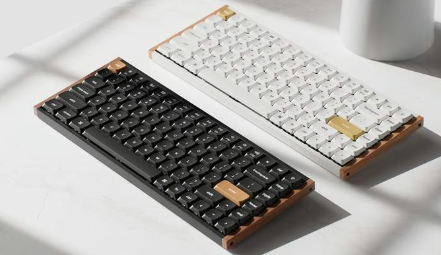
The chassis features a precision-machined aluminum alloy frame complemented by natural rosewood side accents. It comes equipped with LSA double-shot PBT keycaps, known for their oil and wear resistance, and supports RGB backlighting.
The rosewood is genuine wood, not a sticker or printed imitation wood grain. Variations in grain and tone between batches are inherent, meaning each keyboard will have subtle individual differences in appearance. This is a plus for users who appreciate handcrafted aesthetics but requires an expectation adjustment for those seeking uniformity. The aluminum alloy body offers superior heat dissipation and EMI suppression compared to similar plastic casings, also contributing positively to stability during prolonged, intensive use.
QMK/ZMK Open-Source Firmware + Keychron Launcher Web Configuration
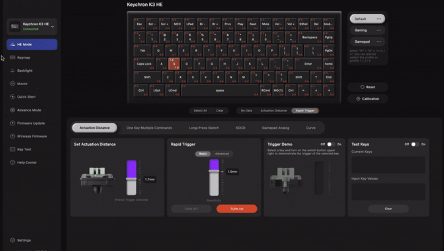
Both keyboards support QMK/ZMK open-source firmware. Their accompanying browser-based configuration tool requires no software installation and allows for key remapping, macro settings, actuation point adjustment, and RGB control. Settings can be accessed across devices without needing reconfiguration.
Open-source firmware is one of Keychron's core differentiators, long maintained for its enthusiast community, and a direct contrast to closed-ecosystem brands like Logitech and Razer. Users are not dependent on manufacturer software maintenance cycles, as the community continuously contributes feature updates, ensuring the keyboard's long-term usability.
Keychron's Brand and Business Model
Keychron, established in 2017, is a brand under Keshine Technology (Shenzhen) Co., Ltd., according to public information. It was founded by a group of enthusiasts with backgrounds in keyboard design, marketing, and manufacturing. Co-founders Will Ye and Sven Zhu collectively bring over 20 years of experience in keyboard production and industrial design.
The brand's headquarters are reportedly in Shenzhen. To date, Keychron has served over 5 million users, completed 17 crowdfunding campaigns, and received accolades such as the 2024 European Hardware Award and the 2025 CES Innovation Award. Keychron employs a sales model primarily focused on Direct-to-Consumer (D2C), supplemented by Amazon and crowdfunding platforms. The advantages of this model include rapid responsiveness to user needs and strong community engagement. However, a limitation is its channel coverage, which still lags significantly behind major retail brands like Logitech and Razer.
Market Analysis and Competitive Landscape
The global mechanical keyboard market, valued at approximately $2.05 billion in 2024, is projected to grow to about $5.68 billion by 2033, with a Compound Annual Growth Rate (CAGR) of approximately 11.9%. This growth is driven by three main factors: the sustained demand for high-performance peripherals fueled by esports and streaming culture, the normalization of remote and hybrid work pushing professionals towards higher-quality input devices, and the increasing enthusiasm among maker and enthusiast communities for customizable keyboards. In terms of technological trends, the Hall Effect and optical switch segments are growing at a CAGR of about 7.6%, making them the fastest-growing sub-categories within the overall mechanical keyboard market. This growth is underpinned by competitive gamers' stringent demand for sub-millisecond latency and virtually infinite trigger lifespan.
In the competitive landscape, Logitech, Razer, Corsair, SteelSeries, and HyperX are the leading players in the global mechanical keyboard market. Their core strengths lie in extensive channel coverage, mature retail ecosystems, and proprietary software suites. In the professional enthusiast and customizable keyboard segment, brands like Ducky, Varmilo, Akko, and Glorious directly compete with Keychron. Differentiation in this space primarily revolves around switch selection, acoustic tuning, and firmware openness.
Keychron has long held a dominant position in the niche of low-profile, customizable wireless keyboards, with the K3 series being its most iconic product line in this segment. The simultaneous launch of Hall Effect versions for the K3HE and K3 Ultra directly challenges major manufacturers like Razer (e.g., Huntsman V3 series) and ASUS ROG, which have recently made significant inroads into this technology. The key question for future competition is whether Keychron can align its technical specifications while preserving its moat of open-source firmware and community ecosystem.
Mechanical keyboards have evolved from gaming peripherals into mainstream productivity tools for office and creative work. Hall Effect magnetic sensing technology is redefining the performance ceiling of this market, but the true test will be the quality of the mass-produced units.