Tiiny AI PocketLab: Portable Supercomputer Raises Over $1 Million on Kickstarter in Five Hours
Crowdfunding Analysis · · PledgeRadar Editorial
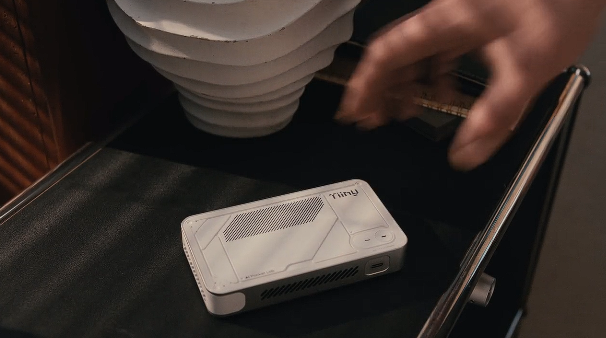
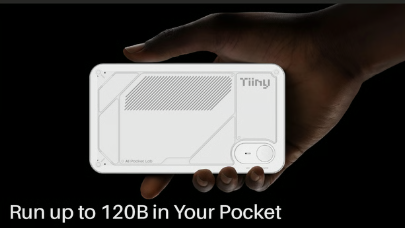
The Tiiny AI PocketLab, a portable supercomputer designed to run large language models (up to 120B parameters) offline, launched on Kickstarter on March 11, 2026. Aimed at developers, researchers, content creators, and professionals with privacy concerns, it enables local AI inference and deployment without cloud dependency. Remarkably, the campaign surpassed its $1 million crowdfunding goal within just five hours of launch and has continued to grow.
Early Backer Engagement and Reception
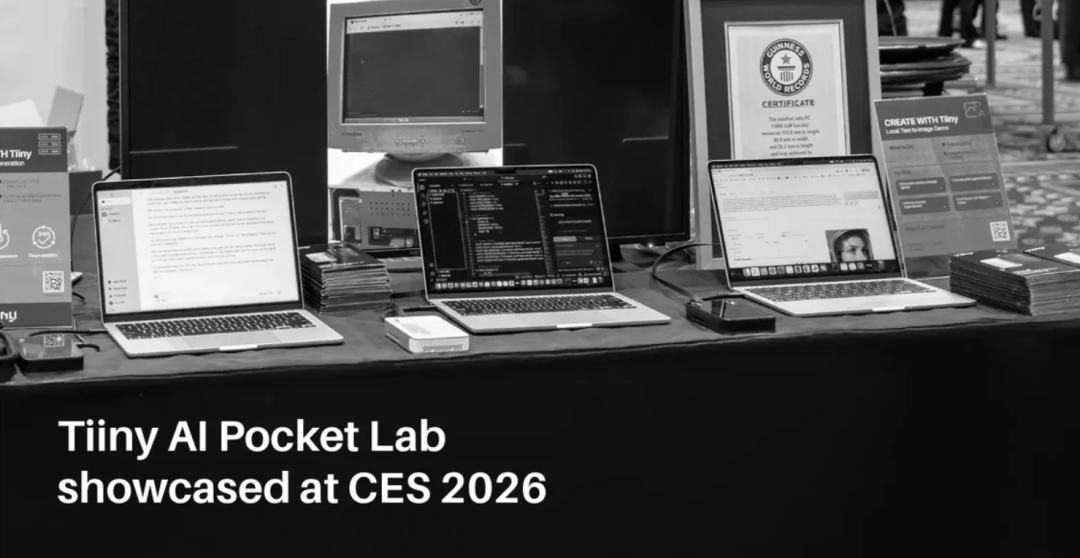
With an average pledge of approximately $1,389 per backer, the Tiiny AI PocketLab sits in the high-end segment for tech hardware crowdfunding. This suggests a primary audience of developers and professional users with a clear willingness to invest. Public feedback within the community has been overwhelmingly positive, focusing on strong endorsement of its core value—local large model operation—and favorable reviews of the performance demonstrated by the CES prototype.
Key Features of the Tiiny AI PocketLab
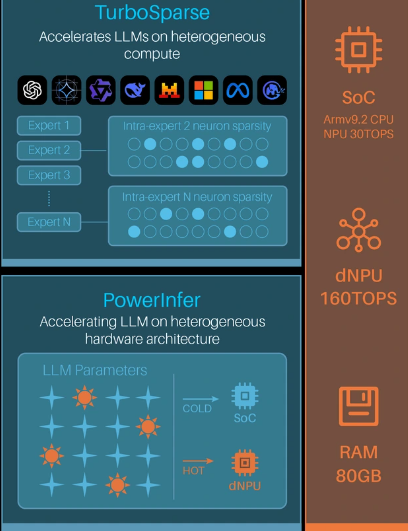
The Tiiny AI PocketLab features an Armv9.2 CPU (delivering up to 30 TOPS of compute power) and a 160 TOP SNPU, complemented by 80GB LPDDR5X memory and a 1TB NVMe SSD, all while maintaining a total power consumption of 30W TDP. This hardware configuration, combined with Tiiny's proprietary TurboSparse and PowerInfer inference optimization technologies, makes it possible to run LLMs with up to 120 billion parameters on a pocket-sized device, entirely without internet access, cloud services, or a dedicated GPU. For developers and researchers, this means complex inference tasks previously confined to data centers can now be performed in a local environment.
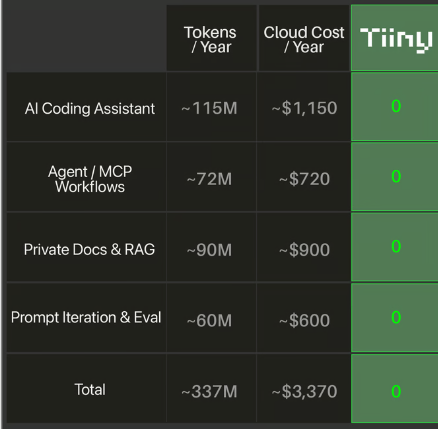
The Tiiny AI PocketLab operates on a one-time purchase model, with all local AI functionalities available without subscription fees or token-based billing. This contrasts sharply with the usage-based pricing of cloud models from providers like OpenAI and Anthropic, shifting the cost upfront to the hardware itself. For users requiring intensive, long-duration private tasks—such as internal document retrieval, or legal and medical document processing—this pricing structure offers significant cost advantages over the device's entire lifecycle.
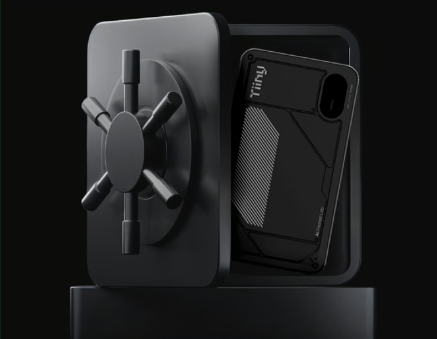
Equipped with bank-grade hardware encryption, the device operates entirely offline, processing all data locally. This completely bypasses the privacy risks and compliance challenges associated with uploading data to the cloud. This feature is particularly crucial for users in highly regulated industries like finance, healthcare, and law, where data sovereignty is paramount, and it assures individual users that sensitive information will not be collected or used for model training by third-party platforms.
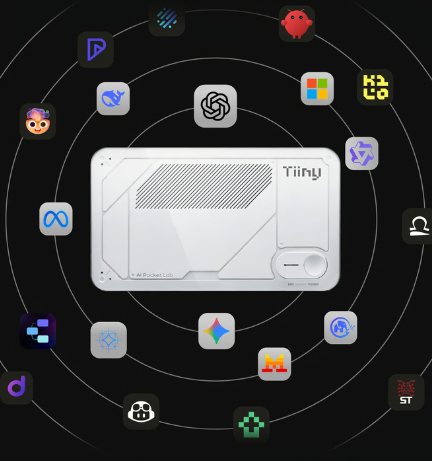
The Tiiny AI PocketLab supports one-click installation for over 50 mainstream open-source models, including OpenAI GPT-OSS, Llama, Qwen, GLM, Mistral, and Phi, alongside rapid deployment for more than 100 open-source AI Agents. The team plans to release a model conversion tool by July 2026, which will allow users to import .gguf format models directly from HuggingFace, further expanding the ecosystem. For developers, this compatible framework significantly lowers the barrier to entry for local AI applications, enabling quick prototype validation and private Agent deployment.
Tiiny positions the PocketLab as a new device category: the AgentBox. This device is specifically designed to support persistent local AI models and Agent workflows. This positioning distinguishes it from general-purpose PCs, which prioritize versatility, and from servers, which involve high deployment costs. Instead, it focuses on lightweight, AI-first edge computing, aiming to establish a new product category.

The Team Behind Tiiny AI
Public information indicates that Tiiny AI Inc. is an AI infrastructure startup registered in Delaware, USA, founded in 2024. Its core mission is to make advanced AI personal, private, and accessible. The founding team comprises researchers from MIT, Stanford, Hong Kong University of Science and Technology, and Shanghai Jiao Tong University, alongside engineers with backgrounds from Intel and Meta. Their research has been published in top-tier systems conferences such as SOSP, OSDI, ASPLOS, and EuroSys, demonstrating a solid academic foundation.
Overall, Tiiny AI appears to be an early-stage startup with a clear technological background and strong engineering capabilities. It is currently transitioning from product validation to mass production and delivery, with no significant issues anticipated for fulfillment.

Market Landscape and Opportunity
The edge AI hardware market is experiencing rapid growth. Valued at approximately $26 billion in 2025, it is projected to grow from $30.7 billion in 2026 to $68.7 billion by 2031, at a compound annual growth rate (CAGR) of approximately 17.5%. This growth is primarily driven by three factors: the critical need for low latency in real-time inference, increasing data privacy compliance regulations, and the rising long-term total cost of cloud services. Tiiny AI's focus on personal, portable local LLM inference hardware targets a niche within this larger market, currently characterized by very few players and an unformed market structure.
In terms of competition, mainstream cloud AI service providers (such as OpenAI, Anthropic, and Google) represent the largest alternative, though not direct, competition. On the local inference hardware side, existing players mostly offer desktop or rack-mounted solutions, with no mainstream brand yet achieving 100B+ parameter local inference in a pocket-sized form factor. While GPU devices currently hold about 50% of the edge AI hardware market, ASIC and NPU devices are expected to expand rapidly at a CAGR of approximately 18.7%, driven by continuous optimization of performance-to-power ratios.
Tiiny's core advantages lie in its proprietary TurboSparse/PowerInfer technologies and system-level hardware-software co-design. If the company can deliver on its performance promises post-mass production and consistently maintain its open-source ecosystem, it will establish significant technical barriers and user stickiness. Portable local supercomputers are a natural solution for privacy-first, subscription-free, and long-term controllable AI needs. As model quantization techniques and specialized chips continue to mature, this product category is rapidly moving from niche exploration to mainstream, demonstrating significant long-term growth potential and industrialization prospects.
For developers and researchers, this means complex inference tasks previously confined to data centers can now be performed in a local environment.