Tilswall Hornet Cordless Spray Gun Campaign Nears $1 Million Mark on Kickstarter
Crowdfunding Analysis · · PledgeRadar Editorial
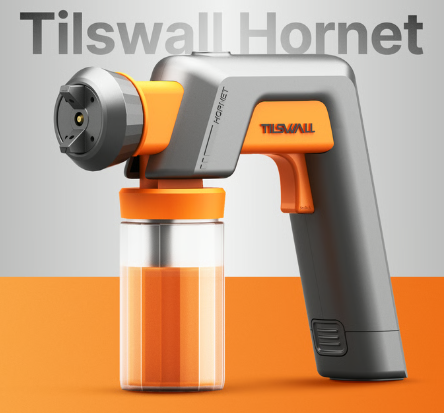
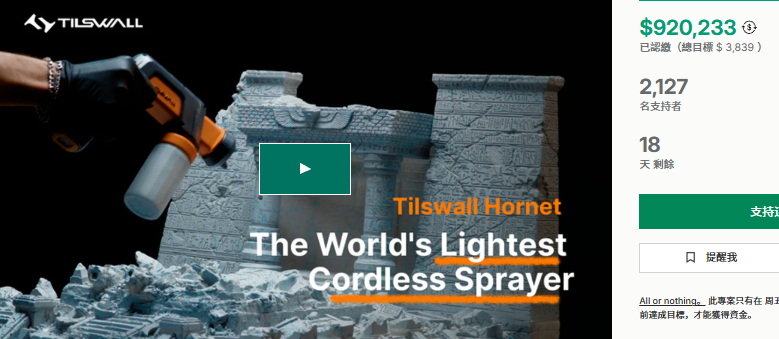
The Tilswall Hornet is a consumer-grade cordless HVLP spray gun designed for home DIY renovations, furniture painting, touch-ups, and small outdoor projects. Weighing just 450g and featuring a 100,000 RPM brushless motor, it combines wireless power with precision copper nozzles. The campaign aims to enable users with no prior painting experience to achieve professional-quality detail work. Launched on Kickstarter on February 10, 2026, the project has already raised approximately $920,000, making it a rare high-value success among recent crowdfunding tool campaigns.
Key Product Features
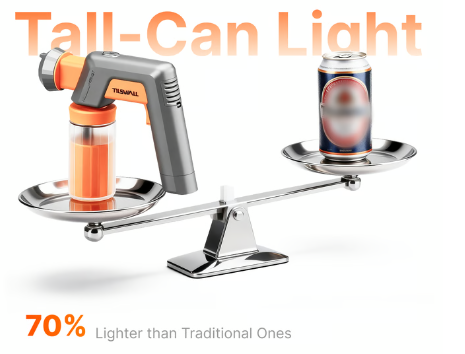
Weighing only 450g, the Hornet is approximately 70% lighter than conventional HVLP spray guns. Its palm-sized grip allows for single-hand operation, making it ideal for intricate tasks in tight spaces, on ladders, or during extended periods of use where wrist fatigue is a concern.
Beyond ease of handling, this lightweight design directly impacts working duration. Reduced wrist and shoulder fatigue are crucial for maintaining consistent coating uniformity throughout a single use. Achieving the 450g weight relies on an engineered plastic body and internal structural optimization. However, the structural integrity and long-term durability under this lightweight design are critical metrics that require validation for mass production consistency.
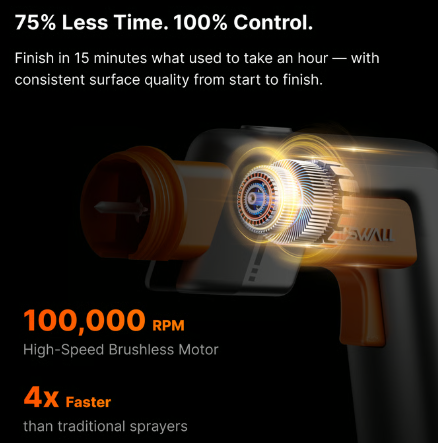
The Hornet features a built-in brushless motor that spins at 100,000 RPM, utilizing HVLP (High Volume Low Pressure) atomization technology. The manufacturer claims this results in atomization speeds four times faster than traditional spray guns, delivering uniform coatings without pressure drops or surges.
This high-speed motor is central to the Hornet's ability to achieve fine atomization in a compact form factor, while HVLP technology offers significant advantages in reducing overspray and paint waste. Key considerations for backers include the motor's heat accumulation and long-term operational lifespan at this RPM, as well as the consistency of atomization when using slightly higher viscosity paints, such as latex. Both aspects require long-term real-world testing data for verification.
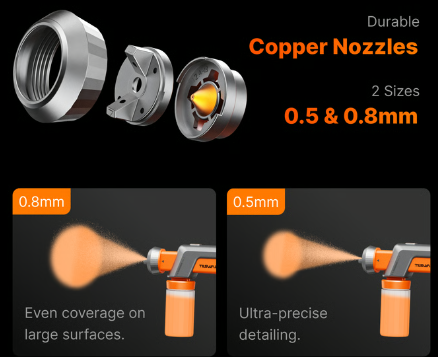
The Hornet comes with two precision-machined copper nozzles: a 0.5mm nozzle for fine detailing and touch-ups, and a 0.8mm nozzle for larger area coverage. Users can switch between three spray patterns (vertical, horizontal, and circular) without needing to disassemble the unit.
Copper nozzles offer distinct advantages over plastic alternatives in terms of edge sharpness and wear resistance. The dual-size configuration addresses the two most common consumer-level painting scenarios. While the convenience of three-way spray pattern switching provides efficiency for users who frequently change work surfaces, the durability and long-term sealing performance of the switching mechanism will only be fully assessable after extensive use.
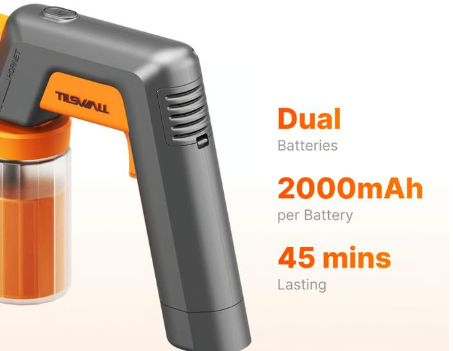
The Hornet features a modular, replaceable battery design, supporting a three-battery rotation system: one battery powers the device, one charges, and one remains on standby. This setup theoretically allows for uninterrupted operation.
This approach directly addresses a core pain point for portable spray gun users: battery anxiety. However, the actual charging time and the single-charge runtime for each battery (corresponding to the paintable area) are crucial parameters for potential backers. As of now, the official campaign has not released independent test data under review conditions.
The modular chamber design allows for cleaning in under 60 seconds and is compatible with peelable paints, enabling users to easily remove a coating and restart if a painting error occurs.
Ease of cleaning is often the biggest hidden barrier to user satisfaction with spray tools. Many users abandon their spray guns not due to poor painting results, but because of the tedious cleaning process. If the promise of 60-second cleaning can be validated in real-world tests, it would be the single most compelling selling point for word-of-mouth promotion.
Tilswall: Company Profile and Strategy
Based on publicly available information, Tilswall specializes in the research and development of lightweight DIY power tools and painting systems. Their core technological approach involves integrating brushless motor technology into traditional home improvement tools. With products currently sold on Amazon and their independent website, Tilswall appears to be a relatively established e-commerce company.
The Hornet is the brand's inaugural product in the consumer-grade cordless spray gun market. Priced from $129 for early bird crowdfunding pledges, with an official suggested retail price of $319, Tilswall positions itself as an established tool manufacturer with both crowdfunding channels and a defined retail plan, rather than solely a crowdfunding project initiator. Currently, Tilswall has no public institutional funding records, with its primary funding source being crowdfunding pre-sales.
Market Landscape and Competition
The global spray gun market, valued at approximately $1.25 billion in 2024, is projected to grow to about $1.99 billion by 2033, with a Compound Annual Growth Rate (CAGR) of approximately 5.3%. This growth is primarily driven by the expanding demand for home renovation, the rapid penetration of DIY culture among younger consumers, and the widespread adoption of cordless tools fueled by decreasing lithium battery costs. Within product segmentation, the cordless spray gun sub-category exhibits a higher growth rate (CAGR of approximately 5.72%) than corded products, making it the fastest-growing segment in the overall market.
In terms of competitive landscape, Graco and Wagner are the two dominant brands in the global spray gun market. They have established barriers through extensive global channel coverage, diverse product portfolios across multiple price points, and mature after-sales ecosystems, primarily targeting professional contractors and industrial painting applications. Graco's introduction of the TrueCoat360 cordless airless spray gun in July 2024 also indicates that leading brands are actively moving towards cordless solutions.
Within the consumer DIY segment, lightweight HVLP products from brands like HomeRight and FujiSpray are the Hornet's most direct competitors, though most of these brands still rely on corded power. The Hornet's differentiation lies in its unique combination of a 100,000 RPM brushless motor, 450g weight, and cordless operation. Products simultaneously meeting these three parameters are virtually absent in the current consumer spray tool market, leaving this niche objectively open. However, market risks exist: the Hornet is explicitly not suitable for large-area painting, which limits its actual target users to those focused on detail touch-ups and small item painting, thereby imposing a relatively finite market ceiling. Furthermore, if issues with spray uniformity or paint compatibility emerge during real-world testing, negative feedback could easily spread within the crowdfunding community.
Ease of cleaning is often the biggest hidden barrier to user satisfaction with spray tools.