Mammotion YUKA Robotic Lawnmower: Auto-Empty Bin and Vision-RTK Tech Drive HK$17.2M Kickstarter Success
Crowdfunding Analysis · · PledgeRadar Editorial
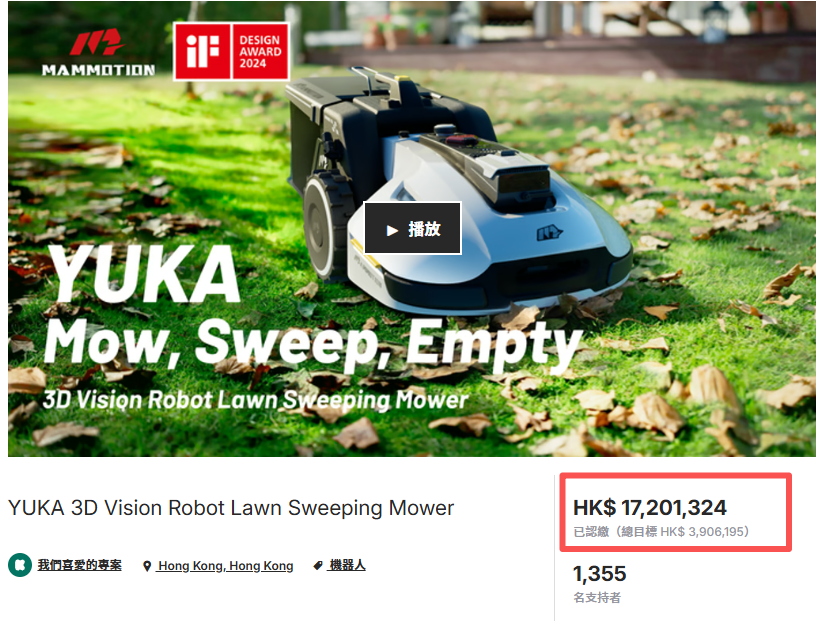
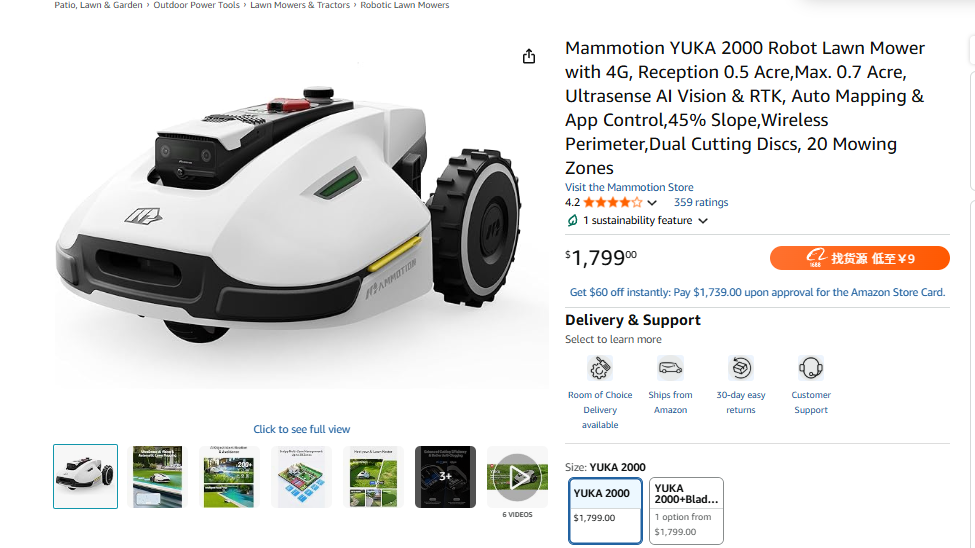
The Mammotion YUKA robotic lawnmower successfully concluded its Kickstarter campaign, securing HK$17.2 million (approximately US$2.2 million) from 1,355 backers. Following the campaign, the product entered mass production and is now globally available. Various YUKA models (1500, 3000, and mini) are officially sold through Mammotion's website, Amazon, HomeDepot, and other retail channels.
Campaign Overview and Initial Reception
Numerous long-term reviews on YouTube have showcased the practical performance of the auto-empty bin and leaf-sweeping functions. Many reviewers noted that the YUKA significantly reduces manual maintenance for small to medium-sized yards. However, professional media outlets like PCWorld highlighted that while the device is innovative, there's still room for improvement in stability and software maturity. They also cautioned the manufacturer about the risk of 'marketing claims outweighing actual product refinement.'
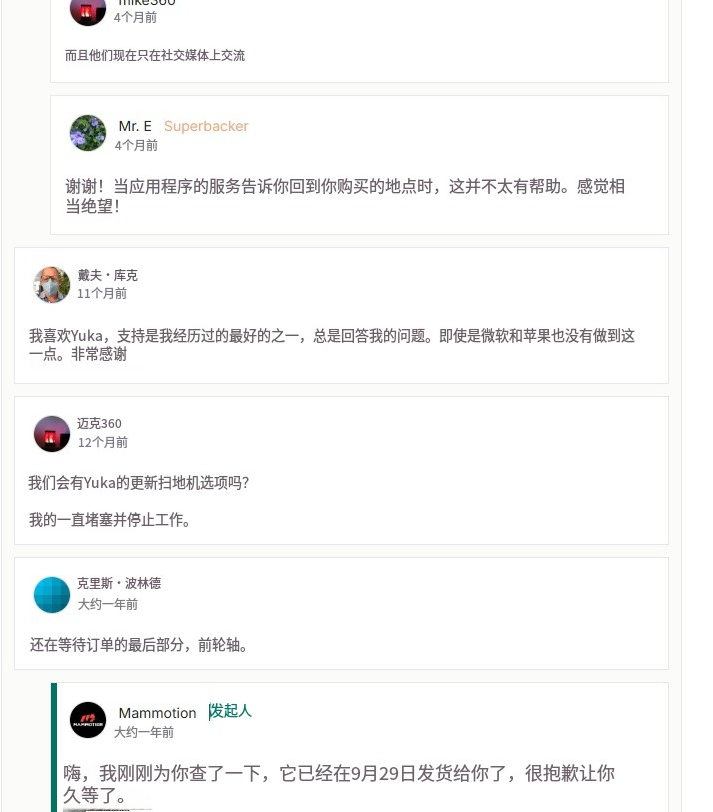
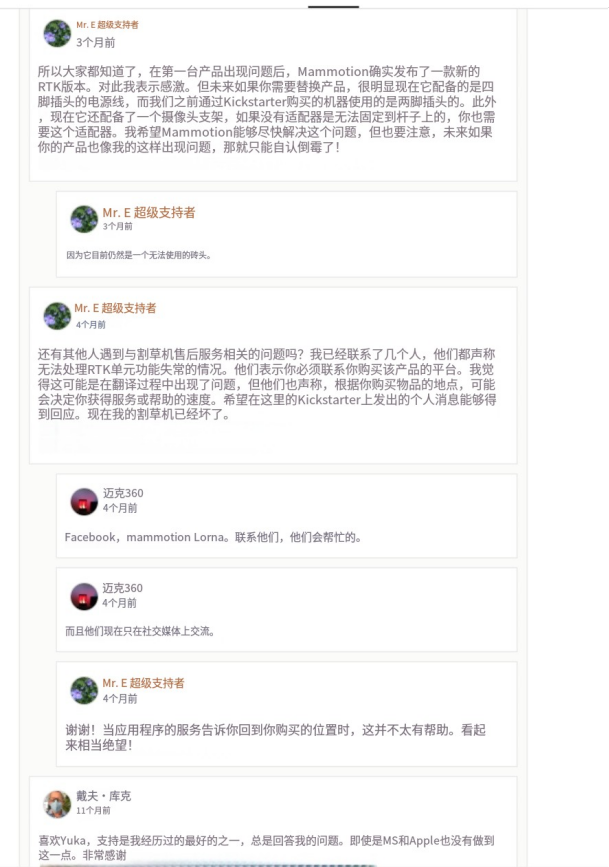
Community discussions also reveal conversations about localized malfunctions, parameter settings, and logistics timelines. Overall, a substantial number of users have received the product and reported positive experiences.

Key Product Innovations
**Auto-Empty Bin and Leaf Sweeping Kit**
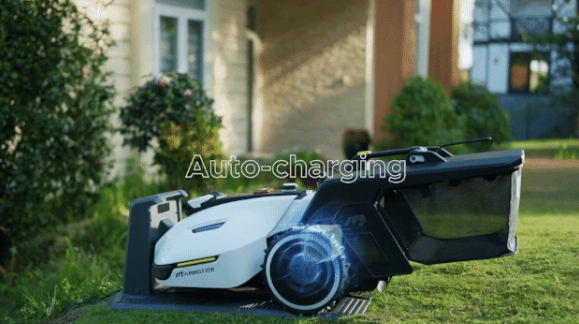
This is YUKA's most distinctive feature. While mowing, the device simultaneously clears fallen leaves and debris, automatically emptying the collection bin at user-preset locations. Managing leaf litter has historically been a significant hurdle for robotic lawnmowers aiming to fully replace manual labor, and this auto-empty function substantially reduces the frequency of human intervention.
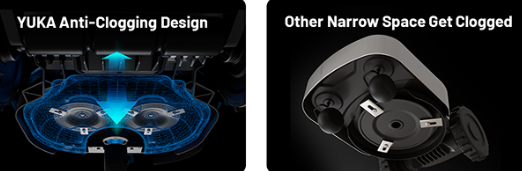
Real-world test videos and third-party reviews indicate that in ideal scenarios with moderate leaf accumulation and flat terrain, the leaf-sweeping and auto-empty functions operate effectively. The product also supports setting multiple emptying points within the app. However, actual performance can be affected by factors such as leaf moisture, debris size, slope, and obstacle distribution. Automatic bin emptying requires precise alignment and reliable mechanical transmission. Long-term durability, potential clogging issues, and maintenance costs are aspects that warrant ongoing observation, as some scenarios may still require manual intervention.
**3D Vision + RTK Fusion Positioning**
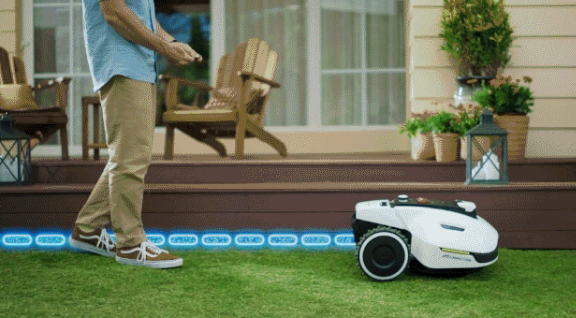
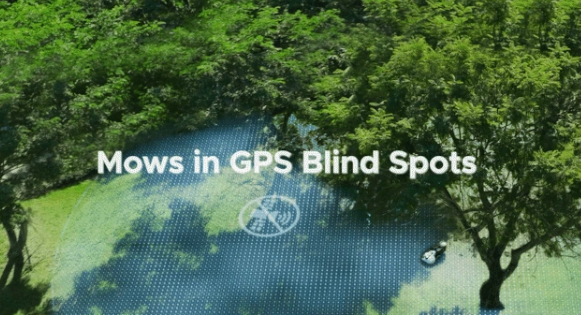
The product utilizes multi-camera vision and enhanced RTK (Real-Time Kinematic) technology for precise mapping and positioning, eliminating the need for perimeter wires or physical fences. This allows operation under trees or in areas with weak GPS signals. Eliminating boundary wires is a highly anticipated user experience improvement, offering simpler installation and a more aesthetically pleasing lawn. Theoretically, vision-RTK fusion can achieve centimeter-level positioning accuracy.
The integration of visual SLAM (Simultaneous Localization and Mapping), depth cameras, and enhanced RTK is a current industry trend. Mammotion brands this solution as UltraSense / 3D Vision+RTKFusion.
Some reviews and demonstrations show that map construction and navigation through narrow passages have reached a usable level. However, vision-based solutions can be affected by strong backlighting, low light, rain, fog, and specular reflections. RTK performance may also fluctuate due to base station placement or local interference. Manufacturers need to accumulate extensive real-world scenario data to train their models and provide reliable fallback solutions (e.g., low-speed safety modes) to prevent misjudgments or system freezes. Industry media generally consider vision-based solutions to be viable, but long-term stability requires continuous refinement.
**Dynamic Obstacle Recognition and Avoidance**
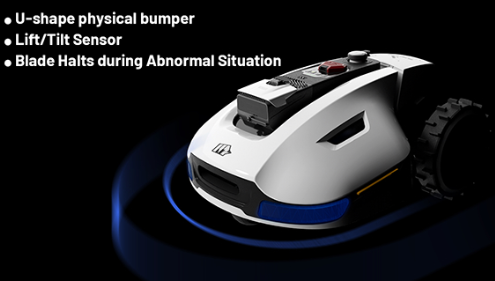
Based on depth cameras and neural network-driven object recognition, the system can identify and navigate around obstacles in real-time. This is particularly crucial for addressing controversies surrounding early robotic lawnmowers' inability to adequately detect and avoid small animals, which could lead to harm.
The product claims obstacle avoidance within a 1-inch range and the ability to plan alternative routes, a feature partially validated in several real-world tests.
However, detecting very small, ground-level, or nocturnal animals remains challenging. Low-light/nighttime conditions, animals obscured by vegetation, or complex debris (like tangled branches) increase the likelihood of issues. Furthermore, regulatory requirements regarding outdoor ground-level cameras and privacy in different countries and regions also need consideration.
**Multi-Zone Management and Path Planning**
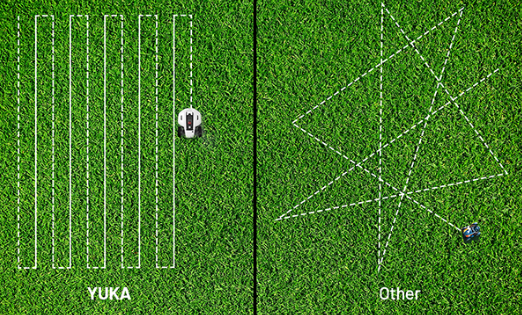
The product supports multi-zone scheduling, virtual no-go zones, and offers various path modes like Parallel, Checkerboard, and DiamondGrid within its app, with official claims of supporting over 30 zones. To truly deliver a fully autonomous, hassle-free experience, the software layer's zoning, task scheduling, and path planning must be sufficiently intelligent and user-friendly.
However, the app's stability, map reconstruction speed, remote reconnection capabilities, and OTA update quality are critical to user experience. If the app or backend services perform poorly, the hardware's full potential cannot be realized.
Community feedback on software experience is often more critical than on pure hardware, making this an area requiring continuous manufacturer investment.
**Dual-Blade High-Efficiency Cutting System**
Featuring dual 320mm blades and an anti-clogging design, the system can handle tall and wet grass, with official claims of a mowing efficiency of 200-270 square meters per hour.
Dual blades, large-diameter tires, and powerful brushless motors are common industry methods for improving efficiency. The product claims to handle slopes up to 45%. Third-party reviews have validated its basic mowing capabilities, but the stated slope traversal ability needs to be considered in conjunction with specific models and actual environments. Tire grip, center of gravity design, and slope direction all influence performance. Long-term stability on wet or loose soil slopes, tire wear, and safety are points that require attention.

Company Profile and Product Strategy
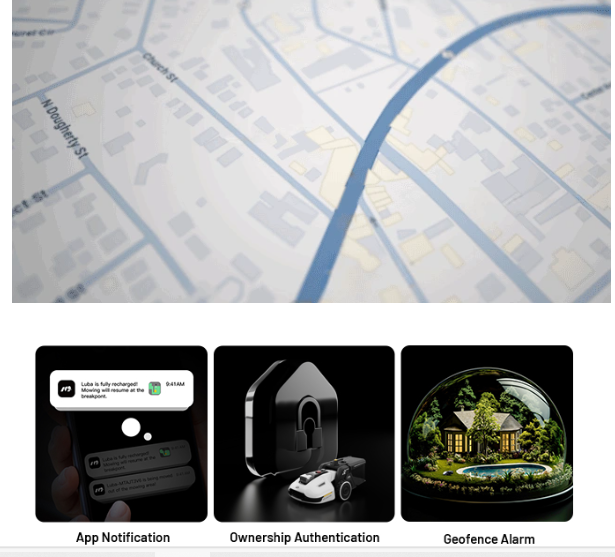
YUKA integrates the industry's most popular technology stack—including visual SLAM, RTK fusion, and automatic cleaning—into a comprehensive, user-centric solution. It also incorporates lifestyle features such as lawn art, smart home integration, and anti-theft positioning.
Mammotion (MammotionTech) is an outdoor robotics company with its operations and R&D center based in Shenzhen, China. According to information from its official website, LinkedIn, and industry databases, the company was founded in 2021. Its product lines include the LUBA series (AWD all-terrain models), the YUKA series (featuring auto-empty bins and visual navigation), and the entry-level YUKAmini. Mammotion has established overseas sales and warehousing channels and actively participates in international exhibitions like CES and IFA.
In terms of product roadmap, Mammotion gained significant market attention between 2023 and 2025 with its LUBA series, which was a best-selling boundary-wire-free model. The YUKA series represents the company's effort to standardize the 'auto-empty bin + vision' functionality.
The company has established direct sales channels in the US and Europe via its official website and international e-commerce platforms. It has also accumulated a substantial amount of user test and review content on social media and YouTube.
Market Analysis and Competitive Landscape
Estimates for the robotic lawnmower market size vary significantly among different research institutions. GrandViewResearch data indicates a global market size of approximately US$8.47 billion in 2024.
Under a conservative definition, the pure residential/retail market currently has an annual scale ranging from several hundred million to over a billion US dollars. If commercial, landscaping services, and related software services are included, the scope expands significantly to tens of billions of US dollars. The industry generally predicts rapid growth in the coming years, with visual navigation and boundary-wire-free technology being key drivers for accelerated adoption.
Regarding the competitive landscape, key market players include Husqvarna (a traditional lawnmower giant dominating the high-end market), Worx (with its Landroid series, a major player in the mid-range market), EcoFlow (Blade, focusing on vision + solar), Segway (Navimow series, offering RTK + wireless solutions), and Mammotion's own LUBA and YUKA series. Different brands diverge in their technological approaches: some adhere to boundary-wire solutions for stability, while others bet on pure vision or RTK fusion to enhance user experience.
At this stage, boundary-wire-free, visual navigation, and automated maintenance features are evolving from differentiating selling points into standard functionalities. However, technological maturity, the completeness of the software ecosystem, and after-sales service capabilities remain critical factors determining a brand's long-term viability. As technology iterates and costs decrease, the market is expanding from early adopters to the mass consumer market.

Professional media outlets like PCWorld highlighted that while the device is innovative, there's still room for improvement in stability and software maturity. They also cautioned the manufacturer about the risk of 'marketing claims outweighing actual product refinement.'