CleanseBot: A $1.18 Million Crowdfunding Success, Marred by Delivery Issues
Crowdfunding Analysis · · PledgeRadar Editorial
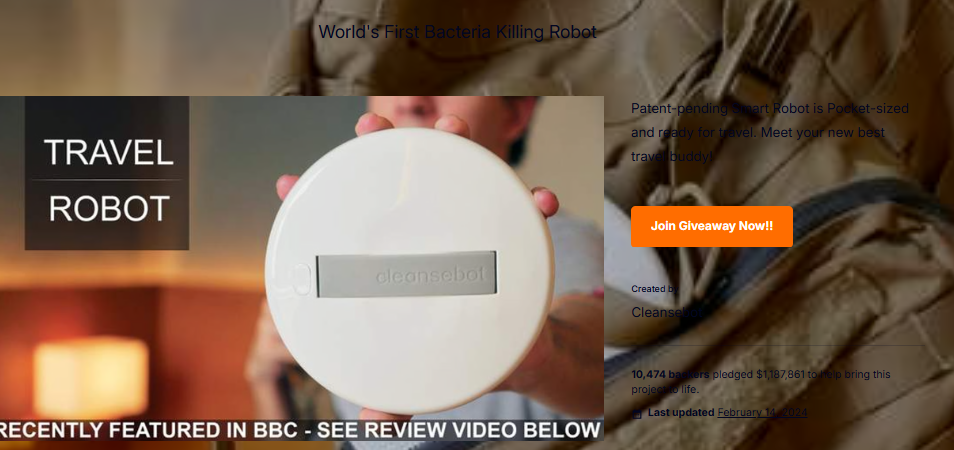
The CleanseBot portable sterilization robot ran a crowdfunding campaign on Kickstarter from November 27, 2018, to January 6, 2019. The project garnered support from 10,474 backers, raising a total of $1.18 million, which validated strong market demand for portable smart cleaning products. However, the project ultimately failed to complete all deliveries.
Key Product Features
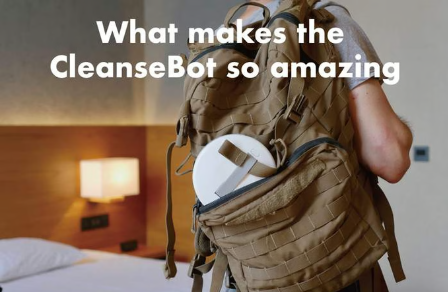
CleanseBot's design prioritized user portability, with dimensions of approximately 130×30 mm and a weight of just 220 grams, allowing it to be easily packed into a backpack or suitcase. This compact design made it an ideal travel companion, ensuring personal hygiene safety for both business trips and leisure travel.
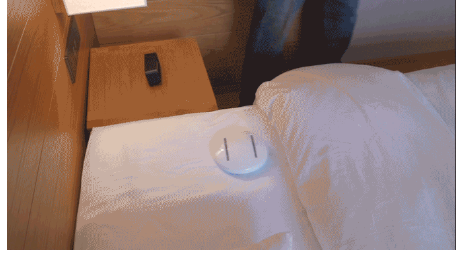
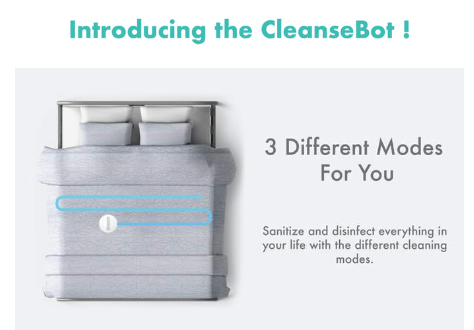
The product offered three distinct cleaning modes to meet diverse usage needs: The 'Under/On Bed Mode' allowed the robot to autonomously roll and clean on bedding for 30 or 60 minutes, thoroughly sanitizing the sleeping environment. 'Handheld Mode' enabled precise disinfection of small items like remote controls, switches, and toys. 'Power Bank Mode' utilized the built-in 3700mAh battery to provide emergency power support for other devices via USB-C output.
CleanseBot incorporated four powerful 254nm UV-C LED beads, each with an output power of approximately 1500μW/cm². Its sterilization effectiveness was verified by independent institutions such as the Guangzhou Institute of Microbiology, demonstrating the ability to kill ≥99.99% of E. coli with just 30 seconds of exposure, ensuring the scientific validity and reliability of its disinfection capabilities.
Equipped with 18 sets of AI sensors, the product could intelligently adapt to over 40 different bedding materials and uneven surfaces, automatically navigating around obstacles. A patented roller system ensured the device maintained excellent mobility on various bedding surfaces, overcoming challenges posed by uneven textiles.
CleanseBot successfully integrated three major functions—a travel disinfection tool, a smart robot, and a mobile power bank—into one compact device, offering users a comprehensive portable hygiene solution.
The Team Behind CleanseBot
The CleanseBot brand was founded by a team based in Wilmington, Delaware, focusing on innovative product development in the clean technology sector. This team demonstrated a consistent capacity for innovation, rather than being a one-off venture. Following the success of the CleanseBot project, the team launched the Cleanse Bud disinfection tablet project in 2020. This subsequent campaign, which aimed for $5,000, ultimately raised approximately $190,000, further underscoring the team's sustained innovation and market acumen in clean technology.

Market Outlook and Competitive Landscape
CleanseBot targeted a primary market including business travelers, frequent flyers, health-conscious individuals, and households prioritizing hygiene. Amidst a global rise in travel health and safety awareness, particularly the significant increase in demand for hygiene during the pandemic, the need for hotel disinfection grew substantially, providing a vast market opportunity for the product.
From a competitive standpoint, CleanseBot significantly differed from the large UV-C robots used in hospitals or offices. It occupied a unique position in the portable personal disinfection device market with virtually no direct competitors. While alternative products like handheld UV-C lamps and disinfectant wipes existed, they lacked CleanseBot's core advantages of automation, multi-function integration, and power bank capabilities.
In terms of technological trends, UV-C sterilization devices are rapidly developing in sectors like healthcare and transportation. The disinfection robot market, however, remains in its early stages, offering significant potential for innovation and increased user penetration. Nevertheless, the product also faced challenges, including the importance of educating users on safe UV-C usage, verifying the actual path coverage efficiency of the device, battery life performance, and long-term reliability and maintenance costs.
CleanseBot raised $1.18 million from 10,474 backers, validating strong market demand for portable smart cleaning products. Yet, the project ultimately failed to complete all deliveries.