AI Smart Tennis Trainer Aceii One Surpasses $600K on Kickstarter
Crowdfunding Analysis · · PledgeRadar Editorial
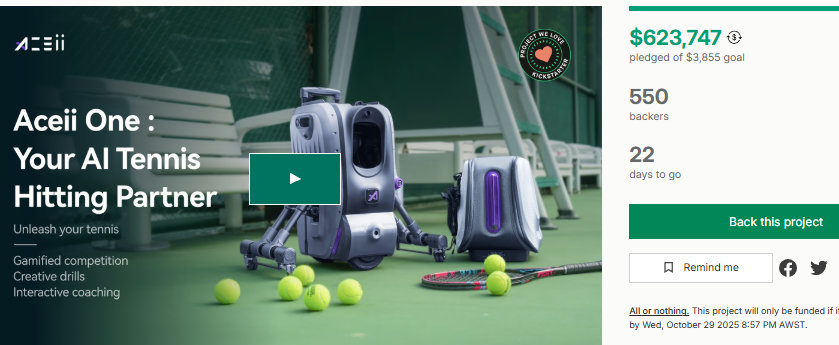
The Aceii One AI smart tennis trainer launched on Kickstarter on September 23rd, quickly securing hundreds of thousands of dollars in support within 12 hours. By October 6th, the campaign had surpassed $620,000, with early bird pledges starting from approximately $1099 USD.
Campaign Success and Future Outlook
According to official updates, the project is now entering the mass production preparation phase. The Aceii One has undergone VIP field testing at events like the US Open, and a Pickleball version is simultaneously under development. This strong crowdfunding performance underscores the significant demand potential for high-end smart training equipment within niche sports markets.
Aceiilab, as described on its campaign page, is an entrepreneurial brand focused on deeply integrating hardware and software, positioning its ball machine as an intelligent training partner. The brand emphasizes a structured and gamified training process, building market influence through its official website, Instagram, YouTube demonstration videos, and continuous Kickstarter updates. Aceiilab has further bolstered its credibility by releasing promotional videos featuring VIP trials, coaches, and high-level players, and has been covered by tech media and sports vertical websites such as NewAtlas, Notebookcheck, and CyberGuy.
Key Product Features
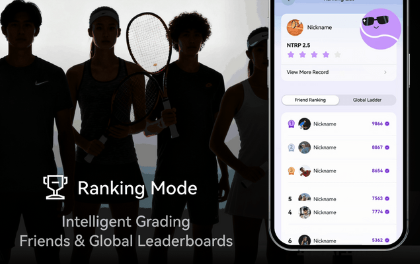
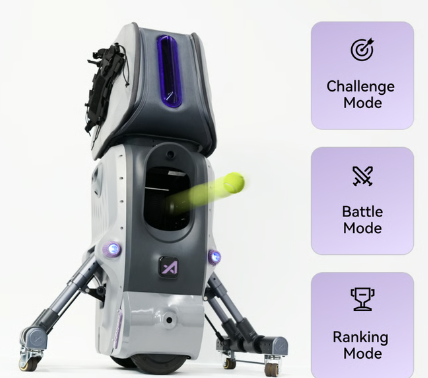
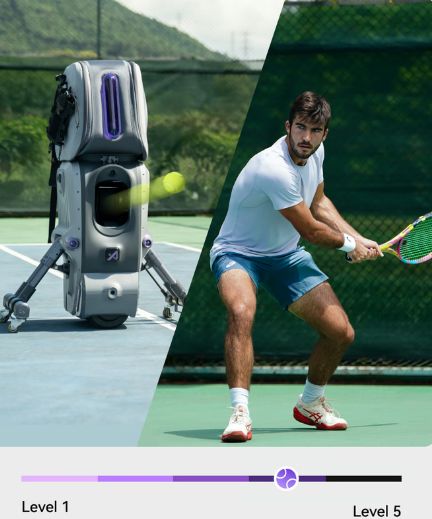
**Immersive Rally Experience:** The Aceii One breaks free from the limitations of traditional, mechanical ball machines by offering multiple rally and matchplay modes, including Ranking, Challenge, and Battle. This transforms practice into an engaging training experience complete with scores, levels, and challenges, making solo training less monotonous.
**AI Coach Closed-Loop System:** A built-in app assesses the user's NTRP level, provides graded courses, and offers multi-dimensional data feedback after training, covering shot speed, landing accuracy, and consistency. This creates a complete course-practice-evaluation loop, offering a significant advantage for users lacking coach guidance or facing court limitations.
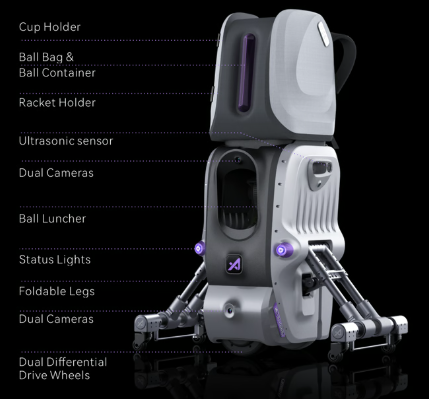
**Vertical Stereo Vision Dual-Camera Technology:** Utilizing a Vertical Stereo Vision + dual-camera system for real-time visual tracking, the Aceii One can track high-speed serves and instantly determine their trajectory. This is the technical foundation for dynamic rallies, differentiating it from traditional monocular vision or wearable device solutions.
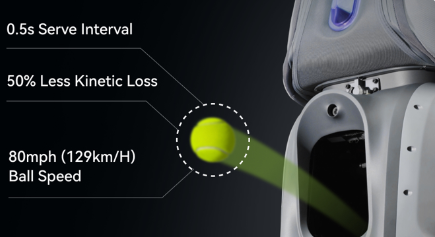
**Dual-Stage Acceleration Launch:** The Dual-Stage Acceleration technology provides faster propulsion and better energy retention compared to traditional dual-wheel systems. It supports a minimum serve interval of 0.5 seconds, enabling high-frequency continuous returns and creating a near-realistic continuous rally experience.
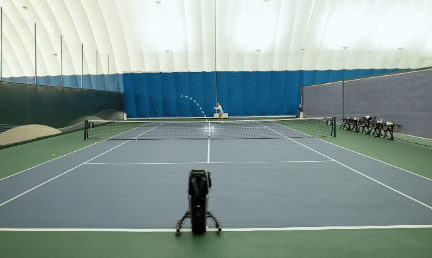
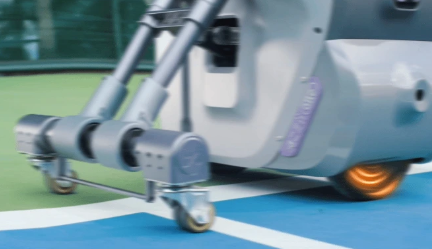
**High Mobility Movement:** A differential drive system delivers an acceleration of 3.5 m/s², allowing the machine to move from mid-court to the sideline in 1.2 seconds. This enables dynamic ball retrieval across the court rather than fixed-position feeding, significantly enhancing training realism.
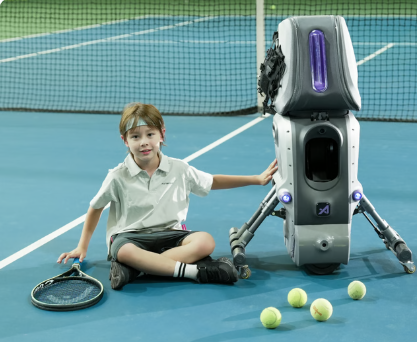
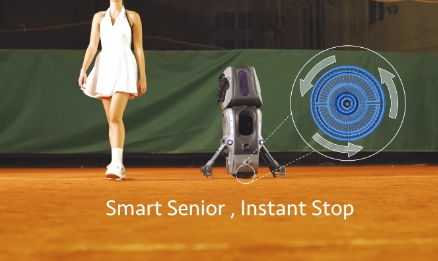
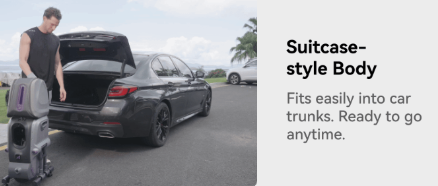
**Portable and Safe Design:** Featuring a suitcase-style foldable design with wheels, the Aceii One can be easily pushed and pulled, making it suitable for private clubs, home courts, or coaches demonstrating drills. An integrated safety system combining AI, ultrasound, and visual perception instantly pauses ball launching upon detecting intrusion or obstacles, mitigating safety risks during use.
Market Landscape and Opportunities
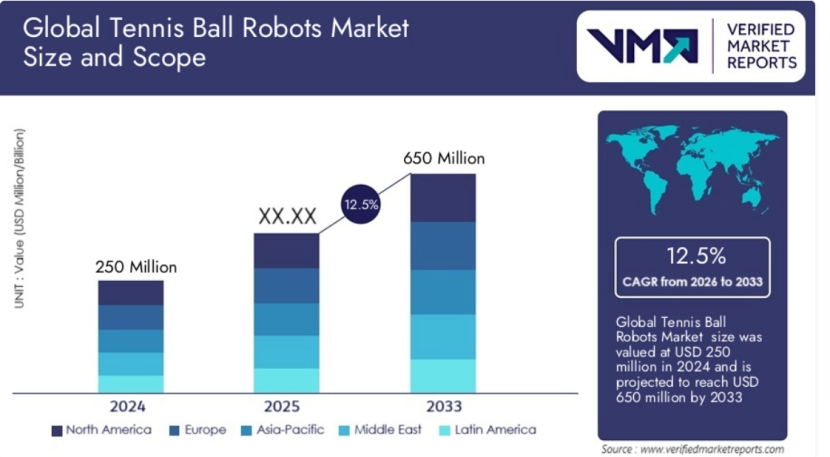
The traditional tennis ball machine market has long been dominated by established brands like Lobster, Playmate, and Spinshot, whose products typically offer fixed feeding and relatively singular functions. In recent years, innovation has shifted towards intelligent, mobile, and data-driven features. Market research institutions predict that the tennis ball machine/robot sub-segment will maintain medium-to-high growth over the next 5-10 years. More broadly, sports technology and smart training equipment are gaining significant attention from investors and manufacturers, with sports robots identified as a promising vertical market.
Demand-side opportunities are evident. A user base with consistent practice frequency and willingness to pay for an alternative to human sparring partners—especially high-end clubs, coaches, and avid tennis enthusiasts—demonstrates a clear willingness to invest in a more realistic rallying experience. Aceii has positioned its pricing in the $1000+ range, targeting mid-to-high-end individual consumers, as well as the coach and club markets.
Furthermore, the explosive growth of Pickleball in North America presents a new market for small-ball training equipment. Aceii has explicitly announced a Pickleball version as a horizontal expansion, aligning with current sports popularization trends.
However, robotic products demand significantly higher reliability and durability from their mechanical and control systems for mobility, visual recognition, and long-term continuous launching compared to traditional ball machines. Insufficient reliability and durability validation pose a primary risk. Price sensitivity is also a practical challenge. The product's price point is close to or even exceeds the cost of coaching lessons or annual club memberships in some regions, limiting its appeal to budget-conscious individual users. Moreover, established brands already offer more affordable and reliable fixed ball machines as alternative options.
This strong crowdfunding performance underscores the significant demand potential for high-end smart training equipment within niche sports markets.