SHARGE DiskPro: Can Active Cooling Redefine Portable Storage in Crowdfunding?
Crowdfunding Analysis · · PledgeRadar Editorial
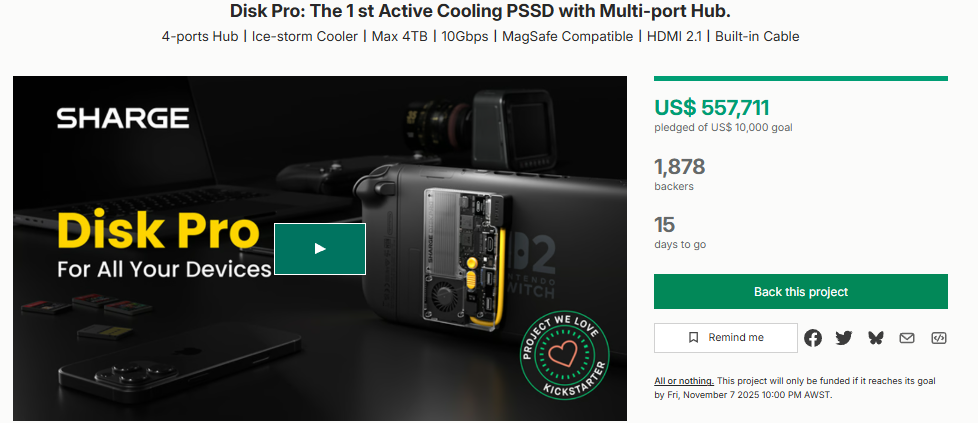
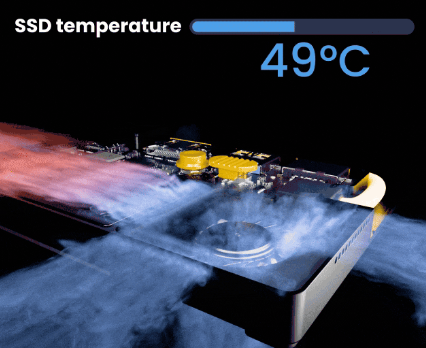
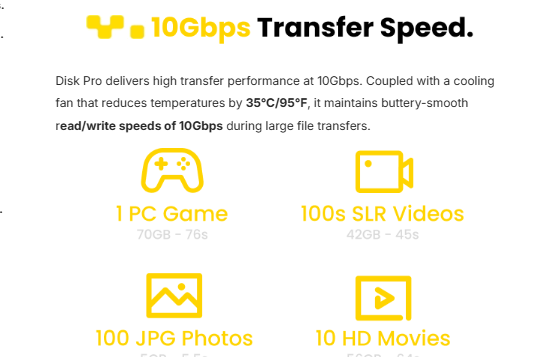
The SHARGE DiskPro crowdfunding campaign on Kickstarter has currently raised over $550,000 from 1,876 backers, indicating a strong market demand for integrated portable storage solutions, despite a perceived lack of optimal products. Early prototypes and media reviews have shown a polarized reception. Supporters praise the performance boost from active cooling, with tests demonstrating the DiskPro can maintain stable 10Gbps transfer speeds during sustained large file transfers, reducing temperatures from 80°C to around 50°C. However, significant concerns persist, including the non-replaceable internal SSD limiting long-term value, as well as questions regarding fan noise, dust resistance, and overall long-term durability.
Core Technology Selling Points
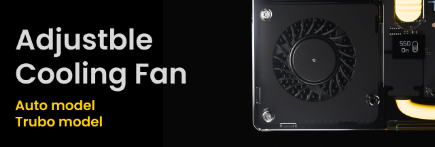
The SHARGE DiskPro features an 'Ice-storm' active cooling system, incorporating a high-speed fan (7000-10000 RPM) with Turbo and Auto modes. This system actively dissipates heat from the NAND flash and controller chip, preventing performance throttling caused by overheating. Active cooling directly addresses a critical pain point for portable SSDs.
Most portable SSDs on the market rely on passive cooling via metal casings, which often leads to thermal throttling and speed drops during prolonged continuous writes. Active fan cooling, conversely, maintains the chip within its optimal operating temperature range, ensuring sustained transfer performance and extending NAND lifespan. Both manufacturer and independent media tests have confirmed its effectiveness in temperature control.
However, the fan introduces three key trade-offs. Firstly, noise and vibration: high RPMs inevitably generate audible sound, potentially affecting user experience in quiet environments. Secondly, dust ingress: intake and exhaust vents create opportunities for dust and debris to enter the device, which could compromise cooling efficiency or damage components over time. The product's ingress protection rating and cleaning solutions warrant attention. Thirdly, power consumption: when connected to low-power devices like smartphones, the fan's operation will consume additional power, potentially shortening the mobile device's battery life.
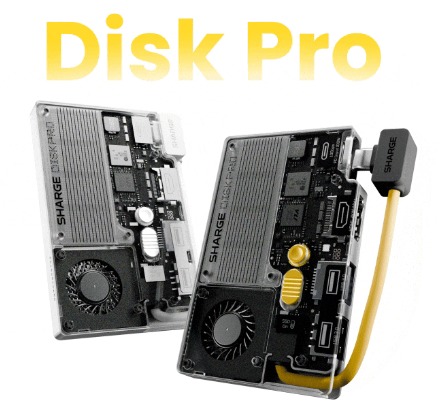
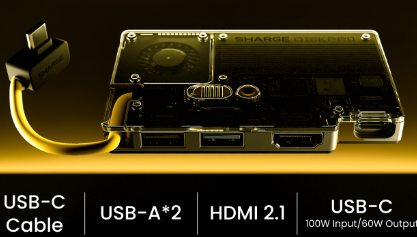
The DiskPro adopts an integrated PSSD (Portable Solid State Drive) design, encapsulating an SSD with up to 4TB capacity directly within the device. This integrates a multi-port hub, HDMI output, and PD power delivery, all designed for magnetic attachment to the back of a phone or laptop. This all-in-one approach offers significant advantages in portability and plug-and-play convenience, making it highly user-friendly for non-technical users.
The magnetic attachment, combined with an integrated cable, enables scenarios like direct ProRes video recording on iPhones, an level of integration difficult to achieve with separate hub and SSD solutions.
The most significant controversy surrounding this sealed design is its non-replaceability. Professional users often prefer removable NVMe solutions for two reasons: first, if the SSD fails, the storage module cannot be replaced independently, leading to higher overall repair costs; second, users cannot flexibly upgrade capacity as needed.
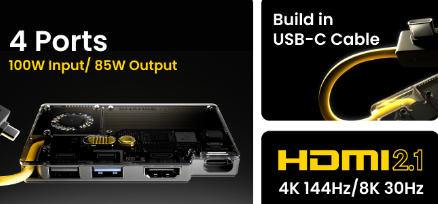
The DiskPro is equipped with an HDMI 2.1 interface, supporting 4K 144Hz or 8K 30Hz output, alongside four USB ports and 10Gbps data transfer speeds. It also offers 100W PD input and 80W output. Integrating storage, display expansion, and PD charging into a single device provides practical value for content creators and multi-screen office users. Compared to common 'hub + external SSD' separate solutions, the integrated design reduces cable clutter and port usage, enhancing portability.
While HDMI 2.1's theoretical bandwidth supports high refresh rates and resolutions, actual performance depends on the entire signal chain, including the connected device's GPU performance, cable specifications, and whether large file transfers are occurring simultaneously. Manufacturer-stated maximums are typically based on ideal test environments, and real-world usage may see performance reductions due to bandwidth competition.
The device employs a multi-controller architecture with three independent controllers managing different ports. The manufacturer claims over 1000 hours of compatibility testing across more than 800 devices. Theoretically, this multi-controller design can reduce resource competition and protocol conflicts between ports, improving device compatibility. Given the fragmentation issues with USB-C devices regarding power output limits, OTG behavior, and display mapping (especially across different smartphone and gaming console brands), independent control offers more precise management.
Compatibility issues often arise in edge cases, such as specific iPhone power output limitations, abnormal OTG behavior on certain Android devices, or power/display protocol differences with Switch or Steam Deck. The manufacturer's extensive testing is a positive sign, but third-party verification of interoperability on real-world devices would be more convincing.
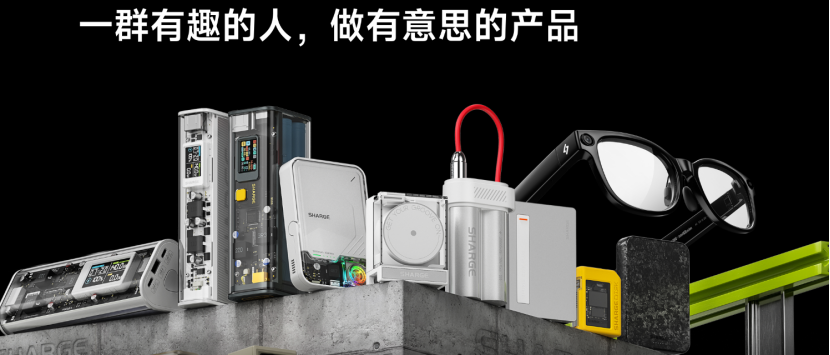
SHARGE Technology (Shenzhen) Co., Ltd. is a Chinese consumer electronics company specializing in portable power and mobile accessories. The brand has established a reputation in the charger and power bank market, with products like its GaN chargers being cited or reviewed by tech media such as The Verge, MKBHD, and Linus Tech Tips. This indicates significant brand exposure and channel capability within the consumer electronics sphere. In recent years, SHARGE has consistently explored innovative electronic products, including AR glasses.
Prior to the DiskPro, SHARGE had already launched portable storage-related Kickstarter projects and retail products, including the Disk and DiskPlus series. This suggests the brand has accumulated product experience and early user feedback in the portable storage + hub sector, fostering a degree of user trust.


Market Analysis
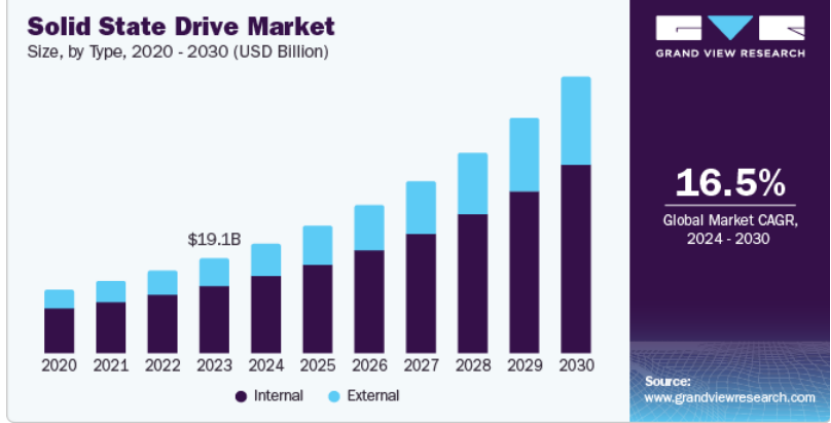
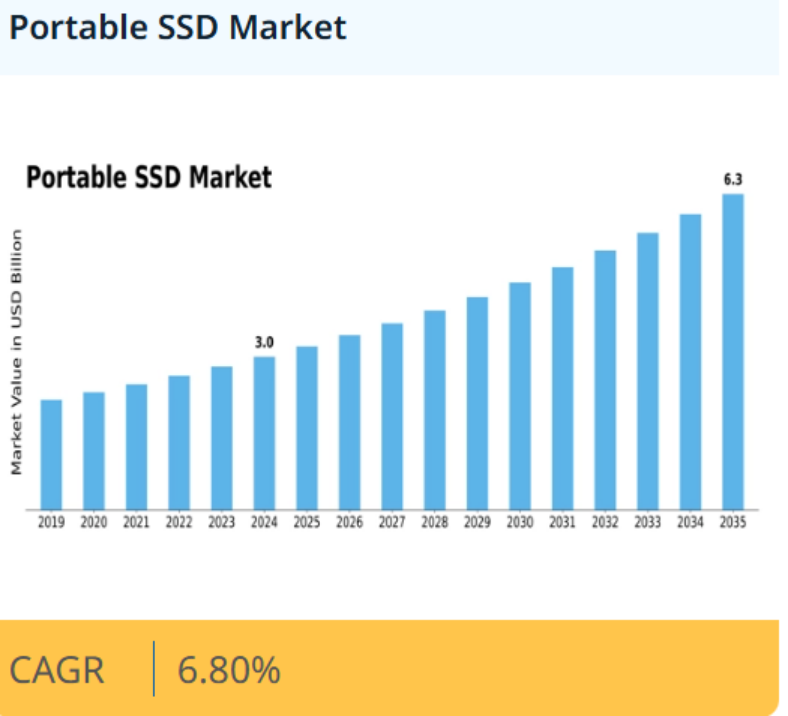
The portable SSD market is experiencing rapid growth. According to Grand View Research, the global SSD market was valued at approximately $19.1 billion in 2023 and is projected to reach $55.1 billion by 2030, with a compound annual growth rate (CAGR) of 16.5%. The portable/external SSD sub-segment alone is estimated to be worth $2.7-3.05 billion in 2024, with MarketResearchFuture and other agencies predicting robust growth in the coming years.
Concurrently, the USB Hub and docking station market is also expanding, with some reports estimating a base of $4.4 billion in 2023, potentially reaching $8.4 billion by 2032. Integrated products like the DiskPro, which combine a hub and SSD, are effectively competing for market share in two growing segments simultaneously.
Current market competitors can be broadly categorized into three types. The first includes traditional brands focused on high-speed portable SSDs, such as MSI Datamag, which closely mirrors the DiskPro's positioning with magnetic attachment and aluminum alloy cooling. Brands like Samsung, SanDisk, and OWC also offer high-speed portable SSDs with strong performance and cooling designs, but typically without integrated hub and HDMI functionalities.
The second category comprises modular combination solutions. Many users prefer to purchase hubs from brands like Satechi or Anker separately and pair them with external SSDs such as the Samsung T7 or SanDisk Extreme. While this approach sacrifices some portability, it retains maintainability and upgrade flexibility.
The third category consists of similar new Kickstarter projects, including SHARGE's own earlier Disk series and other portable storage products emphasizing magnetic attachment and active cooling. These projects validate the genuine market demand but have also exposed common controversies regarding upgradeability, repairability, and long-term durability.
Based on observations, several key structural changes are occurring within this industry. Firstly, there's a growing demand for sustained high-performance transfers. Content creators require ProRes recording on phones and RAW file transfers from cameras, while gamers need stable game installations and console expansion. The DiskPro's active cooling directly addresses this pain point.
Secondly, cooling and longevity are becoming crucial purchasing factors. An increasing number of portable SSDs are criticized by users for thermal throttling issues, making active cooling a differentiating selling point. However, this also introduces new trade-offs concerning durability, noise, and dust.
Thirdly, repairability and sustainability are gradually gaining attention. Within the user base, there remains a demand for drives that can be swapped or repaired. While sealed, integrated designs enhance the user experience, they simultaneously reduce long-term maintainability and resale value.

Concerns about the inability to self-replace or recycle the SSD have been raised in YouTube reviews and community discussions, impacting the product's long-term value and resale potential.