Algobrix: The $1.15M Educational Robot That Faced Post-Campaign Backlash
Crowdfunding Analysis · · PledgeRadar Editorial
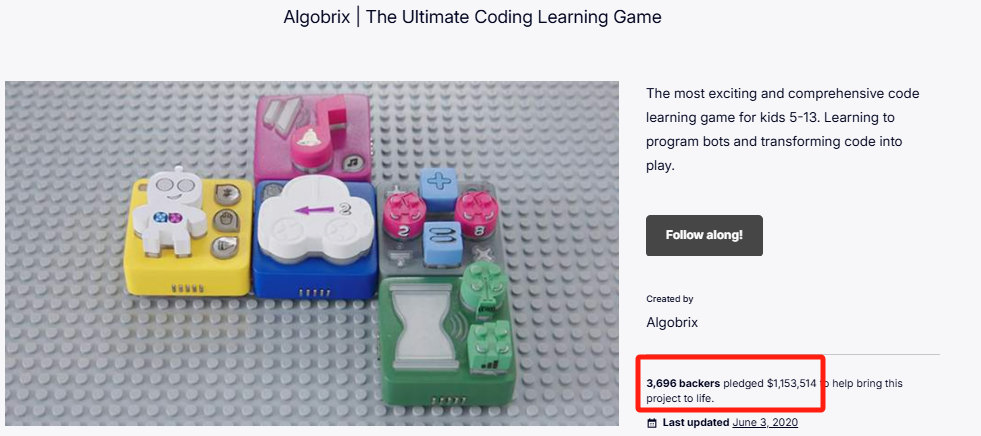
Algobrix achieved remarkable crowdfunding success on Kickstarter, launching on July 25, 2017, and running for 58 days. The campaign attracted 3,696 backers and raised a total of $1.15 million, marking it as a significant achievement in the crowdfunding space. This outcome not only demonstrated strong market demand for tangible programming education products but also highlighted the appeal of Algobrix's core concept.
Key Product Features
Algobrix's primary innovation lies in transforming abstract programming concepts into concrete, physical blocks. Compatible with LEGO™ bricks, these blocks represent fundamental programming elements such as functions, parameters, loops, and sensor interactions, effectively lowering the barrier for children to learn coding.
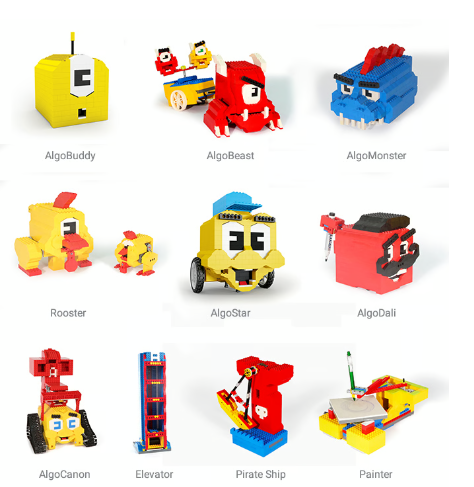
The product offers a comprehensive robot programming experience. Users can assemble various Algobot models and control actuators like motors, lights, and sounds using the block-based programming system. It also supports interaction with multiple sensors, including light, sound, touch, and distance.
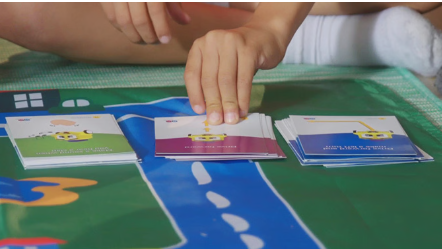
The system incorporates a progressive learning mechanism through activity cards, ranging from basic to advanced tasks. These are complemented by themed activity boards (e.g., city, space, travel), creating a multi-layered educational design that guides children through programming concepts step-by-step.
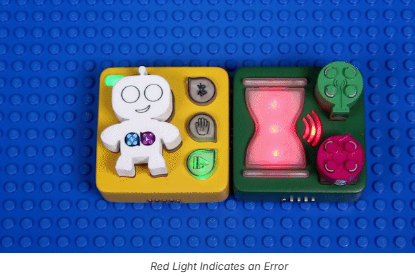
Blocks are equipped with built-in red light indicators, providing real-time feedback to quickly identify and correct programming errors. This feature enhances experimental efficiency and problem-solving skills during the learning process.
Designed for open-ended play, Algobrix features LEGO™ brick compatibility and its core modules are based on the Arduino platform, ensuring system openness and future expandability.
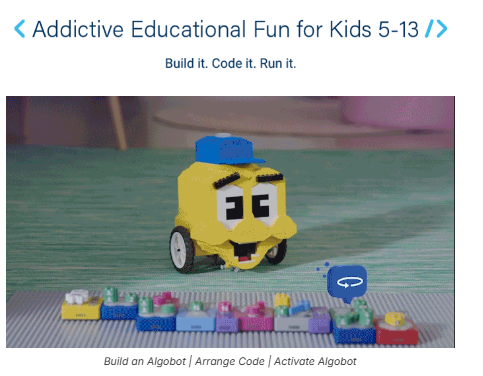
The Team and Vision
The team behind Algobrix brought considerable expertise to the project. It was co-founded by Amir Asor and Dr. Danny Eizicovits. Amir Asor, founder of Young Engineers, contributed 10 years of STEM teaching experience and extensive practical knowledge in children's education. Dr. Danny Eizicovits, with a background in robotics research, provided robust theoretical support for the product's technical implementation.
Algobrix is closely associated with the Young Engineers educational organization, which operates in over 40 countries, focusing on children's brick-based and STEM education. This affiliation provided a broad international reach and educational resources. Algobrix positioned itself on an 'Edutainment' philosophy, integrating education with entertainment, and adopted teaching methodologies like Spiral Learning and Project-Based Learning (PBL) to foster children's active thinking and skill development.
Market Landscape and Post-Campaign Reality
In the educational toy market, physical programming toys are experiencing rapid growth. Algobrix entered a competitive landscape alongside established brands such as Codey Rocky, LEGO™ Mindstorms, and Osmo Coding. However, Algobrix sought differentiation by emphasizing its tangible block format and non-screen-based learning approach.
From a product advantage perspective, Algobrix offered a more intuitive and playable experience compared to traditional programming robots, and a richer physical interaction and construction experience than programming apps. Its Arduino compatibility strategy also provided a clear technical path for future product expansion.
Despite its initial crowdfunding triumph, the subsequent market performance revealed a stark contrast. Post-campaign, Algobrix's reputation suffered significantly. On Trustpilot, the official website received an average rating of just 2.1/5, with all nine reviews being one-star. Numerous users reported not receiving their promised products, with some labeling the project a 'scam' or 'fraud.' This indicates severe potential issues with supply chain management, product fulfillment, or customer service.
Despite its phenomenal crowdfunding success, Algobrix's post-campaign reputation suffered severely, with numerous backers reporting non-delivery and labeling the project a 'scam' on Trustpilot.