GAMEBAG: A £310K Kickstarter Success Story in Retro Gaming Fashion
Crowdfunding Analysis · · PledgeRadar Editorial
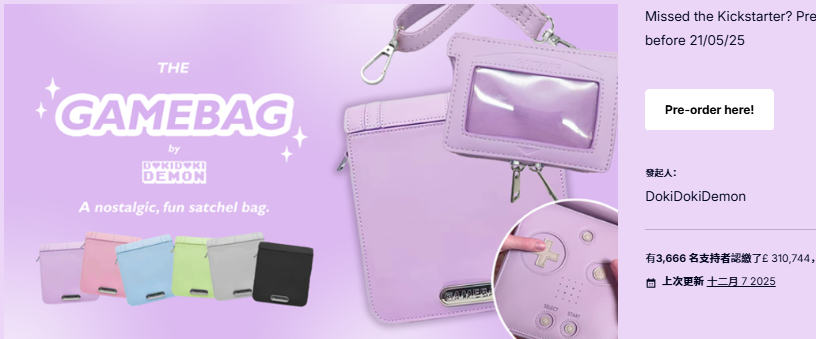
GAMEBAG's crowdfunding campaign concluded on Kickstarter at the end of April, successfully raising approximately £310,700 from 3,666 backers. The project has now completed its funding phase and is preparing for delivery.
GAMEBAG Campaign Overview
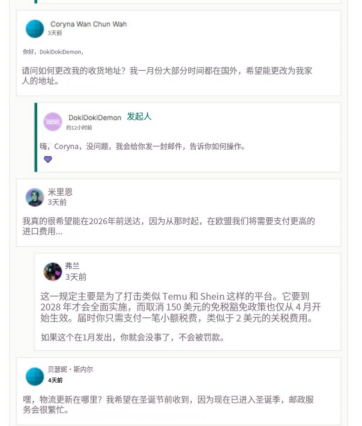
The official project page and subsequent updates have clearly outlined the production and shipping schedule, with initial production and dispatch anticipated to commence in October 2025. Discussions among backers on the Kickstarter forums have primarily focused on choices for product colors and front flap styles, as well as specific delivery arrangements.
The project team has maintained active engagement with its community through Instagram and regular project updates. However, as of now, delivery has not yet begun, leading many backers to inquire about shipping timelines, hoping to receive their products before Christmas.
Modular Design & Customization
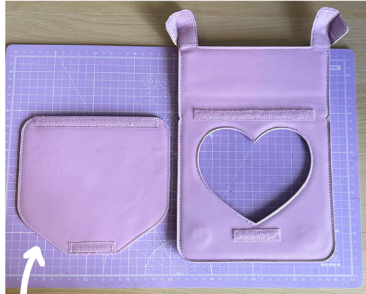
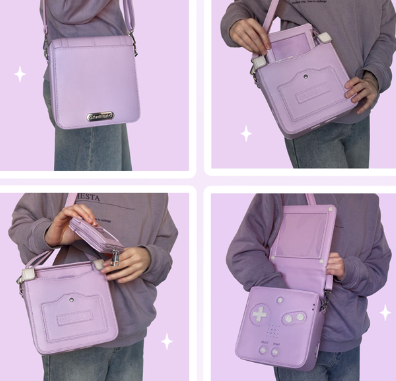
The core differentiator of the GAMEBAG lies in its modular, interchangeable front flap design. Users can quickly swap out the front panel to match their mood, outfit, or event theme, significantly enhancing the product's personalization and display value.
From a supply chain perspective, this design presents distinct manufacturing challenges: strict dimensional tolerances between the front flap and the bag body are crucial, and the connection and fastening mechanism (which uses strong Velcro) requires thorough durability testing. Furthermore, packaging and spare parts logistics must support extensive SKU management. The success of such a modular design ultimately hinges on the manufacturing factory's precision control and quality inspection system.
Retro Gaming Aesthetics & Emotional Appeal
The product's visual identity centers on a cartridge window design combined with retro gaming aesthetics, aiming to evoke players' nostalgia and sense of identity.
Designs based on such emotional connections can significantly boost purchase conversion and social sharing. However, long-term brand value development depends on the continuous release of new styles, collaborative editions, or limited editions, alongside careful management of intellectual property risks. The project team has proactively addressed potential IP concerns by clarifying that the product draws visual inspiration from game aesthetics without incorporating third-party physical game hardware.
Materials & Cost Efficiency
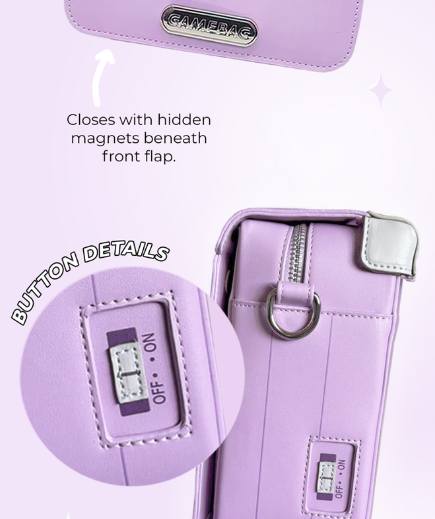
The GAMEBAG utilizes vegan PU leather, a transparent PVC window, and a fabric lining, complemented by metal hardware. This material selection balances vegan-friendly credentials with cost-effective mass production, positioning the product as a fashion-forward, mid-range accessory.
Key considerations for long-term durability include resistance to years of daily wear, seam strength, and the repeated adhesion durability of the Velcro fasteners. Successful mass production will require factories to implement comprehensive Quality Control (QC) processes and robust design validation for critical components.
Targeted Sizing & Functionality
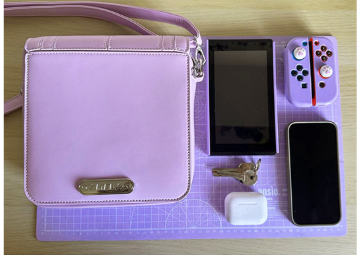
The GAMEBAG's body is designed to be relatively compact, explicitly not accommodating items like a Switch Lite or an A5 notebook. This clearly positions the product for decorative and light travel purposes, rather than as a large-capacity utility bag.
This precise positioning aligns perfectly with its intended use cases, such as conventions, light commutes, and display as a collectible. While the GAMEBAG may not be the primary solution for users needing to carry multiple electronic devices or a large volume of items, this does not diminish its appeal to its target audience.
Independent Creator & Niche Appeal
The product emphasizes the personal brand and design aesthetic of independent creator Beth (DokiDokiDemon), showcasing a distinct individual style and a small-batch, handcrafted feel. This characteristic quickly fosters emotional resonance and drives sharing within fan communities.
Beth (DokiDokiDemon) has cultivated her personal brand on social media platforms (Instagram, X, etc.) for an extended period, starting with sales of enamel pins and small merchandise, and has built an active fanbase. The GAMEBAG is considered her most significant commercial project to date, representing a typical direct-to-consumer (DTC) and crowdfunding hybrid model, where a creator leverages a small team for outsourced production.
Market Analysis & Competitive Landscape
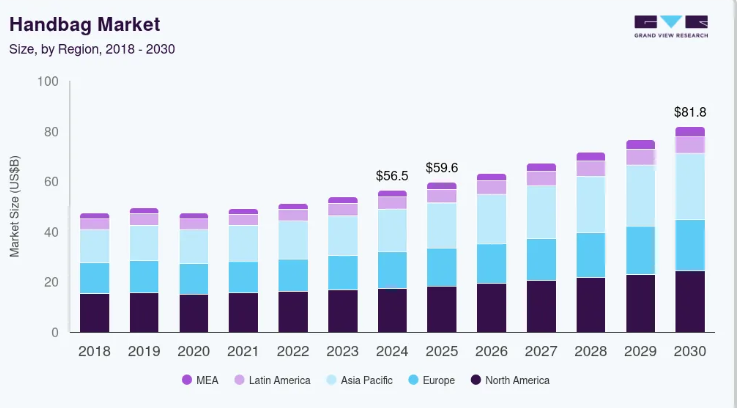
The global handbag and satchel market represents a massive consumer goods category. Leading market research firms (such as Grand View Research) estimate the global handbag market size for 2024-2025 to be between $56 billion and $67 billion, with an anticipated compound annual growth rate (CAGR) of approximately 5-7% in the coming years, reflecting robust market demand. Within this, satchels, as a sub-category combining functionality and fashion, possess a stable consumer base, though their market scale may not rival that of luxury brands.
GAMEBAG's market opportunity is concentrated at the intersection of ACG (Anime, Comics, Games) culture, retro aesthetics, and functional accessories. This niche is supported by three key drivers: the fan economy, where younger consumers are willing to pay for emotional identification and personal expression; the potential for repeat purchases offered by interchangeable front flaps; and scenario-based sales through offline conventions and community channels.
The competitive landscape comprises two main types of players. Direct competition comes from independent designers and niche DTC brands (selling retro gaming-themed bags via platforms like Etsy, Shopify, and Instagram), as well as fast-fashion brands with advantages in pricing and distribution channels. Compared to global brands and retail giants, DokiDokiDemon's core competitive advantage lies in her IP affinity and deep community engagement.
By combining retro gaming aesthetics with a practical satchel, the product can rapidly amplify word-of-mouth and emotional resonance among gamers and trend-conscious audiences. Provided that production quality, international logistics, and tax compliance are fully met, such emotionally driven peripheral fashion items hold stable commercial potential and community monetization opportunities in the future.
The project team has explicitly stated in official announcements that the product does not contain third-party physical game hardware, using only visual design inspiration to avoid intellectual property disputes.