Wiivv's Pioneering 3D-Printed Sandals: A $560K Crowdfunding Case Study
Crowdfunding Analysis · · PledgeRadar Editorial
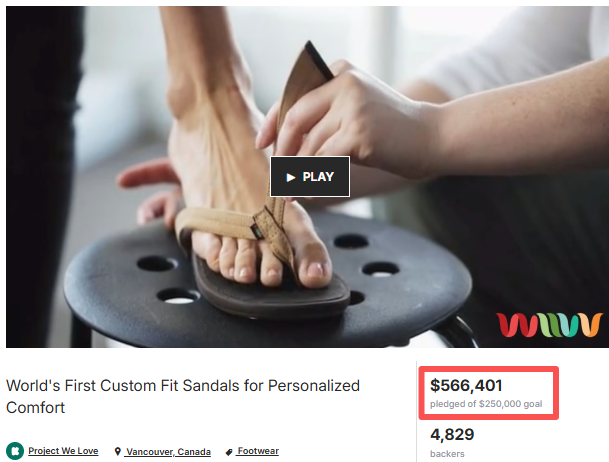
Wiivv's groundbreaking project for the world's first custom 3D-printed sandals on Kickstarter attracted 4,829 backers and raised $566,000. This wasn't Wiivv's first foray into crowdfunding; in 2016-2017, the company successfully launched and delivered custom 3D-printed insoles via both Kickstarter and Indiegogo. While some users and bloggers praised the product's comfort, custom fit, and delivery speed, noting a significant improvement over standard sandals, rational skepticism emerged on platforms like Reddit. Concerns primarily revolved around product positioning: the sandals offered cushioning and support but could not replace professional orthotics requiring gait analysis. Overall, the product appeared well-suited for general users seeking everyday comfort, but less so for individuals with complex podiatric needs.
Product Core Selling Points
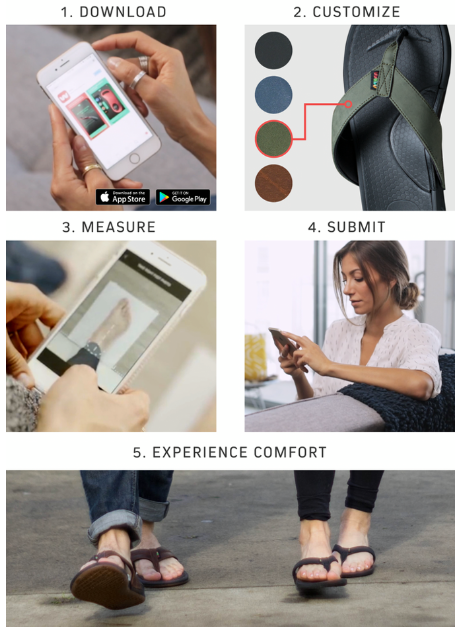
Wiivv developed a mobile application capable of generating a digital model of each foot, capturing over 200 data points through simple photographs. The technical process involved 2D photo capture, algorithmic conversion into a 3D model, and the generation of 3D printing parameters for arch support. This non-contact acquisition method lowered the barrier to customization, allowing users to input foot data without needing in-store scans. Technically, reconstructing a 3D foot shape from 2D images relies on the precision of computer vision algorithms, with lighting conditions, shooting angles, and ground flatness all impacting data quality. While mobile capture objectively presents a precision gap compared to professional foot scanners, this trade-off offers commercial viability in terms of cost and convenience for general comfort needs.
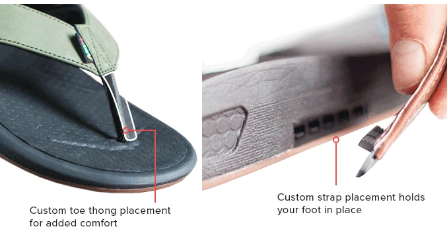
The product emphasized differentiated design for left and right feet, with each foot individually modeled and produced. This offered practical value for users with discrepancies in foot size or morphology. Structurally, it combined 3D-printed custom arch support with a triple-density foam footbed and a deep heel cup, corresponding to support, cushioning, and impact dispersion functions, respectively. The advantage of 3D printing lies in its ability to create complex arched surfaces, though material selection is limited by the printing process. The multi-density design of the foam footbed is a mature footwear material solution, with the key being the match between density distribution and foot pressure distribution. A deep heel cup design can stabilize the rearfoot, but the adaptation of cup depth to individual ankle joint mobility requires data validation.
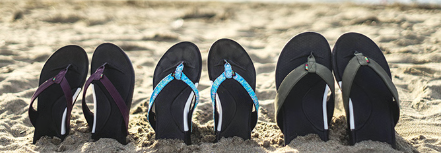
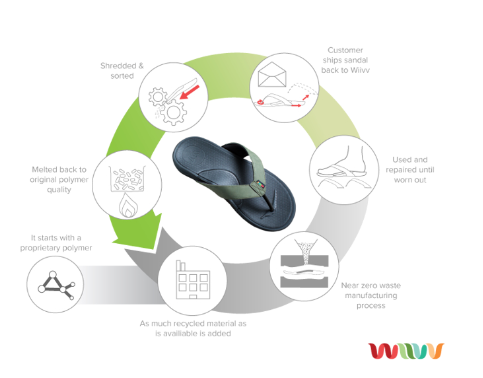
The brand claimed to have conducted high and low-temperature durability tests at the Lululemon White Space Lab and Fortius Sport & Health Center. Product design included replaceable straps, machine washability, and multiple color options, balancing functionality with everyday aesthetics. Material-wise, the footbed utilized recyclable materials, and localized assembly was promoted to reduce the carbon footprint from transportation. For a small company, this presented a cost challenge. While localized manufacturing could shorten delivery cycles, it also implied significant initial investment to establish printing and assembly capacities in multiple regions.
Wiivv Wearables Inc. originated in Vancouver, Canada, later establishing production and assembly facilities in San Diego, USA. The company initially entered the market with 3D-printed custom insoles; its BASE insoles project on Kickstarter became one of the most-watched 3D-printed consumer products at the time, accumulating an early user base and a foot database. Regarding financing, Wiivv completed seed and early-stage funding rounds between 2015 and 2017. Around 2017, it announced the completion of approximately CAD 5.2 million in Series A funding, concurrently acquiring eSoles to expand its customer base and data capabilities. The company positioned its accumulated foot data and proprietary manufacturing capabilities as core competitive advantages, gradually extending its technological roadmap from insoles to finished footwear products like sandals.
Market Analysis
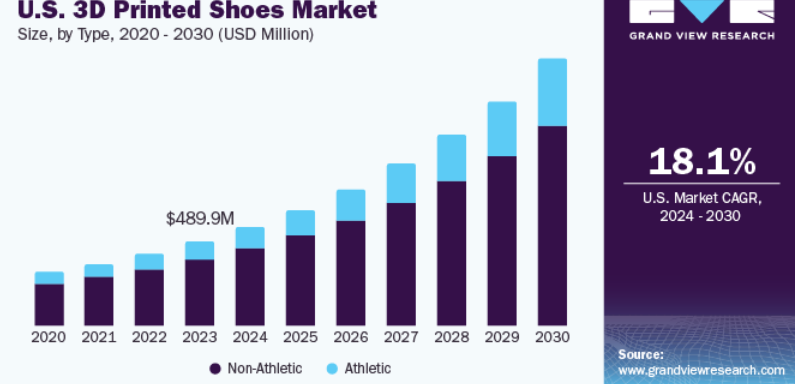
The 3D-printed footwear market is experiencing rapid expansion. According to Grand View Research data, the global 3D-printed footwear market was approximately $1.64 billion in 2023, projected to reach $5.38 billion by 2030, with a compound annual growth rate (CAGR) of approximately 18% from 2024-2030. This growth is driven by increasing demand for customization, on-demand production models, and trends toward localized supply chains.
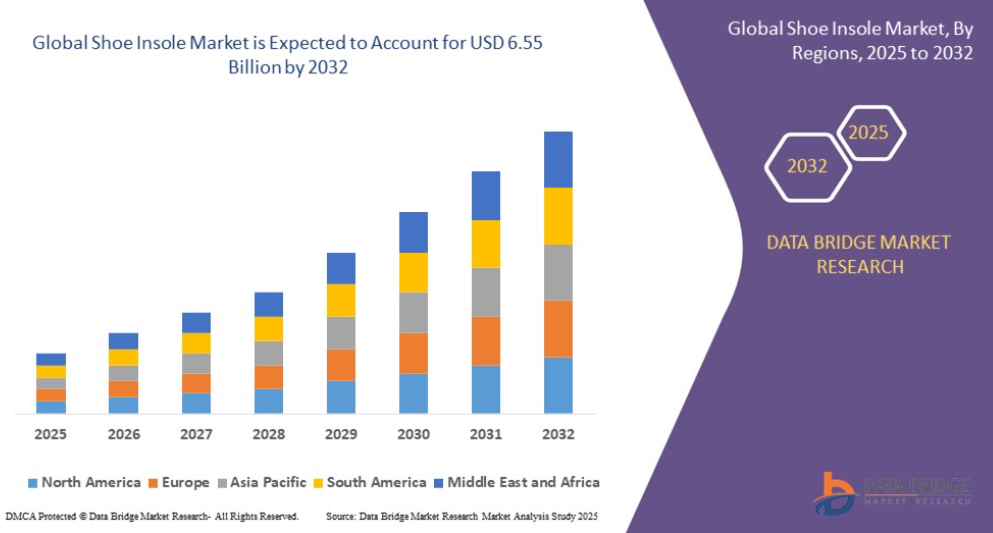
The more traditional market for insoles and orthopedic supports is already multi-billion dollar in scale, with the prevalence of foot problems providing a continuous demand base. Research indicates that approximately 10% of the population will experience plantar fasciitis in their lifetime, and broader surveys show that 75-80% of American adults have experienced foot discomfort, creating a robust market for comfort-plus-support products.
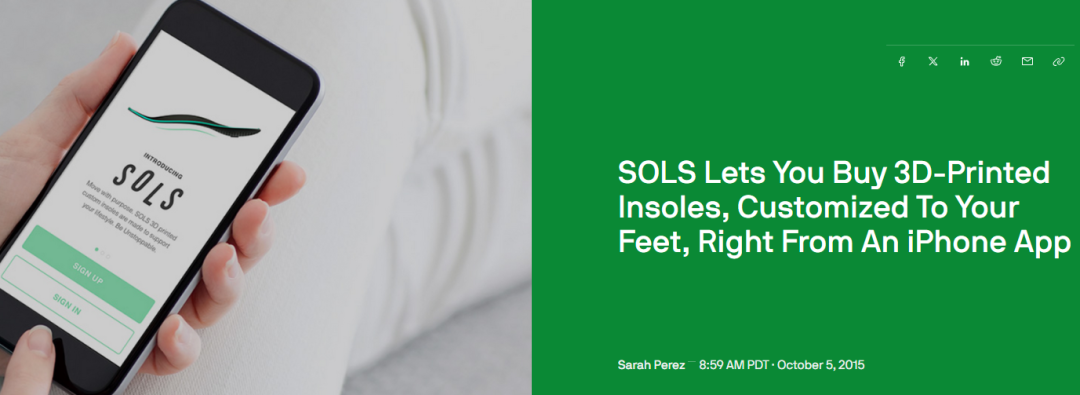
In terms of the competitive landscape, startups like SOLS, Aetrex, Feetz, and Arize are all developing digital foot scanning and custom production solutions. Traditional brands such as Superfeet and Dr. Scholl's are also transitioning towards digitalization. A greater potential threat comes from athletic brands like Adidas (Futurecraft) and New Balance. Their investments in materials and 3D printing technologies could modularize custom services. However, large brands' channel strategies and pricing positions differ from Wiivv's, whose advantage lies in its direct-to-consumer customization process and accumulated data.
Market opportunities stem from increasing consumer acceptance of personalization and comfort, lower barriers to digital data acquisition, decreasing 3D printing costs, and a preference for rapid local delivery. Risks include the product's ambiguous positioning; if users expect medical-grade orthotics, it could lead to negative public perception. Furthermore, cost control in scaled manufacturing, long-term material durability, and integration with insurance or healthcare systems are all commercialization hurdles. Community discussions also highlighted that for users with complex gait issues, support generated solely from static photos might be insufficient, requiring professional medical evaluation.
Digital foot measurement combined with localized 3D printing production is moving customized comfort from niche luxury to the mass market, with significant expansion potential amid rising foot health issues and upgrading experience consumption. However, transitioning from a comfort consumer product to an insurance-approved orthopedic solution will require further clinical data and channel partnerships for validation.

Digital foot measurement combined with localized 3D printing production is moving customized comfort from niche luxury to the mass market, with significant expansion potential amid rising foot health issues and upgrading experience consumption.