IRMO M1 Exoskeleton: Visual Perception Technology Powers Rapid Crowdfunding Success
Crowdfunding Analysis · · PledgeRadar Editorial
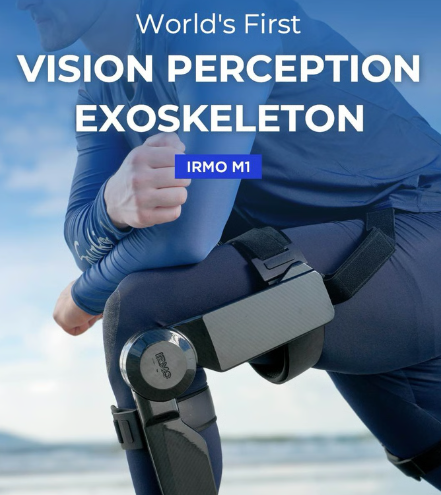
The IRMO M1 is a lightweight, "visual perception" knee exoskeleton designed for outdoor sports and extended mobility. It targets activities like hiking, climbing, long-distance walking, and trail running, or any scenario requiring reduced knee joint impact. The device can proactively sense uneven terrain and adjust assistance/cushioning in real-time.
Campaign Overview and Early Success
Launched on Kickstarter on November 20th, the IRMO M1 campaign quickly garnered approximately $636,500 from 746 backers within 15 days. Official demonstrations, along with reviews and hands-on videos from various tech media outlets and outdoor sports creators, have showcased the device in real-world scenarios, including uphill climbs and stair negotiation.
Community feedback indicates that most backers are particularly interested in and concerned about the visual perception system's real-time responsiveness in complex terrain.
Forward-Looking Perception with Visual and LADAR Fusion
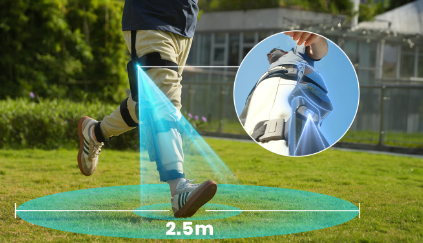
The IRMO M1's core innovation lies in its integration of camera and LADAR (Laser Detection and Ranging) sensors, enabling proactive terrain prediction.
This forward-looking perception system can actively adjust the joint's assistance and cushioning strategies before the user approaches an obstacle or begins a descent. Theoretically, this significantly reduces instantaneous impact and enhances gait stability and safety.
Key engineering challenges for this technology include ensuring extremely low end-to-end latency from perception to control execution, robust sensor performance in varying outdoor light and harsh weather conditions, and fail-safe designs for critical safety scenarios.
Any misperception or excessive execution delay could compromise, rather than improve, safety. Therefore, this system requires thorough engineering validation and safety certification.


Lightweight and Efficient Mechanical Design
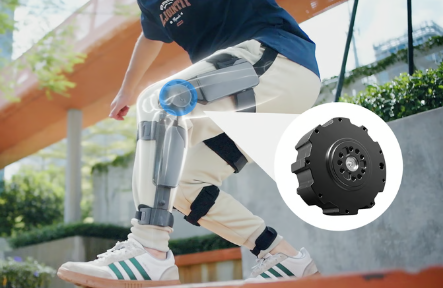
The device utilizes lightweight materials like carbon fiber, resulting in an overall weight of approximately 4.4 pounds (≈2kg), positioning it as one of the lighter wearable exoskeletons available. Its dynamically balanced joint design emphasizes multi-mode adaptability, requiring the product to support diverse human movements such as walking, sitting, running, and jumping.
This necessitates mechanical and control systems with low inertia and high bandwidth, capable of providing sufficient torque assistance while maintaining a natural feel for the user. Material selection and structural optimization directly influence long-term durability and protection ratings (officially claimed to be IP67 dust and water resistant).

Versatile Modes and Hot-Swappable Battery
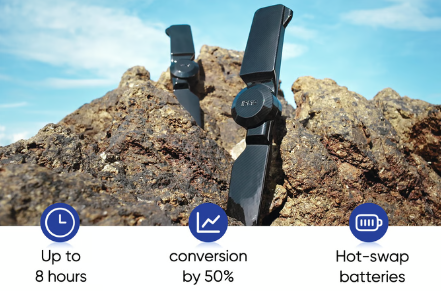
The product offers multiple operating modes, including Eco (power-saving), Turbo (powerful), Training, and Rest, allowing users to switch flexibly based on different scenarios and physical conditions. The hot-swappable battery design enables rapid power replenishment when depleted, theoretically extending usage time throughout the day.
Key to achieving continuous, seamless switching are the durability and waterproofing of the battery interface, along with smooth transition algorithms at the firmware level. The officially claimed 8-hour battery life requires verification through third-party testing under actual operating conditions (varying exercise intensity, terrain, and weather).
Multi-Sensor Fusion and Motion Intent Recognition
The system is equipped with a 9-axis IMU (Inertial Measurement Unit) and visual sensors, integrating data via the HMoCS control algorithm. This architecture aims to improve the accuracy of recognizing user motion intent (gait characteristics, speed changes, anticipation of missteps, etc.), theoretically reducing inappropriate assistance actions.
Engineering challenges for multi-sensor fusion include algorithmic latency, sensor calibration precision, and adaptability to individual differences (varying height, weight, gait characteristics). Such systems typically require extensive real-world data accumulation and long-term algorithmic iteration to reach maturity.
Consumer-Grade Positioning for Outdoor Sports
The IRMO M1 is explicitly positioned for outdoor sports and recreational consumer scenarios (hiking, climbing, trail running, etc.), rather than traditional rehabilitation or industrial applications. This positioning opens up new market opportunities but also imposes higher demands: stricter ergonomic standards, aesthetically pleasing industrial design, and a lighter structure.
Furthermore, consumer-grade assistive devices face varying regulatory requirements and safety compliance standards across different countries, posing additional technical and administrative barriers to global market entry.

Company Background: Beijing Hangmo Technology
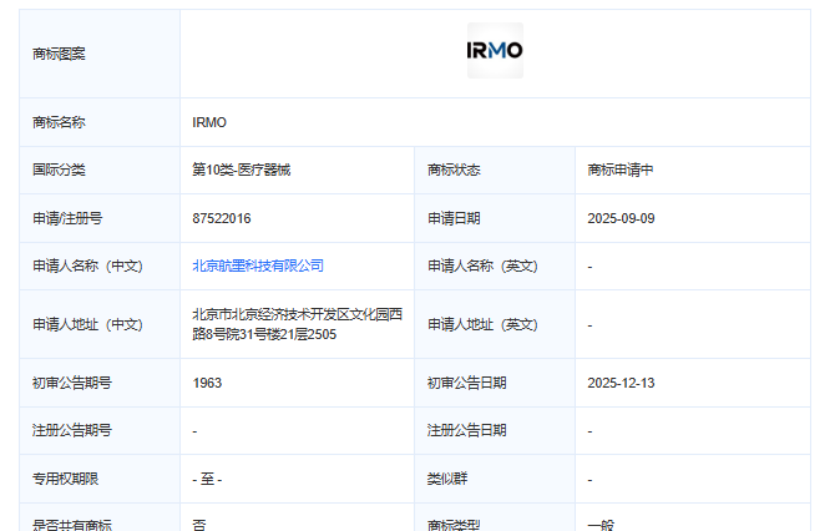
Official IRMO documentation indicates the brand is a wearable robotics project under Beijing Hangmo Technology Co., Ltd. The company focuses on the research and development of bionic joints and wearable robotics technology. Established relatively recently, its core mission is to pioneer consumer-grade and sports-oriented exoskeleton product lines. The company has already secured two rounds of financing.
Market Analysis: Exoskeleton Industry Trends
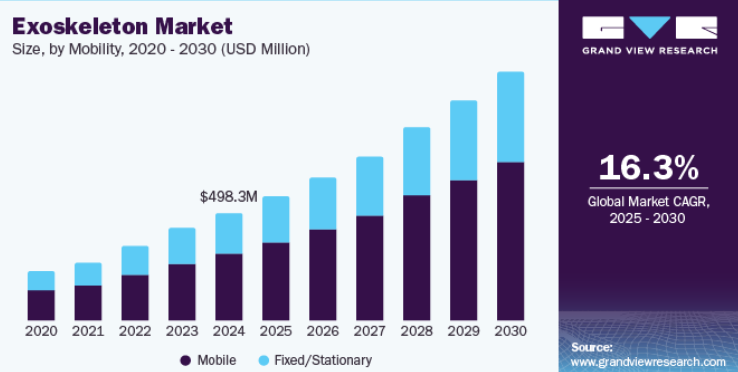
The global exoskeleton market is experiencing rapid growth. Leading market research institutions provide varying growth forecasts, reflecting strong optimism for the sector's future. Grand View Research estimates the global exoskeleton market size at approximately $498 million in 2024, projected to reach $1.25 billion by 2030, with a compound annual growth rate (CAGR) of about 16%.
Currently, the exoskeleton industry is at a pivotal stage, expanding from specialized applications to consumer uses. While medical rehabilitation and industrial assistive exoskeletons still account for the majority of current market revenue, sports/recreational/wearable health support is emerging as a new growth hotspot. IRMO's focus on outdoor sports consumer applications aims to tap into a larger user base, but this segment demands even more stringent requirements for price, user experience, regulatory compliance, and safety.
The competitive landscape in the exoskeleton sector comprises players across multiple tiers. Medical rehabilitation manufacturers (e.g., ReWalk, EksoBionics, SuitX/REHAMOVE) have accumulated deep experience in regulatory approvals and clinical validation. Industrial assistance manufacturers (e.g., Sarcos, Hyundai/Daemon, European manufacturers) emphasize load assistance and productivity enhancement. In the sports consumer segment, PledgeRadar has also reported on several Kickstarter and Indiegogo projects exploring lightweight knee assistance or running support solutions, most of which are in prototype or early production stages. Product differentiation primarily revolves around portability, price, user experience, and technological innovation.
IRMO's visual-first perception strategy represents a clear attempt at technological differentiation, but it also needs to be substantially benchmarked against the safety and reliability standards of existing mature enterprises.