YUEDAO Portable Saltwater Generator: Innovation or Niche Solution?
Crowdfunding Analysis · · PledgeRadar Editorial
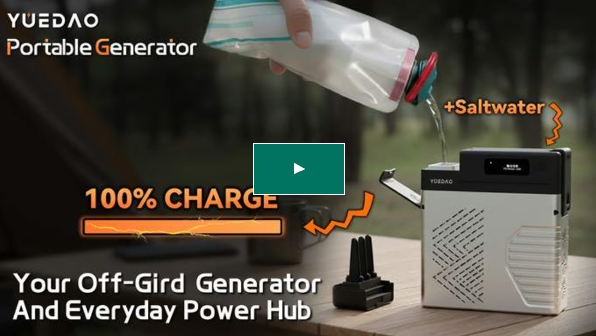
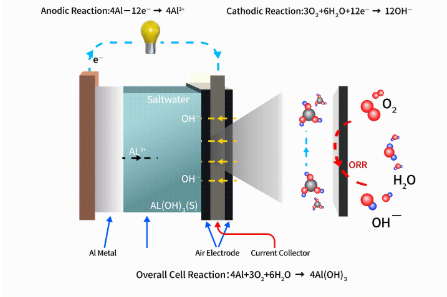
The YUEDAO Portable Generator is an emergency power device based on metal-air electrochemical principles. It generates electricity by injecting saltwater (either ordinary saline or seawater) into the unit, which activates internal metal fuel plates. The device operates without lithium batteries, fuel combustion, or noise, making it ideal for emergency scenarios where traditional power sources are unreliable, such as home power outages, outdoor rescue operations, maritime use, and expeditions.
Campaign Overview and Backer Feedback
The YUEDAO Portable Generator campaign was launched by JXZK on Kickstarter with a 45-day funding period. With only a few days remaining, the project has raised just under $90,000 from 338 backers. The relatively limited number of backers suggests that participants are primarily target users with genuine emergency power needs, indicating a low proportion of impulse purchases.
On forums, backers generally acknowledged the emergency appeal of a device that can generate power simply by adding salt. However, many also raised questions about long-term storage stability, actual discharge efficiency, and the cost of replacing fuel plates. The project team addressed these concerns by providing engineering demonstrations and test videos.
Key Product Features
**Saltwater Activation / Lithium-Free, Air Transportable**
The device generates electricity through an electrochemical reaction between its metal fuel plates and saltwater. This process produces no harmful emissions or noise (below 25dB) and contains no flammable lithium compounds, thus meeting air transport safety requirements.
For users who need to carry a backup power source on flights, this feature is unique in the current portable power station market.
While metal-air systems theoretically eliminate the thermal runaway risks associated with lithium batteries, electrode passivation, byproduct (metal oxide) accumulation, and electrolyte corrosion are long-standing engineering challenges for such systems. The product's ability to maintain stable output under consumer-level usage frequency will require real-world data verification after large-scale delivery.
**High Energy Density Fuel Plates**
A single 300g fuel plate is rated for 500Wh of energy storage, capable of instant activation after years of storage with no self-discharge loss. If accurate, this metric significantly surpasses lithium battery packs of equivalent weight in terms of weight-to-energy ratio, making it highly attractive for lightweight, long-term emergency preparedness scenarios.
It's important to note that 500Wh represents the theoretical chemical storage. Actual usable power depends on discharge efficiency and load matching. The brand has not yet disclosed independent third-party test data for this conversion, making it the most critical parameter requiring verification.
**Hybrid Energy Ecosystem (Solar Panel Integration / Lithium Battery Parallel Connection)**
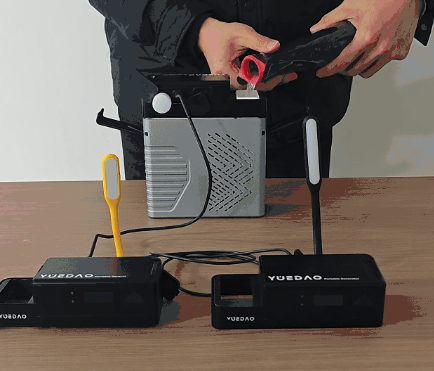
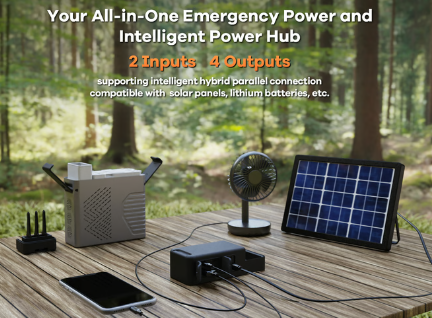
The YUEDAO generator supports parallel connection with solar panels and lithium battery devices, functioning as a power hub. It can integrate solar panels, power adapters, or lithium batteries to form a hybrid emergency microgrid.
This design elevates YUEDAO from a single-use power source to an expandable energy node, significantly enhancing its practical value in long-term power outage or extended outdoor scenarios. The hybrid integration feature demands high-performance bidirectional power management from the controller. Stability and firmware maturity during multi-source parallel connection are key engineering aspects that require thorough validation during mass production.
**Ease of Use and Practicality**
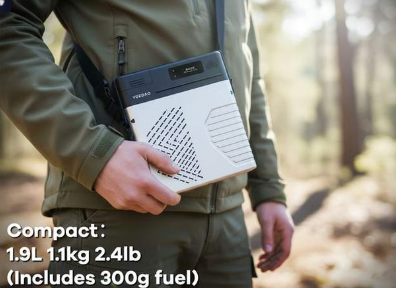
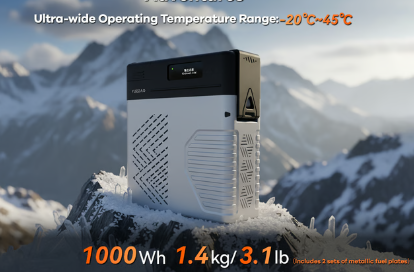
The IPX6 fully waterproof and wide-temperature range body meets IPX6 waterproof standards, with a total volume of 1.9L and a weight of 1.1kg (2.4lb). The design is intended for use in extreme environments.
Waterproofing and lightweight design are crucial for harsh environments such as maritime operations and wilderness rescue, serving as important hardware thresholds for YUEDAO to compete in the emergency/civil-military dual-use market. The actual lower limit of the wide temperature range data and the long-term durability of IPX6 in saltwater corrosive environments are parameters that professional users will scrutinize.
The YUEDAO generator was launched by JXZK on Kickstarter, with its official brand website at yuedaopower.com. The team has disclosed records of multiple prototype iterations and at least one Chinese invention patent number on the project page, and has committed to obtaining international certifications such as CE/FCC.
Market Analysis and Competitive Landscape
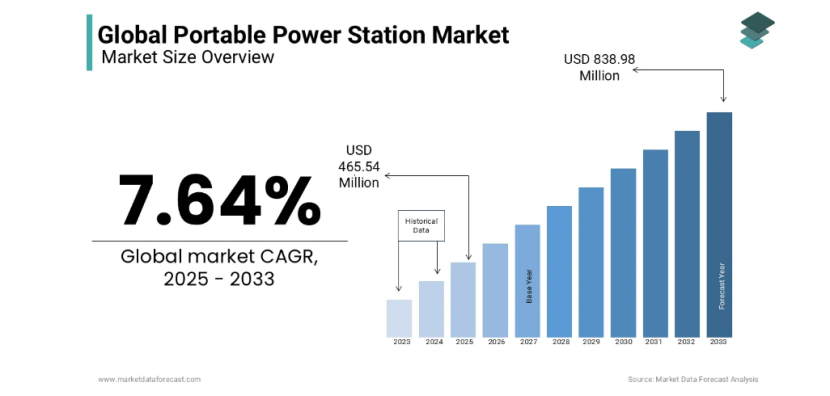
The portable power station market is experiencing rapid expansion. Valued at approximately $4.18 billion in 2025, the global portable power station market is projected to reach around $19.91 billion by 2033, representing a Compound Annual Growth Rate (CAGR) of approximately 22.4%. Key growth drivers stem from three areas: increasing demand for home emergency backup power due to frequent extreme weather events, the continuous rise of the camping and outdoor economy, and the rigid demand for stable off-grid power from remote workers.
By application scenario, emergency backup power accounted for approximately 48% of the total market revenue share in 2024, making it the largest single segment.
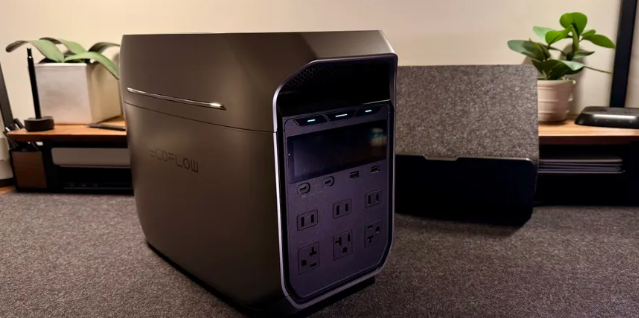
In terms of competitive landscape, EcoFlow and Jackery are leading players in the global portable power station market. Both primarily rely on high-capacity lithium-ion/LiFePO4 solutions, building multi-layered barriers with fast-charging technology, solar compatibility, and smart home ecosystems, while establishing mature distribution channels in North America, Europe, and Asia-Pacific.
Brands like Anker, Bluetti, and GoalZero follow closely, with the entire mainstream sector almost entirely dominated by lithium-ion solutions. YUEDAO's metal-air approach is a technological outlier in the existing market. The structural shortcomings of lithium-ion solutions—being non-air transportable, having self-discharge, and limited long-term storage—are precisely where YUEDAO offers differentiated answers. Therefore, its competitor is less EcoFlow and more the current market's unmet need for emergency scenarios. Market risks include: the long-term supply chain development and replacement cost of fuel plates, compliance for byproduct waste disposal, and building user awareness and trust in a non-lithium technology route. All these require time and consistent product delivery to accumulate.
Portable metal-air power generation is a technology path with clear principles but extremely high engineering barriers. Whether YUEDAO can transition from concept to scale hinges on whether the mass production cost of fuel plates can be sufficiently reduced and whether actual discharge efficiency can withstand independent third-party measurement verification.
YUEDAO's metal-air approach is a technological outlier in the existing market, offering differentiated answers where lithium-ion solutions fall short.