ChopBox: The Smart Cutting Board That Failed 13,000 Crowdfunding Backers
Crowdfunding Analysis · · PledgeRadar Editorial
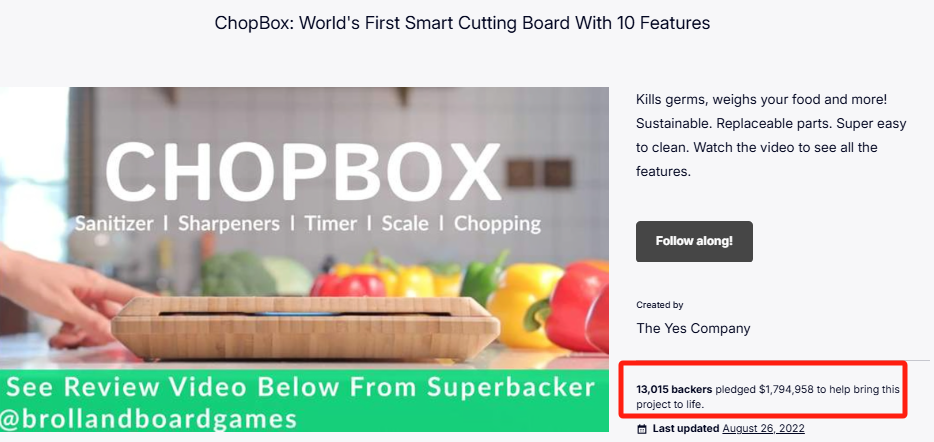
The ChopBox smart cutting board campaign launched on Kickstarter, running for 45 days from September 3 to October 18, 2019. It successfully attracted 13,015 backers, raising a total of $1.79 million – approximately 17,950% over its initial funding goal. On average, each backer contributed about $138.
ChopBox: Features That Captivated Backers
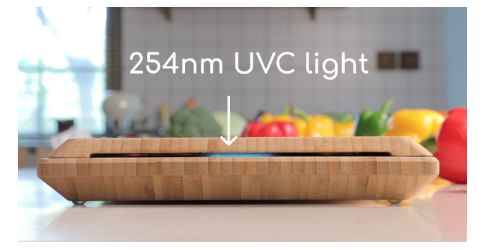
A built-in 254nm UVC lamp promised to sterilize the cutting board and up to three knives in just one minute, claiming to eliminate 99.99% of bacteria and viruses.
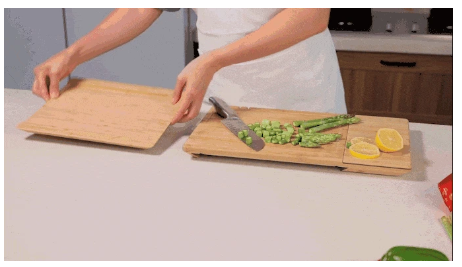
Dual sliding bamboo cutting surfaces were designed to prevent cross-contamination, with separate boards for raw ingredients and prepared food. The main surface was also replaceable, extending the product's lifespan.
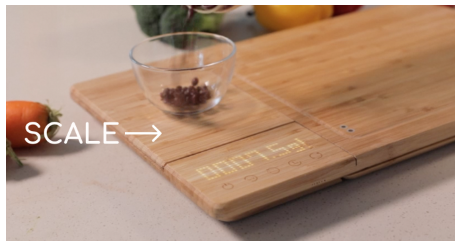
An integrated electronic scale on the left cutting surface offered a maximum capacity of 6.6 lbs (3kg), supporting multiple units (grams, ounces, pounds, kilograms) and a tare function.
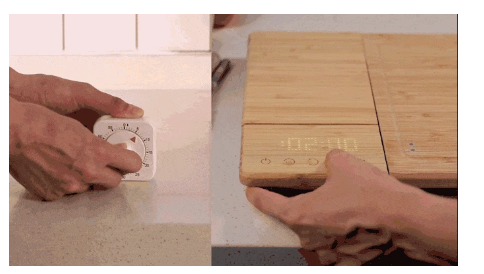
An OLED display featured a timer settable for up to 9 hours, 59 minutes, and 59 seconds, catering to slow cooking and other long-duration culinary needs.
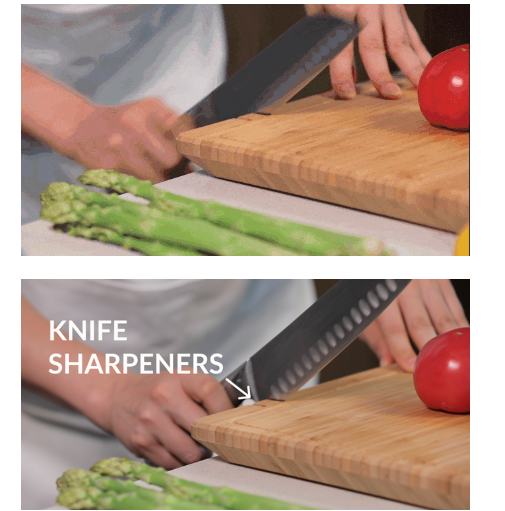
Dual knife sharpeners, with embedded diamond and ceramic stones, were built into the side to keep kitchen knives consistently sharp.
A circular groove around the main cutting board was designed to collect meat and fruit juices, preventing spills onto countertops.
The secondary cutting board could be removed and repurposed as a party platter or serving tray.
A 3000mAh battery promised 30 days of daily use on a 1-hour charge, complemented by IPX7 waterproofing, ensuring the device could withstand immersion.
Constructed from natural bamboo, the ChopBox claimed to support up to 150 lbs, resist scratches and warping, and require minimal maintenance.
Key wear-and-tear components, such as the cutting surfaces and sharpeners, were advertised as replaceable through Kickstarter or the brand's official website, with a commitment to 100% recyclability.
The Team Behind ChopBox: TheYesCompany
TheYesCompany presented itself as a global remote team with design, production, and engineering operations spanning locations like the United States and Shenzhen. The company stated its focus was on smart kitchen appliances and lifestyle products, emphasizing multi-functional integration and sustainable design.
From Viral Success to Delivery Failure
The ChopBox campaign immediately captured public attention upon its launch, raising nearly $300,000 within a single day and ultimately surpassing the $1.8 million mark. However, the project ultimately failed to deliver on its promises. PledgeRadar assesses this as a fraudulent project.
The Smart Kitchen Market: A Promising Landscape
The global smart kitchen appliance market is projected to reach $23.88 billion by 2025, with a Compound Annual Growth Rate (CAGR) of approximately 16.83% between 2025 and 2030. North America is identified as the largest market, while the Asia-Pacific region is experiencing the fastest growth.
Several factors are driving this steady market expansion:
Heightened Health and Hygiene Concerns: Post-pandemic, consumer awareness regarding kitchen cleanliness and cross-contamination has significantly increased, making features like UVC sterilization powerful differentiators.
Demand for Multi-functionality and Space-Saving: With limited kitchen space in modern homes, integrated features such as weighing, sharpening, timing, and sterilization reduce the need for multiple single-purpose tools.
The Smart Home Trend: Consumers increasingly seek connectivity and automation. Smart kitchen products enhance user experience through features like mobile/voice control and cloud-based recipes.
PledgeRadar's Analysis: Why ChopBox Likely Failed
PledgeRadar has identified three key factors that likely contributed to the project's inability to deliver:
Cost and Pricing: Products with high integration and numerous electronic components inherently incur high costs. While ChopBox's projected retail price of $199 was significantly higher than a traditional cutting board and scale combination, the mass production costs for this product likely far exceeded the initial targets.
Ease of Use and Cleaning: The fragility of electronic components and the difficulty of cleaning them are significant consumer concerns. While features like IPX7 waterproofing and modular replacement designs were intended to address these, their practical implementation in a complex, multi-functional device likely presented substantial engineering and manufacturing challenges, contributing to the project's inability to deliver.
The ChopBox campaign immediately captured public attention, raising nearly $300,000 within a single day and ultimately surpassing the $1.8 million mark. However, the project ultimately failed to deliver on its promises.