HighBoy: Open-Source Penetration Testing Tool Surpasses $500K on Kickstarter
Crowdfunding Analysis · · PledgeRadar Editorial

The HighBoy is an open-source, portable, multi-functional wireless penetration testing tool designed for hackers, enthusiasts, and the education market. It aims to consolidate disparate development boards into a single device, allowing users to securely learn and debug Wi-Fi, RF, NFC, and infrared protocols. On Kickstarter, the HighBoy project has successfully raised over $540,000, attracting more than 4,000 backers. This achievement positions it as a significant success within the niche of hardcore geek hardware, providing a solid foundation for initial community ecosystem development.
Community Responsiveness as a Catalyst
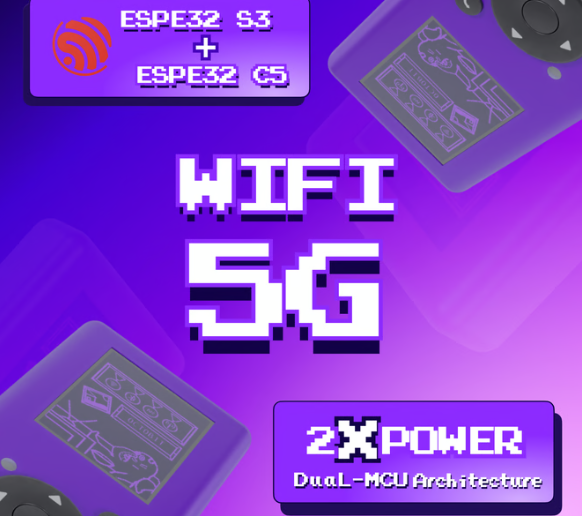
A pivotal moment for the project was the team's rapid response to community feedback. Faced with strong demand from backers for 5GHz Wi-Fi functionality, the team announced an upgrade to a dual-MCU architecture. This decision, to immediately adjust hardware design based on user input, significantly boosted community confidence. We believe this was the critical catalyst that propelled the project past the $500,000 mark. This receptive attitude clearly demonstrates the team's engineering prowess and community awareness, while also confirming market dissatisfaction with the Wi-Fi capabilities of existing competitors, particularly the Flipper Zero.
Product Core Selling Points
HighBoy directly addresses a major pain point of its competitors by upgrading its architecture. Traditional solutions, such as the Flipper Zero, require a bulky external GPIO expansion board for Wi-Fi functionality, and are often limited to the 2.4GHz band, severely impacting portability.
HighBoy adopts a dual-MCU architecture featuring ESP32-S3 and ESP32-C5 chips, natively supporting both 2.4GHz and 5GHz dual-band frequencies. This allows for native network sniffing, Deauth attack testing, and wireless protocol analysis without any external modules, significantly enhancing its practicality.
The Sub-GHz RF frequency band support is based on the CC1101 chip core, covering common frequencies like 315/433/868/915MHz. This enables analysis and simulation of low-frequency wireless signals from devices such as garage doors and smart home systems.
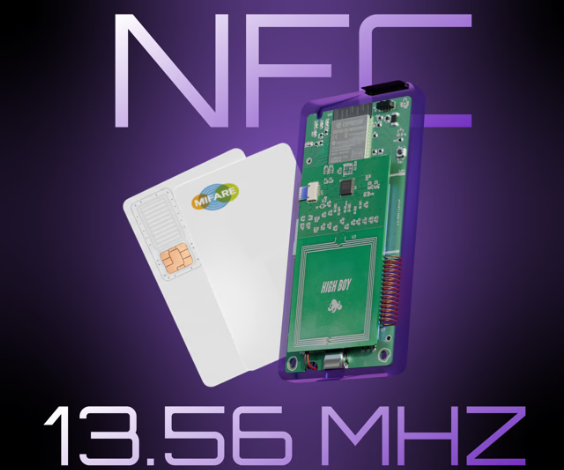
RFID and NFC are fully integrated: HighBoy natively supports high-frequency NFC protocols, and during the crowdfunding phase, unlocked the addition of a 125kHz low-frequency RFID module. This covers common security testing scenarios like access card duplication and signal simulation.
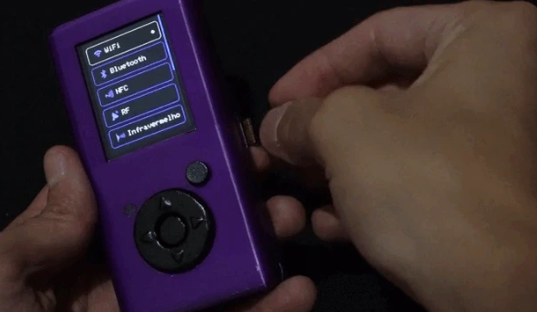
Infrared and Bluetooth modules: Built-in infrared transceiver capabilities support universal remote control and signal replay, while integrated BLE Bluetooth functionality enables linkage with mobile applications, greatly expanding the scope of protocol testing scenarios.
Both the hardware design and firmware code (based on the ESP-IDF framework) adopt a completely open-source strategy. This not only respects the spirit of the hacker community but also, from a legal compliance perspective, clearly defines the product as an educational development platform rather than a hacking tool, facilitating legal sales and use worldwide.
The open-source model also provides ample room for secondary development and customization by the developer community.

The HighCode Team and Origin Story
HighBoy is developed by HighCode, a Brazilian team with deep expertise in embedded development and firmware architecture, and a profound understanding of geek community culture.
The team's entrepreneurial journey began dramatically. Due to strict seizures and bans imposed by the Brazilian regulatory agency Anatel on tools like the Flipper Zero, local enthusiasts found themselves without essential tools. Instead of merely complaining, the HighCode team decided to independently develop a legal penetration testing tool. This background directly influenced the product's design; the fully open-source strategy was specifically chosen to mitigate regulatory risks and emphasize its educational attributes. The team also designed Octobit, an octopus mascot, cleverly alluding to the 8-bit/multi-functional product concept and showcasing the creativity of an engineer-led team.
Market Analysis
The global penetration testing market is substantial and growing rapidly. Industry data projects the penetration testing market to expand at a compound annual growth rate (CAGR) of 12-18%, potentially exceeding $2.7 billion by 2025. While portable hardware tools represent a niche within this market, the increasing popularity of cybersecurity education and hacker culture is driving rapid growth in demand for personal portable security tools, providing ample market space for innovative products.
The current market exhibits a clear 'one dominant, many strong' pattern. Flipper Zero, with its highly appealing electronic pet interactive design, has captured a significant portion of consumer mindshare, establishing a strong brand moat. However, its hardware architecture is showing signs of aging, with issues like external expansion required for 2.4GHz Wi-Fi and limited screen resolution gradually leading to user dissatisfaction. HighBoy enters the market at this opportune moment, positioning itself as a 'performance-oriented Flipper' that directly targets the Flipper Zero's hardware shortcomings.
Other competitors, such as the M5Stack Cardputer running Bruce firmware and professional SDR tools like HackRF One, occupy their respective niches but have not managed to challenge Flipper Zero's absolute dominance.
HighBoy's opportunity lies in the clear demand for an upgrade. A segment of advanced users, seeking higher performance, are growing disillusioned with Flipper Zero's premium pricing and stagnant hardware. This unmet demand is precisely HighBoy's target audience. From its positioning to pricing and feature design, HighBoy precisely targets this specific market gap.
HighBoy represents the evolutionary direction of second-generation portable penetration tools. By sacrificing some entertainment features for native dual-band Wi-Fi and dual-core performance, it has strong potential to become the preferred tool for practical-minded, hardcore enthusiasts.

This receptive attitude clearly demonstrates the team's engineering prowess and community awareness, while also confirming market dissatisfaction with the Wi-Fi capabilities of existing competitors, particularly the Flipper Zero.