The ZNAPS Magnetic Charger: How a $9 Gadget Raised Millions on Kickstarter and Failed to Deliver
Crowdfunding Analysis · · PledgeRadar Editorial
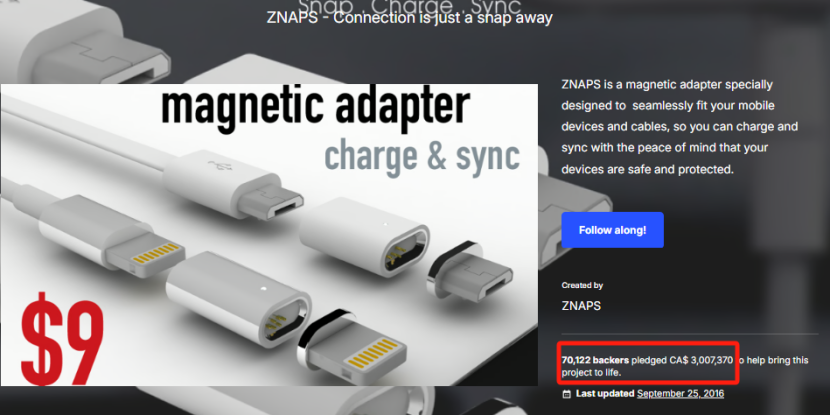
This analysis revisits a notable crowdfunding campaign: ZNAPS. This magnetic charging adapter project captivated over 70,000 backers, raising nearly C$3 million on Kickstarter before ultimately failing to deliver. We examine the strategies that led to its initial success and the insights it offers for both creators and backers.
The Big Business of a Small Adapter
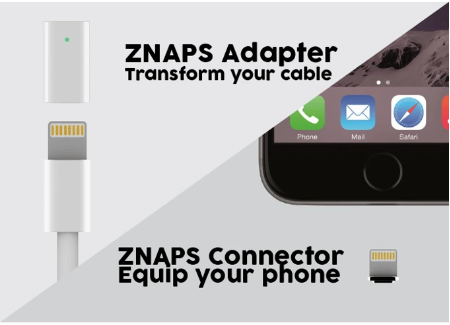
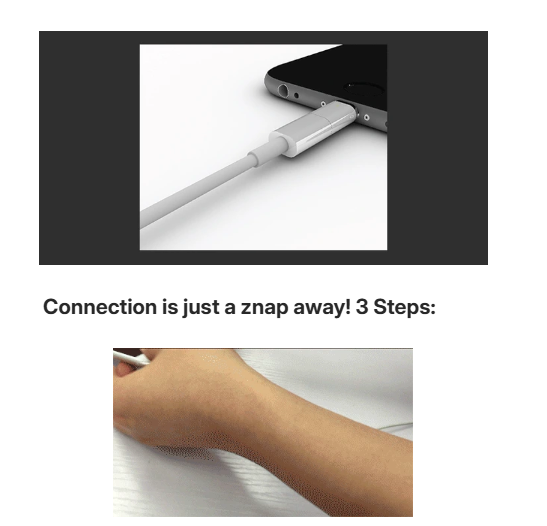
The core concept behind ZNAPS was remarkably simple: a tiny magnetic adapter inserted into a phone's charging port, allowing the charging cable to connect via magnetic attraction. This seemingly minor innovation addressed several pain points for smartphone users worldwide.
Firstly, it offered a revolutionary improvement in charging convenience. Anyone who has fumbled in the dark to plug in their phone, often inserting the cable incorrectly, could appreciate the frustration. ZNAPS promised a 'snap-and-charge' experience, as elegant as Apple's MagSafe for MacBooks.
More significantly, it offered device protection. Frequent plugging and unplugging make charging ports one of the most vulnerable parts of a phone. ZNAPS's semi-permanent adapter effectively sealed the port, preventing dust and moisture ingress while reducing mechanical wear. Furthermore, if the charging cable was accidentally tugged, the magnetic connection would detach, preventing the phone from being pulled down and damaged.
Capitalizing on a Technology Transition Window
ZNAPS's initial success was largely due to its precise market timing. 2015 marked a transitional period for mobile device charging standards: iPhones exclusively used Lightning, Android devices primarily relied on Micro-USB, and the USB-C standard had just been introduced but was far from widespread. This fragmentation created a perfect market opportunity for ZNAPS.
The team wisely chose to support both Lightning and Micro-USB, covering the vast majority of smartphone users at the time. Crucially, they also promised a USB-C version, demonstrating foresight regarding future trends.
According to the Kickstarter page, ZNAPS was backed by a typical Hong Kong startup team: Business lead Phiona Leung had a finance and IT background; designer Brian Chan possessed years of Chinese manufacturing experience; circuit board expert Martin Cheng had 10 years of engineering experience; and manufacturing specialist James Lam boasted over 20 years of factory management experience. While the project has been abandoned for nearly a decade, the brand story they crafted at the time, and its ability to attract so many backers, remains a compelling case study.
This four-person team, as presented in their profile, appeared to possess both business operational acumen and comprehensive technical capabilities, from product design to manufacturing. They opted not to create a large, complex product but instead focused on solving a clear and widespread pain point, a characteristic often seen in successful startup ventures. This fostered user trust.
User Insights Driving Crowdfunding Success
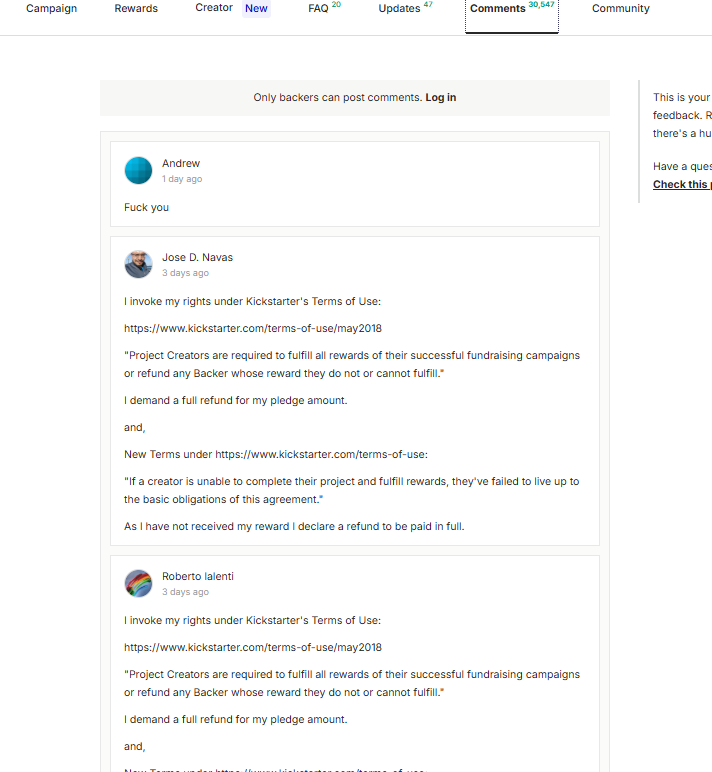
With 70,122 backers and C$3,007,370 raised, these figures underscore ZNAPS's profound understanding of user needs.
From a user profile perspective, ZNAPS appealed to several distinct segments: casual users were drawn to the 'snap-and-charge' convenience; families with elderly members or children valued its safety features; heavy smartphone users prioritized device protection; and minimalists were captivated by its elegant design philosophy.
Crucially, ZNAPS not only supported charging but also maintained data transfer functionality, making it more competitive than other magnetic products on the market that only offered charging. Its ultra-compact plug design also ensured compatibility with most phone cases, addressing a practical user requirement.
Business Lessons from Micro-Innovation
ZNAPS's initial success offers valuable insights for hardware startups:
**Timing trumps technical complexity.** ZNAPS lacked groundbreaking technological innovation, yet it accurately identified a market gap during a period of shifting technical standards, addressing a genuine need with a simple solution.
**Pain points resonate more than selling points.** Rather than showcasing flashy features, solving concrete, everyday user problems generates greater empathy. The shared experience of charging port wear and tear became ZNAPS's most powerful marketing foundation.
**Focus over breadth.** ZNAPS didn't attempt to reinvent the charger; instead, it concentrated on improving one specific aspect of the charging experience. This focused strategy maximized the impact of limited resources.
Amidst waves of technological innovation, not all commercial value stems from disruptive breakthroughs. Sometimes, a small improvement, an overlooked pain point, or a simple solution can unlock significant market opportunities.
While the market window for magnetic charging adapters has narrowed with the widespread adoption of USB-C and the rise of wireless charging, ZNAPS's micro-innovation model still offers valuable lessons for entrepreneurs: in an era of rapid technological iteration, the greatest opportunities often lie hidden within the most mundane daily use cases.
The key lies in possessing the acute insight to discover them, and the execution capability to bring them to fruition.
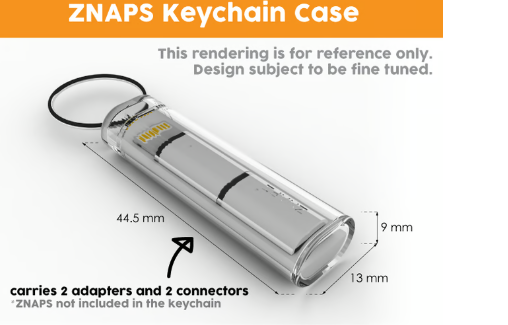
ZNAPS made charging a 'snap-and-go' experience, as elegant as Apple's MacBook MagSafe.