Phrozen Arco: Large-Format FDM Printer Raises $1.4M on Kickstarter
Crowdfunding Analysis · · PledgeRadar Editorial
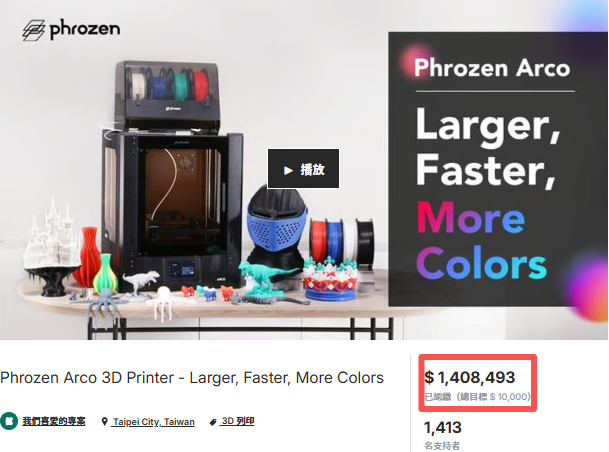
The Phrozen Arco FDM 3D printer successfully raised $1.4 million from 1,413 backers on Kickstarter, demonstrating a clear market demand for large-format, high-speed FDM printers.
Phrozen Arco: Market Positioning and Key Features
Phrozen Arco clearly targets the desktop and semi-professional FDM printer market, emphasizing larger build volumes, higher speeds, and multi-color printing capabilities. Its core features include a 300×300×300mm build volume, a peak speed of 600mm/s, Klipper open-source firmware, a Core-XY structure, and the Multi-Color Chroma Kit.
Notably, Phrozen partnered with Slice Engineering to customize the GammaMaster nozzle for the Arco, enhancing its ability to print high-temperature and engineering-grade materials. This collaboration adds credibility to the product's industrial-grade positioning. The project's participation in industry exhibitions like Formnext also helped build trust among backers.
Large-Format, High-Speed Printing Architecture
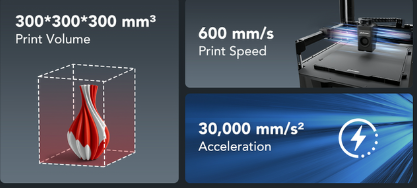
The Arco features a 300×300×300mm build volume combined with Klipper-driven high-performance motion control, boasting an official peak speed of 600mm/s and an acceleration of 30,000mm/s².
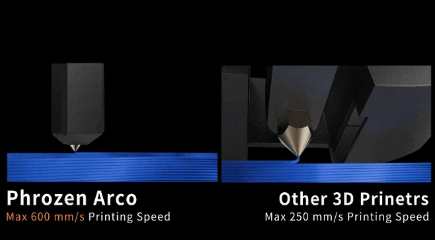
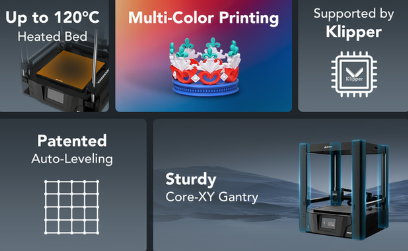
This performance combination aims to reduce print waiting times and enable the printing of larger parts or multiple parallel items in a single job. From a technical perspective, high speeds require robust motion control algorithms and mechanical rigidity. Klipper firmware overcomes traditional control board performance bottlenecks by offloading motion planning to an external processor. The Core-XY low-center-of-gravity design, reinforced metal pillars, linear rails, and a 5×5 auto-leveling system collectively form the mechanical foundation for maintaining layer alignment and edge quality during high-speed printing.
However, the advertised 600mm/s peak speed is often only achieved briefly during non-printing movements or under specific structural conditions. Actual printing speeds are comprehensively constrained by material properties, model complexity, and cooling capabilities.
Multi-Color Printing and Material Waste Optimization
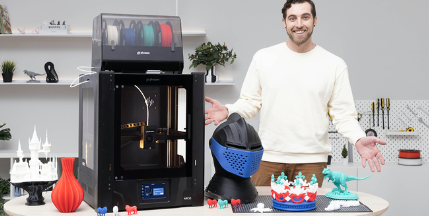
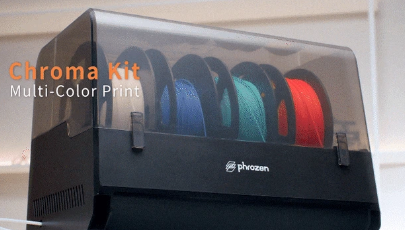
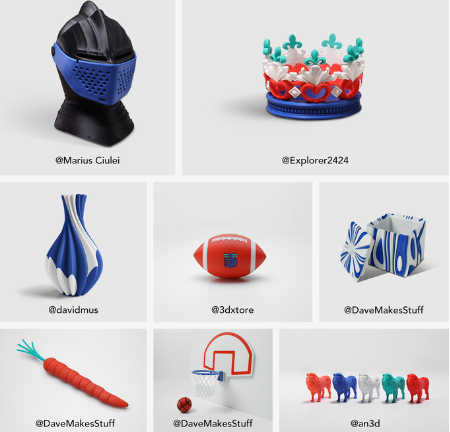
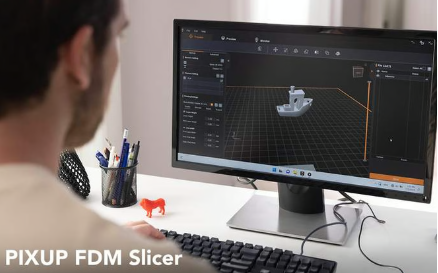
The accompanying Chroma Kit, integrated with the PIXUP FDM Slicer, enables multi-color and multi-material printing. It also optimizes color-switching strategies through software to reduce material waste.
Traditional multi-color FDM solutions often generate significant purge tower waste during color changes, increasing both cost and print time.
The PIXUP Slicer's optimization logic likely involves path planning and material management algorithms to minimize unnecessary purging actions and material consumption.
This feature offers practical value for designers, makerspaces, and small-batch production users who need to create colorful prototypes or finished products. However, the long-term stability of multi-color systems—including the reliability of the material changing mechanism, the clarity of color boundaries, and compatibility between different materials—requires real-world validation.
Engineering Materials and High-Temperature Printing
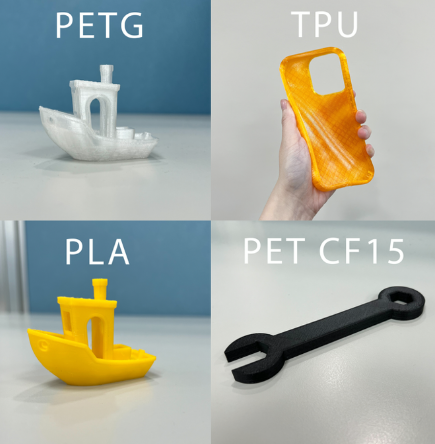
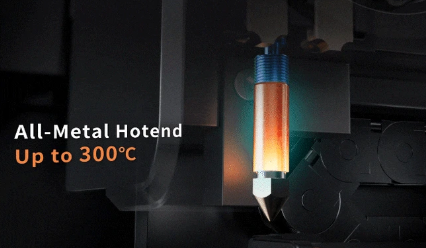
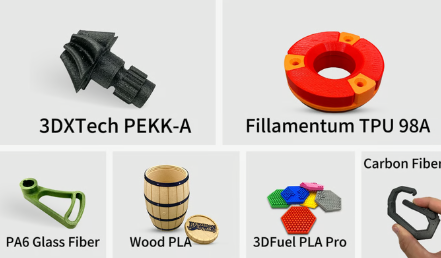
A 300℃ nozzle temperature, coupled with an enhanced Direct Extrusion Path (DEP) system and dual 18mm metal gear extruders, allows the Arco to process a wide range of materials, from PLA, TPU, and PETG to carbon fiber composites.
The collaboration with Slice Engineering for the Gamma Master nozzle further improves the print quality and reliability of high-temperature materials.
For users needing to print functional parts, industrial samples, or engineering test pieces, material compatibility is a core requirement. However, high-temperature printing also demands more stringent hotend sealing, cooling design, and print environment control. The manufacturer will need to provide detailed material profiles and temperature curves to reduce debugging costs for professional users.
Open-Source Firmware and Community Ecosystem
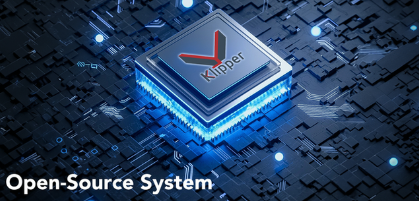
By adopting Klipper firmware instead of a closed, proprietary system, the Arco benefits from continuous optimization and a rich plugin ecosystem provided by the open-source community.
Klipper's advantages include high-performance motion control, flexible pressure advance, and extensive macro command support, features that strongly appeal to enthusiasts and advanced users.
However, embracing open-source also means the manufacturer must invest resources in maintaining firmware branches, resolving compatibility issues, and establishing responsive technical support mechanisms within the community. For professional users, open-source can be a double-edged sword: it allows for deep customization but may also introduce stability fluctuations due to firmware updates.
Integrated Ecosystem and Ease of Use
The inclusion of the dedicated PIXUP slicer and PIXUP community model library, along with bundled high-performance nozzles, lowers the barrier to entry and reduces the learning curve for users. For those migrating from other brands, the specialized slicer can maximize hardware performance, but it might also limit users' ability to use their preferred slicing software (such as Cura or PrusaSlicer). The manufacturer needs to strike a balance between specialized optimization and ecosystem openness.
Phrozen's Strategic Expansion into FDM
According to public information, Phrozen, founded in 2016 and headquartered in Taiwan, began as a 3D printer manufacturer specializing in resin (SLA/MSLA) technology. The brand has built a strong reputation in resin printing, officially serving over 100,000 users and holding more than 20 patents. The Arco represents Phrozen's first significant foray into FDM (Fused Deposition Modeling), multi-color, and large-volume printing, marking a strategic shift from a desktop resin specialist to a broader 3D printing solutions provider.
This product line expansion has a clear business logic. While resin printing excels in precision and surface quality, its limited print size, higher material costs, and complex post-processing restrict its application scenarios. FDM printing, though not matching resin in fine detail, offers advantages in large formats, functional parts, engineering material compatibility, and cost control, addressing a significantly larger market. Phrozen's entry into FDM allows it to reach a wider customer base, including prototyping, small-batch production, education, and industrial jig markets.
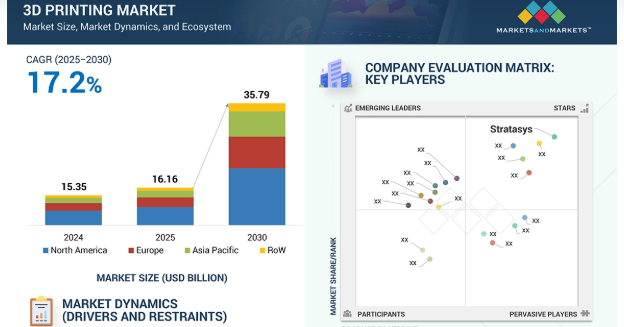
3D Printing Market Analysis and Competitive Landscape
The 3D printing market continues to grow, with expansion across desktop, prosumer, and industrial applications. Key driving sectors include medical, dental, tooling, education, consumer electronics, and small-batch manufacturing. FDM remains the largest technological segment, dominating functional prototyping, tools and fixtures, architectural models, household goods, and educational markets, while resin printing excels in scenarios requiring high precision and detailed surfaces.
User demands are undergoing structural changes. Small factories and manufacturing service providers increasingly require a combination of "speed + precision + multi-material" capabilities, with short lead times, rapid prototype iteration, and engineering material printing becoming critical purchasing factors. Concurrently, the proliferation of open-source firmware ecosystems like Klipper has led more advanced users and manufacturers to adopt open-source solutions for high-performance motion control, pressure advance, and extensive macro command support. Arco's choice of Klipper aligns with this trend.
In terms of the competitive landscape, Bambu Lab holds a strong position in the desktop high-performance FDM segment due to its speed, automation, and ecosystem, making it Arco's most direct competitor. Brands like Creality and Anycubic have advantages in price and distribution, while Prusa is known for its community reputation and stability. Arco differentiates itself through its multi-color Chroma Kit, Klipper firmware, partnership with Slice Engineering, and Phrozen's accumulated manufacturing experience in the resin sector. These elements help Arco establish a unique position in the "multi-color + engineering materials" combination. However, it's also important to note that for customers requiring extremely high surface quality or complex details, SLA, MSLA, or industrial-grade SLS/MJF remain alternative solutions.
Klipper firmware breaks through the performance bottlenecks of traditional control boards by offloading motion planning to an external processor, while the Core-XY design and robust mechanical components ensure layer alignment and edge quality during high-speed printing.