The Rise and Fall of Anki's Vector: A $1.87 Million Crowdfunding Cautionary Tale
Crowdfunding Analysis · · PledgeRadar Editorial
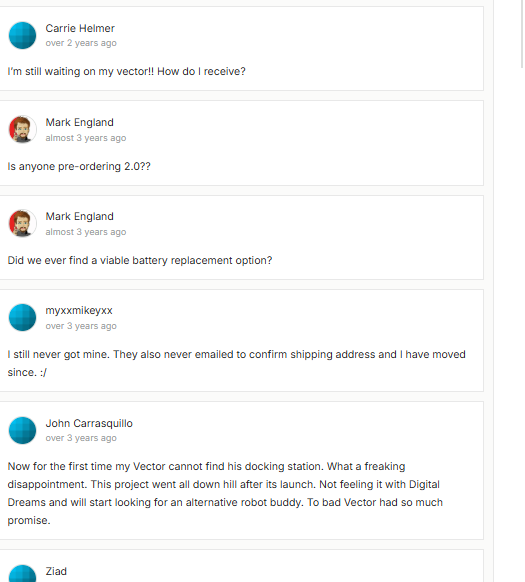
PledgeRadar frequently examines crowdfunding campaigns that fail to deliver on their promises. Today, we delve into a notable example: 'Vector by Anki.' Launched on Kickstarter in 2018, this smart companion robot achieved remarkable crowdfunding success, attracting 8,293 backers and raising an impressive $1.87 million. However, despite its initial triumph, Vector's commercial journey was cut short when its parent company, Anki, ceased operations in 2019. This case starkly illustrates the significant chasm that can exist between a successful crowdfunding campaign and a project's long-term commercial viability, often leaving backers with unfulfilled pledges.
Vector's Core Product Vision and Features
The substantial funds raised by Vector underscore the appeal of its product concept. Let's explore the key features that captivated thousands of backers.
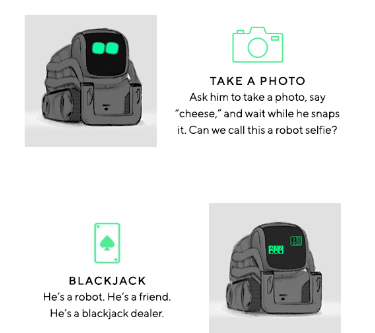
Vector was designed as a lifelike home companion robot, capable of reactive behaviors, emotional expression, and even forming relationships. Unlike traditional utility robots, it aimed to be a blend of a smart companion and an interactive toy, fostering strong emotional attachment through its 'emotion engine,' expressive animations, and behavioral design.
Its comprehensive sensing capabilities were powered by an array of advanced hardware, including an ultra-wide HD camera (120° field of view), infrared Time-of-Flight (TOF) laser scanning for SLAM mapping, a four-microphone beamforming array for directional hearing, a 6-axis IMU (inertial measurement unit), edge detection, and capacitive touch sensors. This sophisticated combination enabled core functions like 'seeing, hearing, touching, obstacle avoidance, and mapping,' allowing Vector to autonomously explore and react within a home environment.
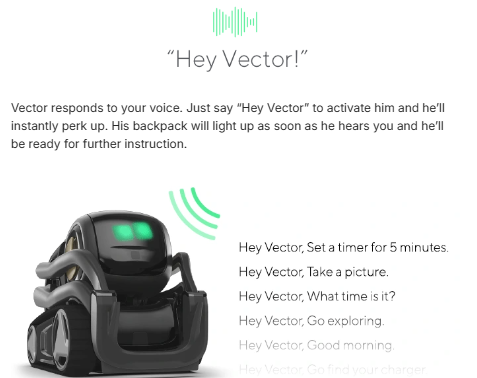
Vector supported 'Hey Vector' voice activation and offered early access to a Python SDK for initial backers. This open platform allowed developers to access camera streams, directional audio, TOF spatial data, facial emotion recognition, and a vast library of pre-set animations, enabling them to extend functionality or integrate Vector into other smart home and research applications.
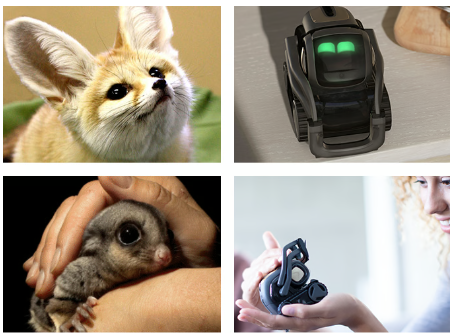
The development team invested significant effort into creating thousands of unique animations, drawing inspiration from animal behaviors to craft a realistic and engaging character interaction experience. This focus on emotional connection provided a distinct advantage over more utilitarian home appliance robots.
Anki's Downfall and Vector's Aftermath
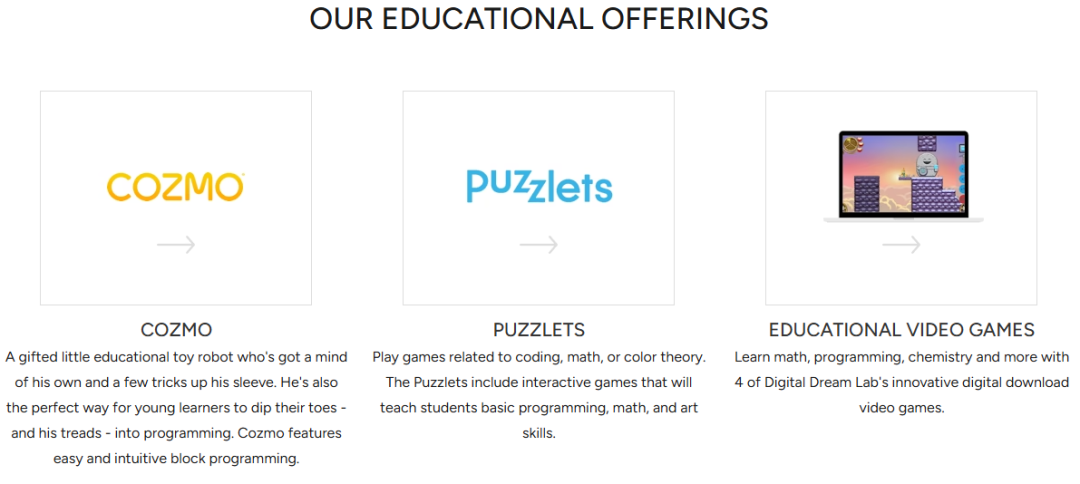
Founded in 2010, Anki was an innovative company focused on consumer robotics, gaining significant market attention and substantial venture capital through products like Cozmo and Anki Overdrive. Despite early sales success and strong financial backing, Anki announced its closure and entered bankruptcy proceedings in 2019, unable to secure a new round of financing.
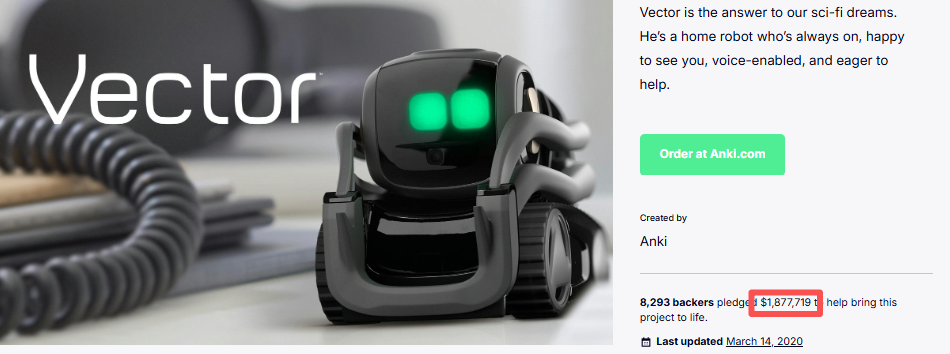
In late 2019, Digital Dream Labs (DDL) acquired Anki's intellectual property and related assets, including core products like Cozmo and Vector. DDL subsequently released updated versions (e.g., Vector 2.0, Cozmo 2.0), attempting to continue supporting the existing user and developer ecosystem. However, DDL's scale and resource investment have been unable to match the original Anki. Crucially, to this day, a significant number of original backers have yet to receive their promised products, with over 6,000 comments on the platform voicing their grievances.
Market Outlook and Industry Challenges for Companion Robots
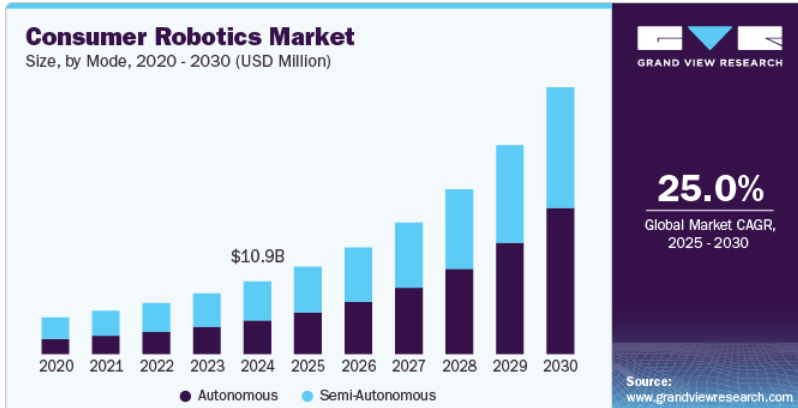
The consumer home robot market is experiencing rapid growth. Several research institutions project the market size to be approximately $10.92 billion in 2024, with significant expansion expected by 2030. Key drivers for this growth include decreasing hardware costs, enhanced on-device AI capabilities, and the maturation of multi-sensor fusion technologies. These factors are enabling a wider variety of home robots to enter the market, particularly in the early-stage development of companion and personal robots beyond traditional vacuum cleaners. The substantial reduction in algorithm and sensing technology costs makes 'seeing and hearing' robots more feasible, while increasing consumer acceptance of smart devices creates a more favorable environment for character-driven devices.
However, the industry faces severe challenges. Business models and profitability remain the biggest hurdles. One-time hardware revenue often struggles to cover long-term research, development, and cloud service costs—Anki's collapse serves as a prime example of this issue. Companion and emotional robots require continuous software updates, cloud services, and content support to maintain user engagement. Should a manufacturer's funding dry up, the user experience can rapidly deteriorate. Furthermore, home robots equipped with cameras and microphones face higher demands for privacy protection and security compliance. The potential entry of large consumer electronics manufacturers like Samsung and Sony also poses immense pressure on smaller companies in terms of distribution channels, brand recognition, and ecosystem development.
This case starkly illustrates the significant chasm that can exist between a successful crowdfunding campaign and a project's long-term commercial viability, often leaving backers with unfulfilled pledges.