AIVELA RingPro: Is This the Next Million-Dollar AI Smart Ring Crowdfunding Campaign?
Crowdfunding Analysis · · PledgeRadar Editorial
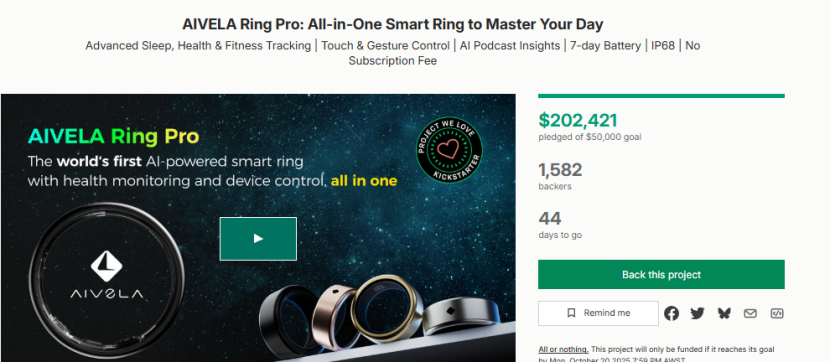
The AIVELA RingPro launched on Kickstarter, quickly attracting over 1,500 backers and raising more than $200,000 within its first day. Positioned as an 'all-in-one AI smart ring,' the project highlights gesture and touch control, comprehensive sleep, health, and activity tracking, and AI-driven daily podcast-style health insights as its core features. This strong early performance and detailed product roadmap suggest the AIVELA RingPro could be the next breakout success in the smart ring sector, potentially surpassing $1 million, driven by robust market demand for innovative wearable technology.
Key Product Features
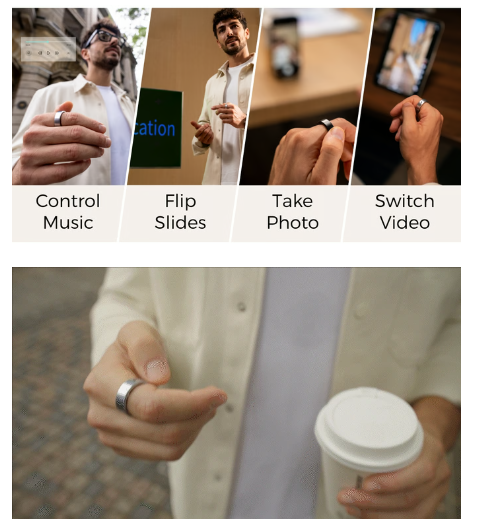
Revolutionary Gesture and Touch Control: The AIVELA RingPro integrates a high-resolution Optical Finger Navigation (OFN) sensor, enabling up to eight touch commands and various in-air gestures. This allows users to remotely control devices like smartphones, headphones, and cameras. This advanced gesture interaction is positioned as a key differentiator from traditional health-focused rings like Oura.
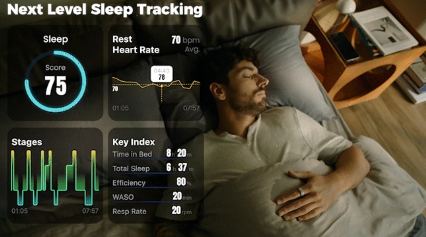
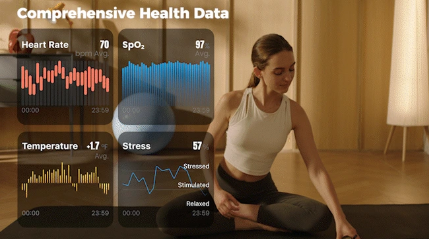
Comprehensive Health and Activity Monitoring: The ring offers continuous tracking of heart rate, SpO2, body temperature, HRV, activity levels, and sleep stages. It also supports MET analysis, endurance/recovery assessment, and female physiological cycle tracking, addressing both general health monitoring and specific fitness tracking needs.
AI-Driven Personalized Insights: The AIVELA RingPro aims to provide actionable health advice through 'Dave' and 'Mira,' two AI advisors. These advisors deliver personalized recommendations in a daily two-minute podcast format, emphasizing 'audible and actionable' morning routine reminders, offering a differentiated experience beyond mere data reporting.
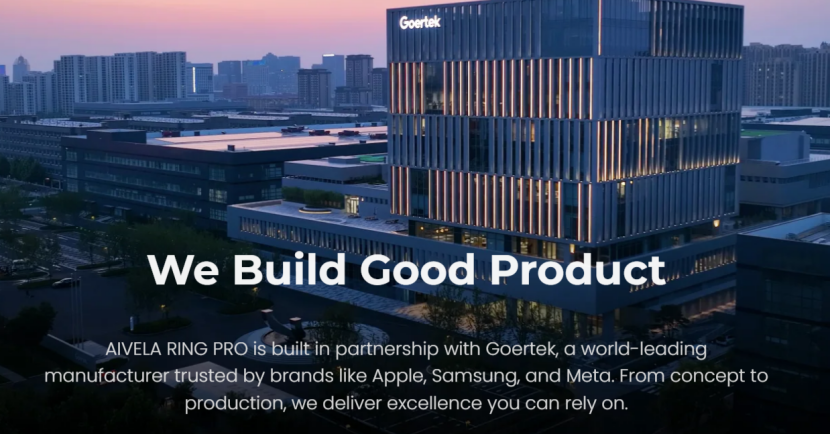
Supply Chain and Manufacturing Backing: The campaign page states a partnership with global manufacturing giant Goertek. The ring reportedly uses well-known components such as Ambiq Apollo series SoCs and Bosch/PixArt sensors, which would significantly bolster hardware credibility and production delivery capabilities. However, the veracity of this claim is yet to be independently verified.
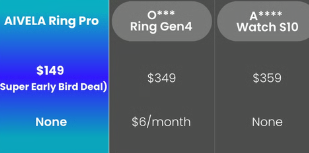
Economical Business Model: The AIVELA RingPro's early bird pricing is notably lower than competitors like Oura and Samsung. Crucially, the project promises no monthly subscription fees, appealing to price-sensitive users with a 'low upfront cost + no recurring fees' value proposition.
AIVELA, reportedly founded in 2024 and headquartered in California, boasts a team of engineers and biomedical/AI researchers from top institutions including MIT, Harvard, and Cornell. The brand name, a fusion of 'AI' and 'Vela' (navigation), underscores its commitment to both engineering excellence and product design. The company emphasizes meticulous attention to detail in craftsmanship, material selection (titanium alloy, lightweight resin), and offers a 2-year warranty, aiming to build user trust through its official website and Kickstarter page.

Market Landscape and Competitive Analysis
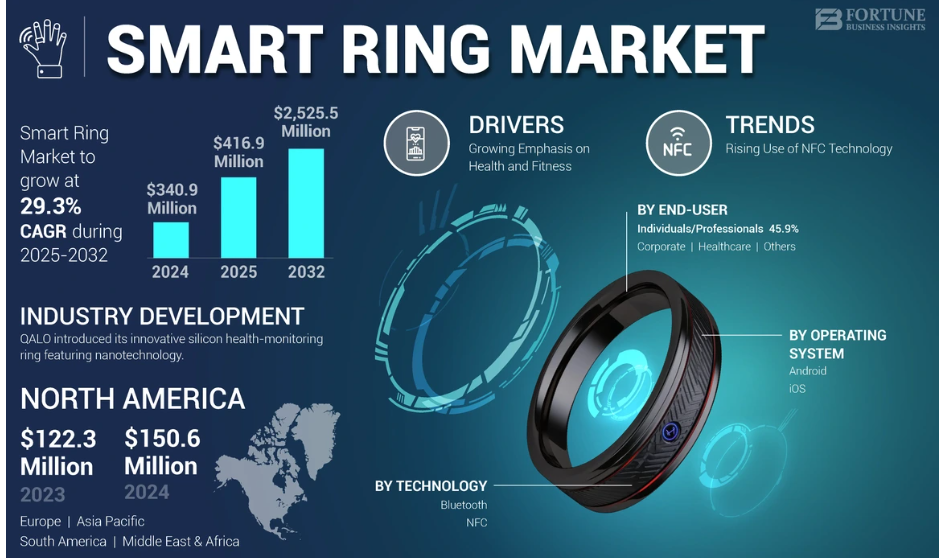
The smart ring market is currently experiencing rapid growth. Industry research indicates that the global smart ring market size is estimated at $340-350 million in 2024, with a projected compound annual growth rate exceeding 20% in the coming years. This could lead to a market valuation of $1.1-2.5 billion by 2030-2032. While still a relatively niche segment, it is rapidly expanding, becoming increasingly competitive, and characterized by rising technological barriers.
In terms of competition, Finnish company Oura is a market pioneer, having established a substantial user base, patent portfolio, subscription service model, and research collaboration network. Its 'Readiness Score' service is a core driver of user retention. Samsung leverages its ecosystem integration, Ultrahuman focuses on metabolic and athletic data, while brands like RingConn and Circular attract users through competitive pricing, creating a multi-faceted competitive environment.
AIVELA's market opportunities are primarily threefold: First, if its differentiated gesture control interaction can achieve stable and reliable multi-device connectivity, it could open up new non-health-related demand pathways for smart rings. Second, the 'one-time hardware + no monthly fee' model is attractive to users sensitive to long-term subscriptions. Third, the theoretical partnership with supply chain partners like Goertek could mitigate mass production risks.
This strong early performance and detailed product roadmap suggest the AIVELA RingPro could be the next breakout success in the smart ring sector, potentially surpassing $1 million.