HEROLASER E700: Desktop Laser Cutter Raises $1.38M on Kickstarter Amidst Backer Concerns
Crowdfunding Analysis · · PledgeRadar Editorial
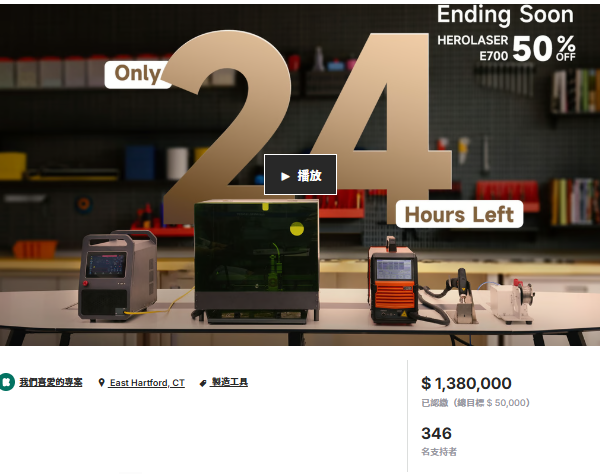
The HEROLASER E700, a desktop laser cutter from a Shenzhen-based brand, recently concluded its Kickstarter campaign, raising an impressive $1.38 million in just 30 days since its July launch. The manufacturer highlighted its prior experience delivering the T300/T700 series laser welders on Indiegogo, leveraging these past project deliveries and user feedback to bolster the E700's credibility. While a track record of successful deliveries often instills greater backer confidence in a company's supply chain management, after-sales service, and product iteration compared to first-time creators, the current sentiment in the comments section and across social media platforms is mixed. Backers, understandably concerned about a product costing around $3,000, are discussing allegations that the company is reselling items found on AliExpress and eBay. Some backers who have received their units report a lack of instructions or accessories, preventing them from using the machine or evaluating its performance. PledgeRadar notes that these backer claims remain unverified, and it is unclear whether the issues stem from the manufacturer or the crowdfunding platform.
Core Technical Selling Points
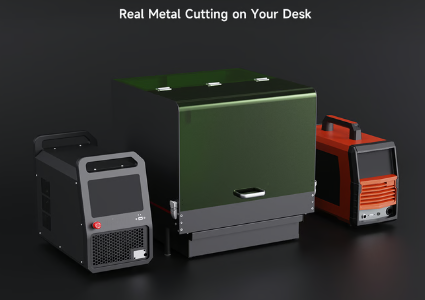
The E700 integrates three metal processing functions—cutting, welding, and cleaning/engraving—into a single device, covering multiple stages of metal fabrication. This consolidation aims to reduce equipment changeover costs and outsourcing expenses for small workshops, offering practical value to users who need to complete an entire process from raw materials to finished products. However, a three-in-one design often implies a performance trade-off compared to dedicated single-function machines, requiring users to assess if this compromise is acceptable for their primary application scenarios.
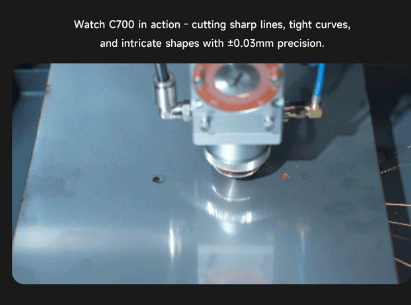
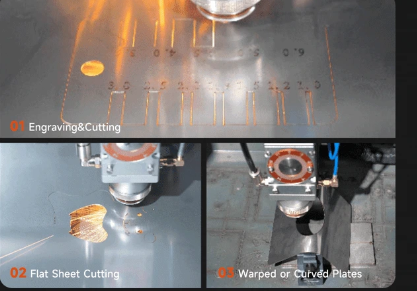
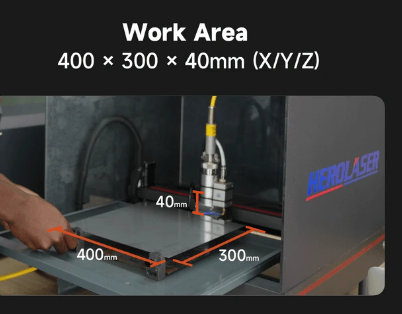
The E700 utilizes a 700W fiber laser source with a working area of 400×300mm. Official specifications claim it can cut approximately 3mm of stainless steel, 2mm of aluminum, and 1.5mm of copper. Fiber lasers offer higher absorption rates and superior beam quality for metal materials compared to CO₂ lasers, making them the dominant technology for precision metal processing. While 700W is a high-power configuration for a desktop device, it remains within the light industrial or semi-professional category, as true industrial-grade equipment typically employs kilowatt-level or higher power sources. The actual cutting thickness and quality depend on a combination of laser power, beam quality, gas assist, and motion control precision. The manufacturer's stated cutting thicknesses represent theoretical maximums; practical applications require consideration of kerf quality, heat-affected zones, and edge spatter.
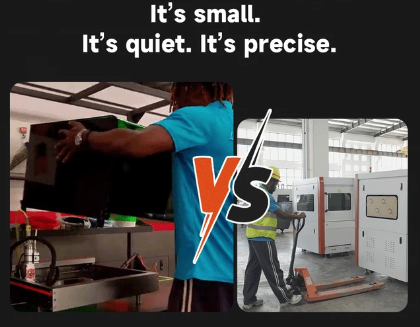
Key features include automatic Z-axis height measurement and real-time autofocus, which maintain stable focal length when processing uneven materials—crucial for consistent cutting and reduced manual intervention. Mobile app control and a desktop footprint of approximately 50kg allow the device to be placed in studios or small workshops, lowering spatial and operational barriers. However, desktop integration also introduces new requirements: the device necessitates an effective smoke filtration system, a laser protective cover, and robust temperature management to prevent adverse effects on the indoor environment and operational safety.
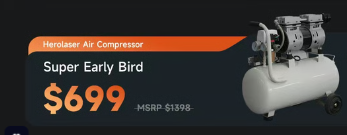
The system includes a dedicated small air compressor and dry gas source, essential for assisting cutting and protecting optical components. High-temperature molten material and smoke generated during metal cutting can contaminate lenses and optical paths, degrading cut quality and shortening the lifespan of optical parts. The auxiliary gas helps clear slag and creates a protective atmosphere. HEROLASER also suggests that the E700 can be combined with their T700Pro laser welder and cleaning module to form an integrated workstation. While this offers an attractive multi-process solution for users in jewelry making, small sheet metal fabrication, and electronics prototyping, it also implies a greater budget investment to establish a complete workflow.
HEROLASER is identified as a brand under Shenzhen Minglei Laser, an integrated industrial and trade company. It positions itself as a manufacturer focused on desktop and light industrial laser equipment, initially entering the market with laser welding and gradually expanding into cutting and surface treatment. The brand previously launched and delivered laser welding devices like the T300 and T700 on platforms such as Indiegogo, establishing brand recognition and a user base through these historical projects. From a technical standpoint, the manufacturer demonstrates the ability to integrate light sources, optical systems, electromechanical control, and software (automatic height measurement, mobile app control), alongside capabilities for small-batch manufacturing and modular accessory supply. These are critical technical integration skills required to bring complex industrial functions to desktop devices. However, desktop metal laser equipment demands extremely high standards for delivery and after-sales support. Laser safety classifications, smoke and dust handling, electrical isolation, and fire prevention measures all involve stringent compliance requirements, with specific regulations like CE, FDA, and RoHS certifications mandated for laser equipment in various countries and regions.
Market Analysis
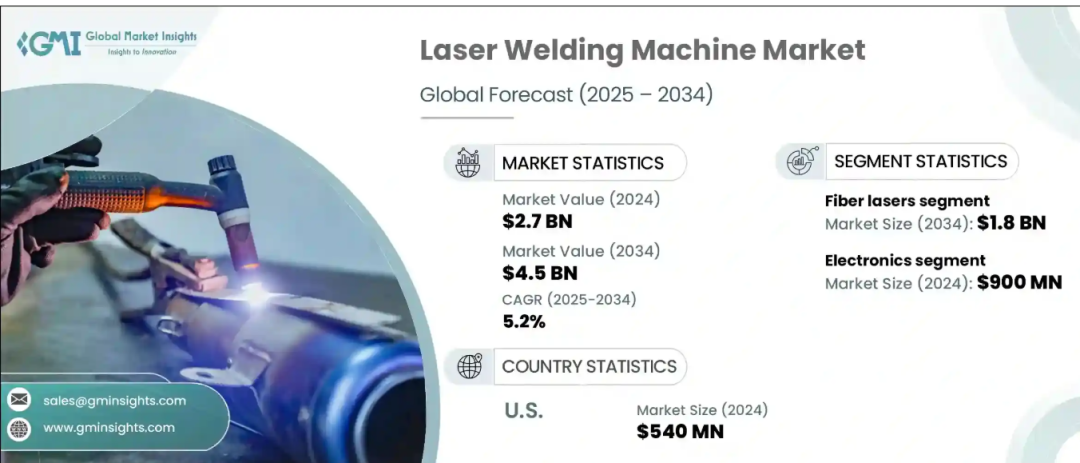
The laser processing market is experiencing robust growth, driven by manufacturing automation, micro-manufacturing, medical devices, and customized production. Multiple market research institutions forecast that the laser welding and laser cutting markets will maintain mid-to-high single-digit compound annual growth rates in the coming years, with market sizes already reaching multi-billion dollar levels. This growth provides fertile ground for desktop equipment, particularly amidst trends towards decentralized manufacturing, personalized production, and localized small-batch manufacturing.
Desktop metal laser equipment represents an emerging niche market. Traditional industrial laser cutters are large, expensive, and designed for heavy-duty applications. However, small and medium-sized enterprises, makers, jewelry processors, and precision manufacturing sectors have a clear demand for desktop devices capable of cutting metal. These users seek lower entry costs, shorter delivery cycles, and the ability to produce prototypes and small batches locally. HEROLASER's integration of a 700W light source into a desktop footprint, coupled with automated accessories, directly targets this market gap.
Established industrial laser manufacturers like TRUMPF and Bystronic cater to large industrial orders and operate in a different market segment than desktop devices. The real competition stems from numerous desktop laser manufacturers in China and Taiwan. This includes traditional manufacturers focused on CO₂ lasers for wood and acrylic, as well as fiber laser suppliers gradually entering metal processing. Key differentiators lie in reliability, cutting quality (melt control, spatter management), optical protection, and after-sales parts supply. HEROLASER's long-term success will depend on its ability to consistently deliver on stability and after-sales responsiveness.
Potential customer groups include small metal fabrication shops, jewelry manufacturing/customization studios, electronics prototyping, small sheet metal workshops, maker spaces, educational research laboratories, and repair/customization shops. If the product demonstrates credible performance in cutting thickness, precision, repeatability, and safety, it can secure market share within these vertical segments.

Desktop metal laser equipment demands extremely high standards for delivery and after-sales support. Laser safety classifications, smoke and dust handling, electrical isolation, and fire prevention measures all involve stringent compliance requirements.