AINOTE2: World's Thinnest AI E-Ink Tablet Launches on Kickstarter
Crowdfunding Analysis · · PledgeRadar Editorial
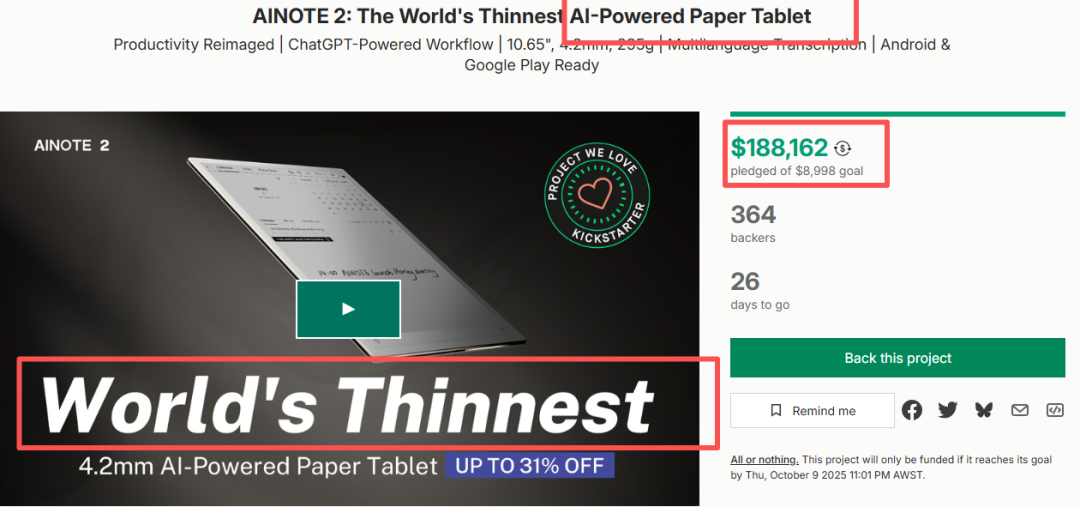
AINOTE2, positioned as the world's thinnest AI paper-like tablet, launched its crowdfunding campaign on Kickstarter. In a short period, the project has raised nearly $190,000 from over 300 backers. Its primary selling points are its ultra-thin 4.2mm profile and 10.65-inch display. Early media and review channels, including YouTube and Reddit, have helped generate initial awareness and user interest. Based on current progress, the project is unlikely to reach the million-dollar mark but is expected to see some further growth beyond its current funding.
Key Product Features
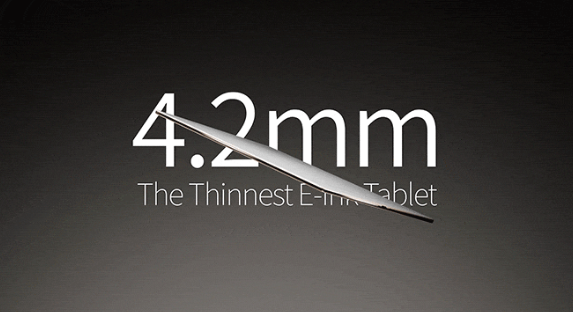
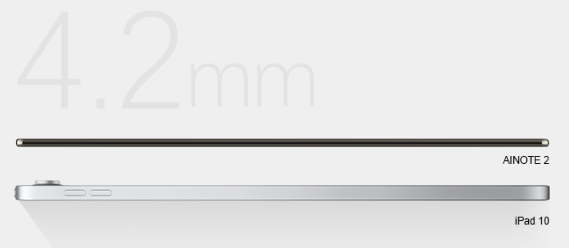
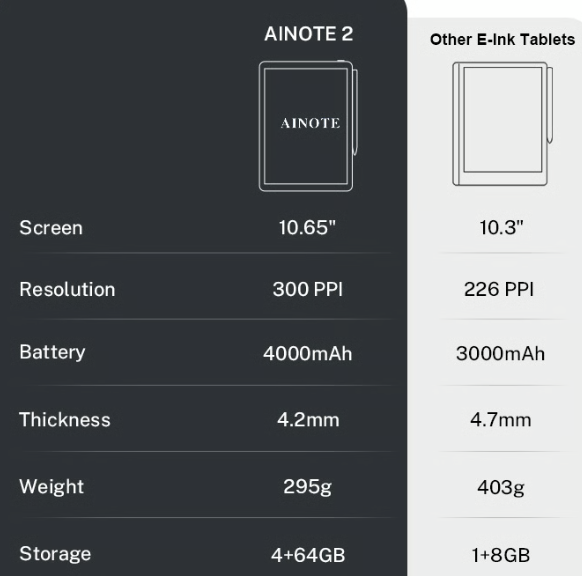
At just 4.2mm, the AINOTE2 claims to be the world's thinnest AI paper-like tablet, offering a paper-like grip and significant portability advantages over mainstream E-Ink devices like reMarkable.
The 10.65-inch, 300PPI E-Ink display is designed for extended reading and writing without eye strain, providing low-latency response and a realistic writing friction feel.
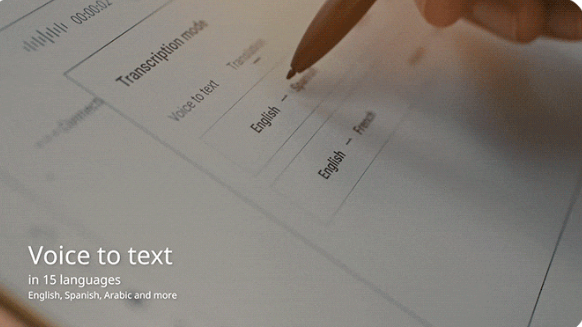
With built-in ChatGPT and deep learning capabilities, it supports one-click summarization, real-time transcription in 15 languages, real-time translation in 10 languages, and handwriting recognition for 133 languages. This integrates paper-like writing with AI productivity, offering users intelligent content processing and analysis.
The unique LiveLinkNotes feature allows users to circle words to jump back to specific points in audio recordings, precisely linking notes with the audio timeline—a direct solution for common pain points in meetings and classroom settings.
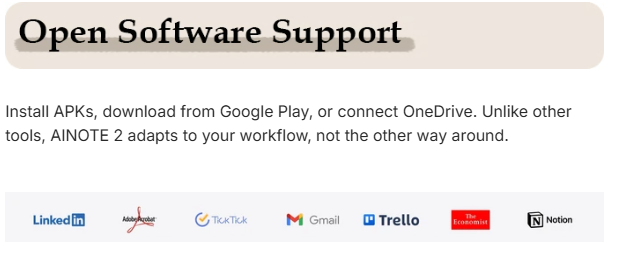
Unlike competitors with closed systems, AINOTE2 supports Android and Google Play, allowing installation of third-party apps, direct cloud drive synchronization, and multi-format export, providing greater freedom for users seeking expandable productivity tools.
Brand Ecosystem and Early Feedback
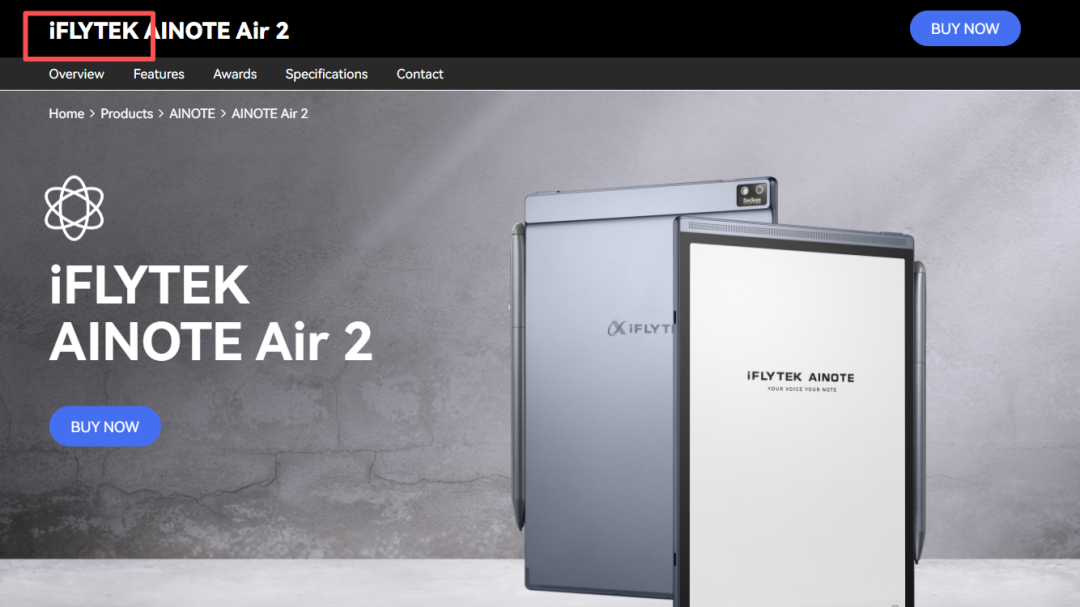
According to information on the project page, the brand ecosystem behind AINOTE2 is associated with Chinese AI and voice technology manufacturers like iFLYTEK. The product line includes models such as AINOTE, AINOTE Air, and AINOTE2, which have already gained some recognition in e-commerce and review circles. From a supply chain perspective, this product line's connection with established Chinese manufacturers offers a degree of assurance for mass production and delivery. (Note: This information is sourced from the internet; users should verify its authenticity, and we do not take responsibility for its accuracy.)
Media and user trial feedback indicates the product is appealing in concept and experience. Independent reviews on platforms like YouTube and Reddit have highlighted its ultra-thin design and real-time transcription performance.
However, reviews also point out areas for improvement in battery performance, processor capabilities, and recognition accuracy—typical challenges for early-stage crowdfunding hardware. The product will need to deliver on its early technical promises through firmware optimization and mass production validation to build long-term market reputation and user trust.


Market Environment and Competition
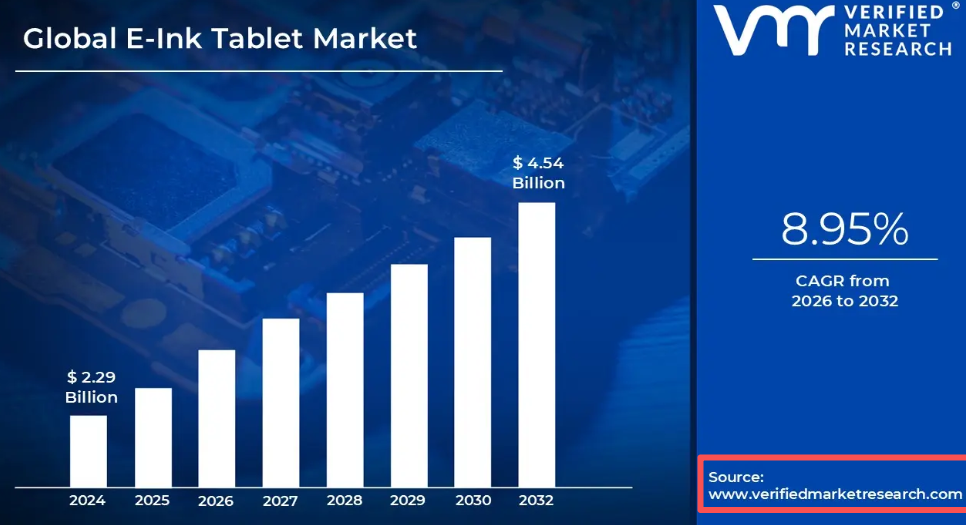
The E-Ink e-paper tablet market has reached a multi-billion dollar scale, with several research institutions forecasting a compound annual growth rate of 8-12% in the coming years. Education, professional reading, and productivity applications are key segments driving market expansion. This is a growing but still niche market, primarily targeting high-end and professional users.
In terms of competition, AINOTE2 faces established rivals like reMarkable PaperPro/2 and the Onyx Boox series, as well as emerging brands such as ViWoods. Each brand has its strengths and weaknesses in writing experience, ecosystem compatibility, and cloud services.
AINOTE2's differentiated advantage lies in its combination of an ultra-thin body, clear AI functionality, and Android extensibility. However, this also presents technical integration challenges: simultaneously achieving low-latency writing, long battery life, and robust AI capabilities places high demands on the supply chain and firmware optimization.
The product will need to deliver on its early technical promises through firmware optimization and mass production validation to build long-term market reputation and user trust.