DreamPilot AI Sleep Mask: An In-Depth Look at its Crowdfunding Journey
Crowdfunding Analysis · · PledgeRadar Editorial
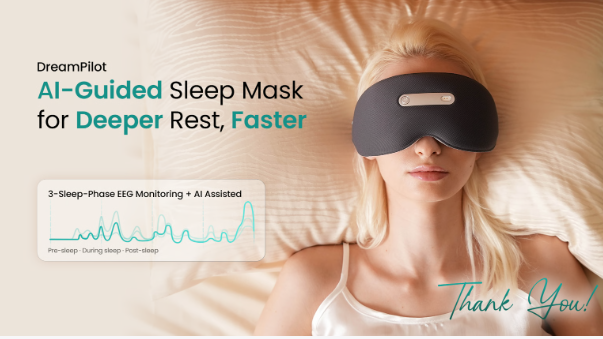
DreamPilot is an AI sleep mask equipped with built-in EEG (electroencephalogram) technology, designed to enhance sleep onset and depth through multi-modal interventions including sound, heat, EMS (electrical muscle stimulation), and vibration. It targets office workers and night shift employees who frequently wake up, engage in prolonged mental work, or generally seek to improve their sleep quality from the comfort of their homes.
Campaign Overview
DreamPilot launched its campaign on Kickstarter in November, concluding with approximately HK$527,000 raised from 387 backers. While the campaign performance was moderate and lacked significant standout features, the product itself shows promise.
Community discussions among backers revealed high expectations for the product's comfort, app usability, and the visualization of sleep monitoring data. However, concerns were also raised regarding battery life, safety certifications, and adaptability to different head shapes. In subsequent updates, the project team committed to further optimizing firmware and mask fit, as well as providing detailed information on warranty and return policies.
Core Product Features
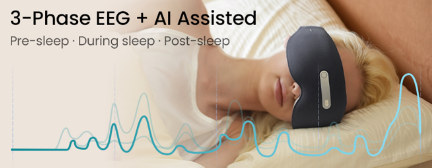
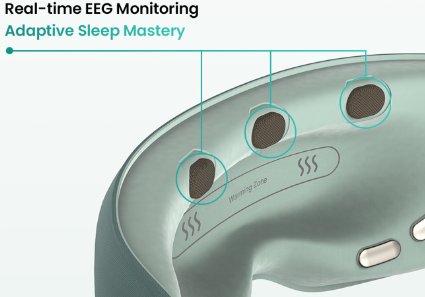
DreamPilot's core innovation lies in its integration of real-time electroencephalogram (EEG) signal monitoring with multiple physical intervention methods.
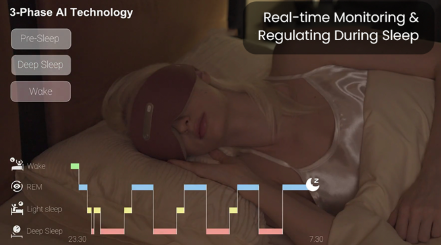
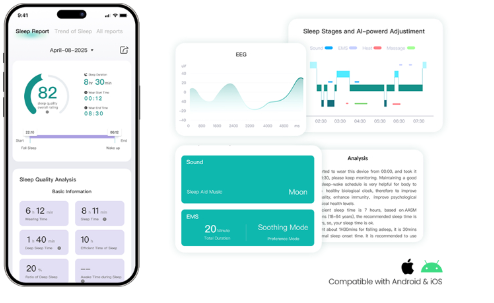
By identifying sleep stages via EEG, the system can trigger personalized interventions at optimal moments. For instance, it might play binaural beats or white noise during sleep onset, or initiate subtle vibrations or localized heating during light sleep. This closed-loop intervention theoretically offers a significant boost in effectiveness.
The critical value of EEG lies in providing precise signals for sleep staging, enabling accurately timed intervention triggers. However, achieving high efficacy demands sufficient algorithmic sampling precision, effective artifact processing, and appropriately set trigger thresholds. While this approach aligns with existing academic precedents (such as EEG sleep headbands like Dreem), robust performance will require extensive clinical validation.
DreamPilot claims to automatically learn from users' physiological data and routines, continuously optimizing its intervention strategies.
From a technical standpoint, personalized models can enhance long-term therapeutic effects, but their success hinges on three factors: the scale of training data, data privacy policies (local processing versus cloud storage), and the model iteration mechanism. If the official approach prioritizes local processing or encrypted cloud storage, user privacy would be better protected, though this might impact the speed of model updates. Future product documentation clarifying these details would significantly boost user confidence.
The system-generated sleep reports and visual charts are designed to help users understand their sleep improvement process. This is a crucial feature for enhancing user engagement, but its accuracy is entirely dependent on the EEG algorithm and the quality of sensor contact.
Academic research indicates that small dry-electrode headbands can achieve a high degree of consistency with medical-grade polysomnography (PSG) for sleep stage identification, though they are not entirely identical.
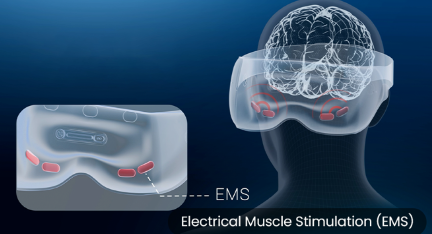
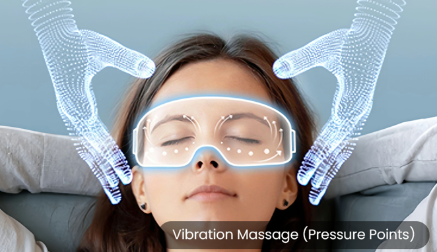
The product integrates four physical intervention methods: thermal sensation, EMS muscle stimulation, vibration, and sound.
Theoretically, these methods are complementary: heat can promote blood flow, sound can mask environmental noise, and EMS may alleviate tension in the muscles around the eyes.
However, each intervention has distinct physiological effects and safety thresholds. The product must provide clear clinical trial data and safety instructions, especially regarding contraindications for specific populations such as pacemaker users, epilepsy patients, or pregnant individuals.
The DreamPilot project was initiated by the SELEPU team, which, according to public information, appears to be Beijing Selepu Technology, a hardware startup focused on product research and development.
Market Landscape
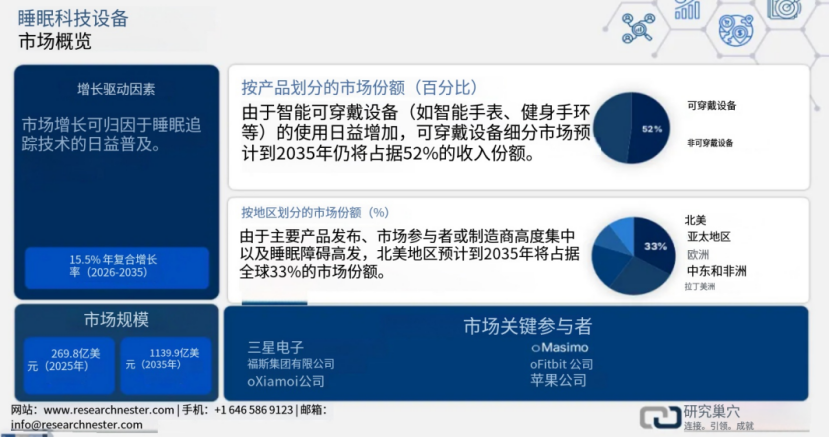
The sleep technology and sleep device market is currently experiencing rapid growth. Multiple market research firms predict that the global sleep tech market has already reached tens of billions of dollars, maintaining a double-digit annual growth rate. This market encompasses various sub-categories, including wearable sleep devices, smart mattresses, and sleep aids.
Wearable EEG headbands and smart sleep masks fall within the intersection of wearable sleep devices and sleep intervention tools. Due to their portability and ability to track data long-term, these products have attracted investment from numerous companies, including major consumer electronics manufacturers. Academic research has also validated the feasibility of headband-type devices for sleep stage identification, demonstrating their technical foundation as tools for home sleep monitoring and improvement.
Existing key competitors include Dreem (known for its EEG headbands in sleep monitoring and intervention, with academic papers supporting the effectiveness of its detection and intervention), Muse (launched by InteraXon, focusing on brainwave feedback and user experience), Kokoon, and SleepShepherd, among other companies specializing in acoustic and headband-based sleep technology. In comparison, DreamPilot's differentiating feature is its mask form factor combined with multi-modal physical interventions. However, whether this advantage translates into real-world benefits still requires validation through genuine clinical and user scenario data.
However, based on our observations, the barrier to entry for this market is significant. Products involve multiple technical modules such as EEG, EMS, and heating, and must meet multi-regional compliance requirements like CE, ETL, and FCC upon shipment. The associated costs for safety certifications and clinical validation are substantial. Furthermore, sleep products typically require a lengthy user education period and trust-building process. If a product necessitates daily wear, comfort and privacy protection strategies directly impact user repurchase rates.
Wearable and embedded sleep monitoring with closed-loop intervention presents clear market opportunities and technical feasibility, with both academic and industry research supporting its short-term transition to home-based and commercialized products.

Ultimately, the ability to deliver on these promises remains the critical challenge for projects of this nature.