Kamingo's $1.7 Million Crowdfunding Success: A Deep Dive into the Viral E-Bike Conversion Kit
Crowdfunding Analysis · · PledgeRadar Editorial
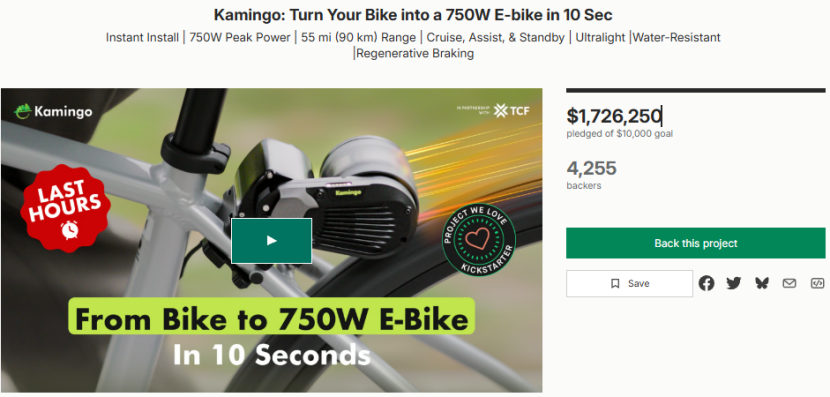
Kamingo achieved remarkable crowdfunding success on Kickstarter, raising over $1.7 million and significantly exceeding its initial funding goal. The project's core selling point—transforming any bicycle into a 750W electric bike in just 10 seconds—quickly captured widespread user attention and support. This strong performance wasn't limited to crowdfunding metrics; the official brand website also launched a presale campaign, maintaining consistent specifications and pricing with the Kickstarter project. This dual approach highlighted a robust market demand for quick, detachable electric conversion solutions. Kamingo's success underscores the urgent need among urban commuters for flexible, portable electric mobility options.
Key Product Features
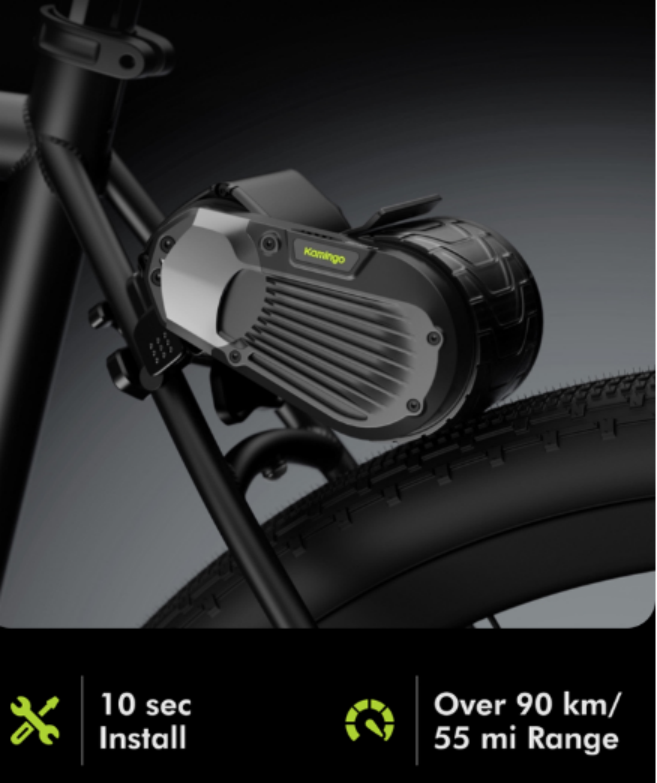
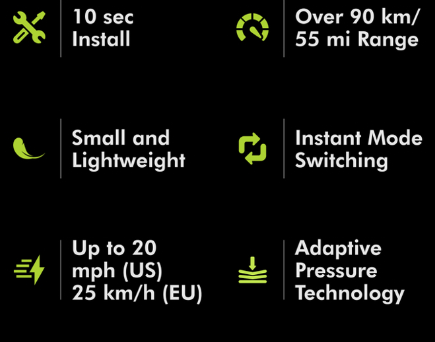
**Ultra-Fast Installation and Removal:** Designed for 10-second installation and removal, the system features a modular design comprising a motor, battery, and controller. After a one-time base installation, daily attachment and detachment take mere seconds, making it convenient for commuting, carrying on public transport, or indoor storage.
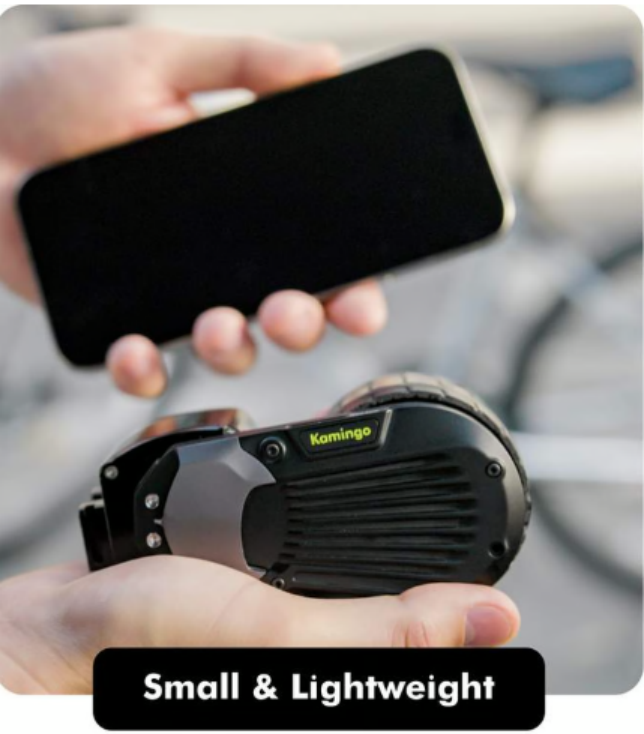
**Ultra-Lightweight Design:** Weighing just 2.3 kilograms, the entire system is roughly equivalent to a MacBook (motor 0.9 kg, battery 1.4 kg). This makes portability and temporary removal practical, especially for urban commuting and folding bike scenarios.
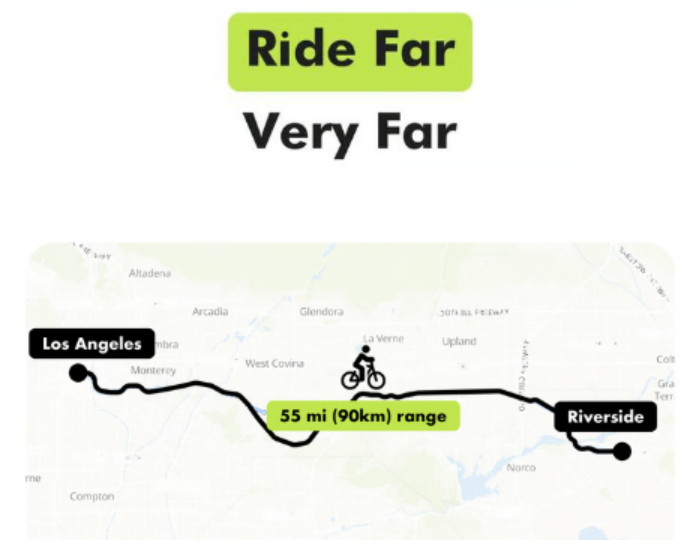
**Powerful Performance:** Offering 750W peak power and 250W rated power (adjustable according to local regulations), the official claims suggest a maximum range of up to 90 kilometers, meeting diverse travel needs.
**Intelligent Pressure Adaptive Technology (PAT™):** The PAT™ Pressure Adaptive System uses pressure and IMU sensors to dynamically adjust the pressure of the assist wheel on the tire. It automatically cuts power and lifts the wheel when detecting tipping, obstacles, or foreign object entanglement, effectively enhancing the safety and stability of friction drive.
**Industrial-Grade Durable Design:** High-specification components include a 266Wh removable battery with 21700 EV-grade cells and an IP66 waterproof rating for the main unit. Equipped with a regenerative braking system, it ensures durability for daily commuting.
Team and Market Engagement
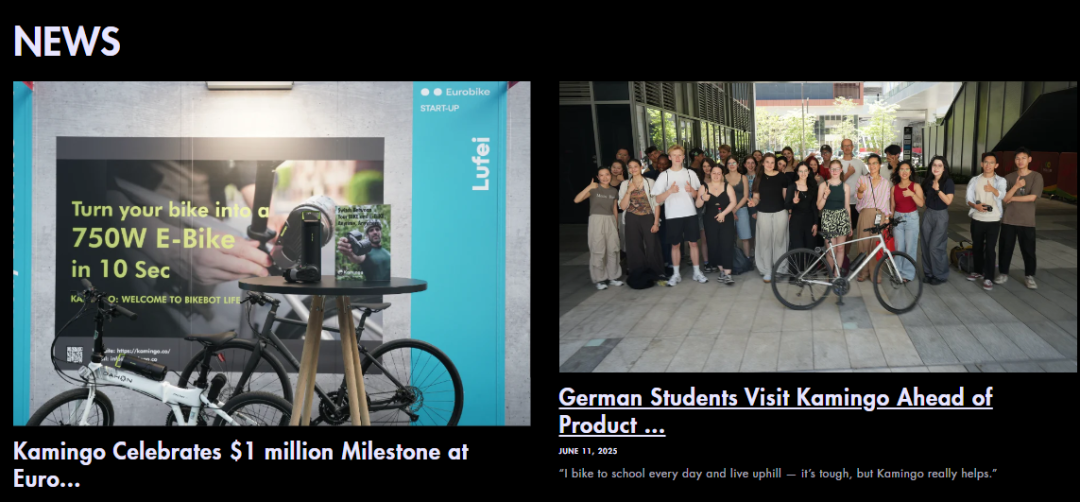
The Kamingo team comprises engineers and designers from renowned companies like Huawei and BYD, focusing on product engineering and lightweight technology. The team maintained synchronized operations across their brand website, Instagram, Facebook, and Kickstarter page, demonstrating proactive market promotion. The product was also showcased and tested at professional exhibitions such as Eurobike 2025, garnering media attention and coverage, which indicates a growing technical capability and market recognition.
Delivery Challenges and Industry Context
However, as a crowdfunding project, Kamingo still faces the inherent delivery challenges of moving from concept to mass production. The projected delivery timeline of late 2025 will require continuous monitoring of manufacturing and logistics progress. Furthermore, similar friction-drive conversion kits like Rubbee, PikaBoost, and Swytch have seen mixed market performance. User communities have frequently discussed concerns regarding durability, waterproofing, long-term wear, and actual climbing ability. Kamingo will need to establish a reliable market reputation through long-term real-world testing results.
Market Environment and Competitive Landscape
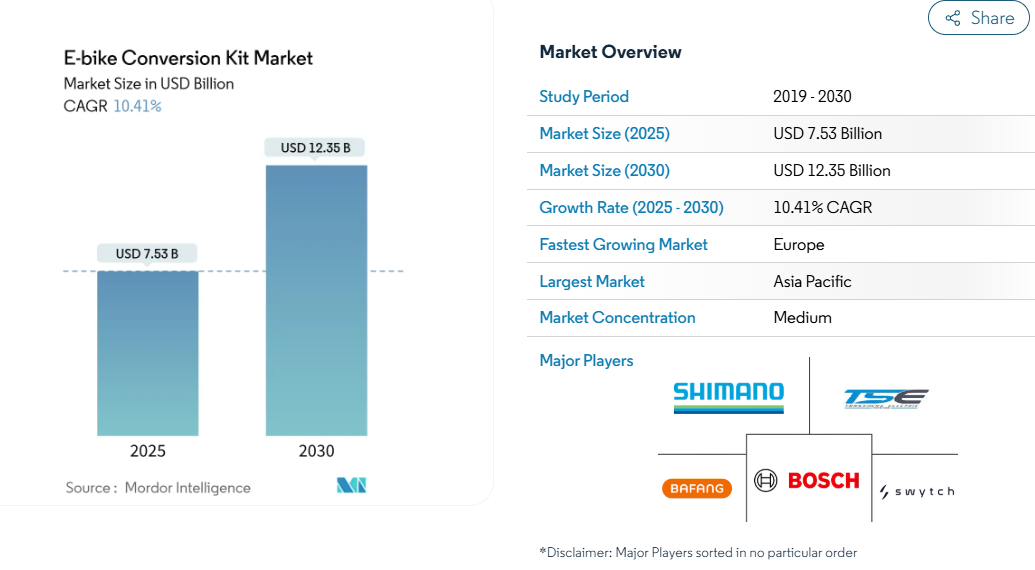
The global electric bicycle market is currently in a rapid expansion phase, with a market size reaching tens of billions of dollars in 2024-2025 and projected double-digit growth over the next decade. Within this broader context, the e-bike conversion kit segment is also experiencing strong growth. Market research indicates the conversion kit market is valued in the hundreds of millions to billions of dollars, with a compound annual growth rate typically exceeding 10%. This 'conversion economy' demonstrates clear market demand driven by urbanization, zero-carbon mobility trends, and cost-sensitive consumer groups.
In terms of the competitive landscape, Kamingo faces direct competitors such as Swytch, Rubbee, and PikaBoost—brands that have been active in the quick-conversion market for several years. Swytch, in particular, has a strong user reputation in European and North American markets, while other friction-drive products have received mixed reviews, balancing portability advantages with durability concerns. Kamingo aims to build a differentiated advantage through features like its lightweight design, PAT technology, 21700 battery cells, and APP Bluetooth lock.
Market opportunities are accompanied by significant challenges. Regulatory compliance is a critical factor, as different regions impose strict limits on power output and assist speed. Kamingo will need to prepare corresponding compliance certificates and localized firmware for various markets. From a user perspective, friction-drive systems still present industry pain points, including slippage in wet conditions, long-term tire wear, torque limitations under high traction demands, and the stability of quick-release interfaces.
Kamingo's success underscores the urgent need among urban commuters for flexible, portable electric mobility options.