OlaresOne: Desktop AI Powerhouse Exceeds $2 Million on Kickstarter
Crowdfunding Analysis · · PledgeRadar Editorial

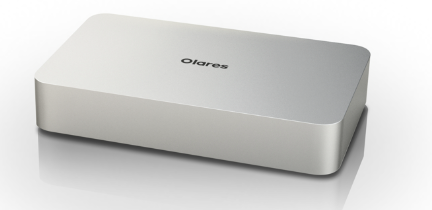
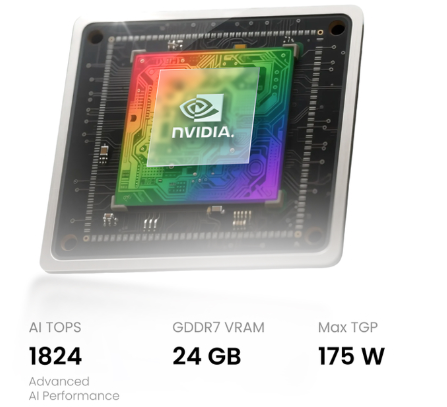
OlaresOne is a desktop mini-PC designed for local AI inference and model deployment. It features an Intel Ultra 9275HX processor, an NVIDIA GeForce RTX 5090 Mobile graphics card, 96GB of DDR5 memory, and Olares' proprietary local cloud operating system. This setup provides individual users, small teams, and edge computing environments with offline large model inference and one-click AI application deployment capabilities. The OlaresOne achieved remarkable crowdfunding success on Kickstarter, ultimately raising over $2 million from nearly 800 backers. This performance underscores the strong demand among its target audience for high-end AI hardware.
Key Product Features: A Full-Stack Local AI Solution
**Desktop-Grade High-Performance Computing** Equipped with an Intel Ultra 9275HX processor, an NVIDIA GeForce RTX 5090 Mobile graphics card, and 96GB of DDR5 memory, the OlaresOne condenses large model inference tasks, typically requiring server-grade resources, into a desktop device. The core value of this hardware configuration lies in its ability to support local execution of large models and concurrent multi-model inference, while reducing reliance on cloud computing services and network bandwidth. A crucial prerequisite for this is the reliable engineering implementation of the product's thermal design and long-term performance.
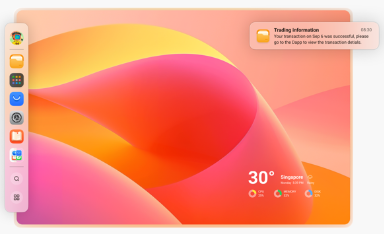
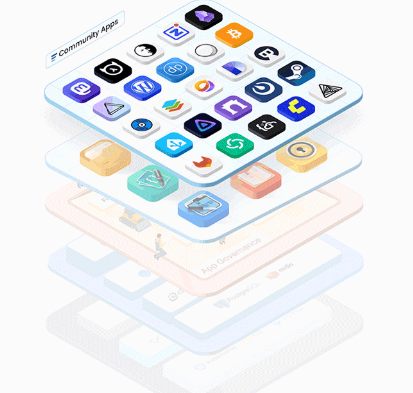
**Local Cloud Operating System and Application Ecosystem** Olares' proprietary local cloud operating system (OlaresOS) serves as the critical link between hardware capabilities and user usability. It emphasizes one-click deployment of local models and applications, data sovereignty, and low latency. The system comes pre-configured with over 200 AI applications and a sandboxed security environment, designed to significantly lower the barrier to entry for non-technical users. The maturity of the software ecosystem and the commitment to its maintenance are key here. If the system directly supports mainstream model frameworks and common toolchains, users' initial setup costs will be significantly reduced. Conversely, over-reliance on user self-configuration would diminish the product's ease-of-use advantage.
**Enterprise-Grade Security and Privacy Protection** Addressing business and compliance requirements, the product offers enterprise-grade features such as local area network access, credential management, multi-factor authentication, and local data isolation. These features allow organizations to significantly reduce their reliance on public cloud services while meeting data privacy and regulatory compliance demands, making them important differentiating selling points for commercial clients.
**One-Click Deployment Experience** Users can deploy pre-installed applications and custom models with simple button operations. This design philosophy is a significant selling point for attracting non-technical users. Its actual effectiveness will depend on software compatibility and long-term maintenance and update commitments.
Olares is a technology team focused on localized AI and data sovereignty, with registered addresses in locations such as Delaware, USA, and Singapore, demonstrating an international operational footprint. The team's core philosophy revolves around localized AI and data sovereignty, developing commercial hardware products while also advancing an open-source software ecosystem. Their self-developed OlaresOS is available on GitHub, positioned as a local cloud operating system for individual users and small teams.
Market Analysis
The market for AI computers and local AI inference devices is currently experiencing rapid growth. According to multiple industry research reports, this market shows a significant expansion trend. A Grand View Research report indicates that the AI computer market was valued at approximately $51.1 billion in 2024, projected to grow to $64.14 billion in 2025, and is expected to maintain high growth through 2030. Analysts also consistently agree that the AI PC market has entered the multi-billion dollar range and is rapidly replacing traditional PCs, making AI capabilities a mainstream sales driver for hardware manufacturers.
While these figures may vary slightly in their specific methodologies, they convey a consistent signal: from 2024-2026 onwards, both system integrators and chip manufacturers are simultaneously pushing AI-ready devices into the mainstream consumer market. Edge inference demands, such as privacy protection, low-latency response, and optimized network bandwidth costs, are significant drivers of this growth. The software ecosystem and ease of use will ultimately determine the adoption rate of local AI products. In terms of the competitive landscape, OlaresOne faces two types of rivals. Traditional OEM manufacturers and system integrators can offer similar hardware stacks, leveraging their mature supply chains and channel advantages. Concurrently, emerging AI workstation and AI PC startups are also rapidly entering this market. Analysis of OlaresOne's product positioning by review institutions indicates that its differentiating advantage lies not merely in hardware specifications, but in its accompanying OlaresOS and one-click deployment experience.
Olares' success hinges on the depth of its ecosystem development. If it can vitalize its software ecosystem and rapidly expand its user base by leveraging hardware appeal, it has the opportunity to become a significant player in this niche market. Conversely, if ecosystem compatibility is insufficient or application support is weak, it will be challenging to withstand the pricing and channel advantages of traditional manufacturers. Synthesizing various research reports, desktop AI hosts equipped with local computing power, a user-friendly software layer, and secure isolation capabilities show significant growth potential in privacy-compliant and low-latency application scenarios.
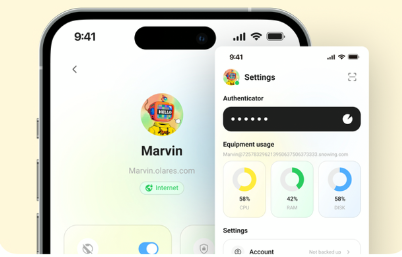

The core value of this hardware configuration lies in its ability to support local execution of large models and concurrent multi-model inference, while reducing reliance on cloud computing services and network bandwidth.