BedJet v2: Sleep Tech's Temperature-Controlled Bed Raises $1.36 Million on Kickstarter
Crowdfunding Analysis · · PledgeRadar Editorial
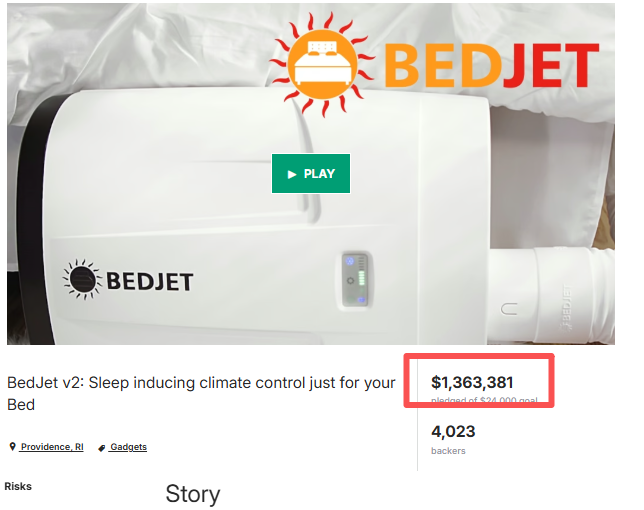
The BedJet v2 campaign on Kickstarter successfully attracted 4,023 backers, raising a total of $1.363 million. Notably, the project surpassed the $1 million mark in less than a month after its launch, demonstrating strong market appeal and user engagement. This achievement validates the product concept of 'instant temperature control + sleep science' and its significant resonance within its target demographic.
Product Core Selling Points
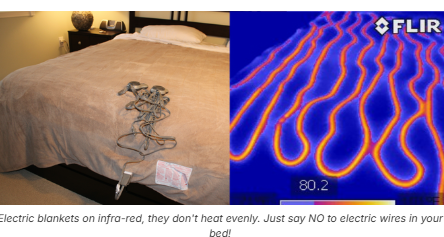
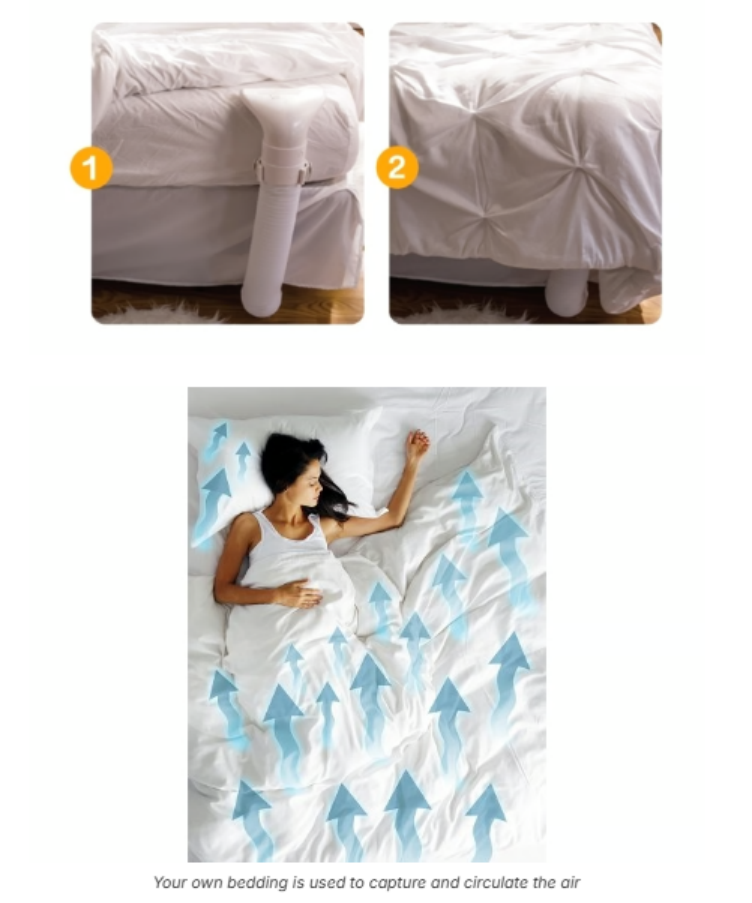
The BedJet utilizes air-driven technology to deliver an immediate temperature control experience, achieving rapid cooling in 10 seconds and full heating in 180 seconds. Compared to traditional electric blankets or heating pads, this air circulation method offers quicker response times and more uniform temperature distribution. Crucially, it keeps electrical components away from the bed surface, fundamentally enhancing user safety.
The product's most distinctive feature is its application of sleep temperature research. The system incorporates a built-in biorhythm algorithm that automatically adjusts the temperature curve hourly. It provides a suitably cool environment during the sleep onset phase to promote faster sleep and facilitates a natural awakening in the morning through gradual warming, potentially even replacing traditional alarm clocks. The company claims collaborations with sleep medicine experts and research institutions, elevating simple temperature regulation to the realm of sleep science optimization.
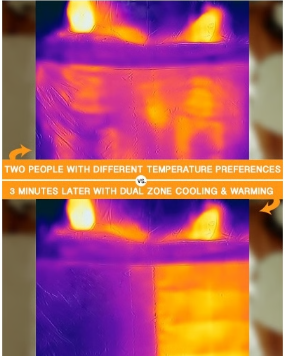
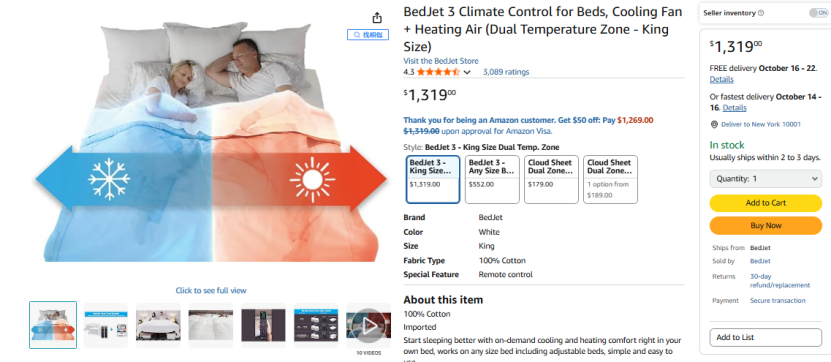
Addressing the common issue of differing temperature preferences between partners, BedJet offers a dual-zone independent control system. Utilizing two main units in conjunction with a specialized Air Comforter duvet accessory, it enables completely separate temperature settings for the left and right sides of the bed. This effectively resolves the practical pain point of 'couple's temperature disparity,' becoming a core purchasing driver for many household users.
The system's design emphasizes versatility and ease of use. It is compatible with any type of bed frame and mattress, requiring no tools for installation and taking only minutes to set up. This significantly lowers the barrier to user purchase decisions and reduces potential return concerns.
Operating at a medium setting, the product generates approximately 39 decibels of noise at pillow level, comparable to the ambient sound in a library. Furthermore, it has obtained authoritative safety certifications such as UL and features a washable filter design, providing reliable assurance across key appliance metrics like quietness, safety, and durability.
Company Background and Business Model
BedJet positions itself as a sleep technology company, headquartered in Newport, Rhode Island, USA. Its founding team boasts diverse backgrounds spanning aerospace engineering, medical devices, and industrial design, offering a cross-disciplinary perspective for product innovation and user experience optimization. In terms of business model, BedJet has long primarily utilized direct sales and e-commerce channels, maintaining official storefronts on major platforms like Amazon, where it consistently receives high user ratings and recommendations within its product categories. Observing its technological iteration path, the company has continuously optimized its controller, mobile application, and user interface from v1 to v2. This follows a typical hardware startup trajectory: establishing an early user base and feedback mechanism through crowdfunding, then iterating the product based on real-world usage data, while progressively expanding its accessory ecosystem and sales channels.
Target User Group and Market Expansion
The product's core target users include general consumers sensitive to sleep temperature, women experiencing menopausal hot flashes, individuals with night sweats, and health-conscious consumers with high demands for sleep quality. The immediate temperature control effects and the brand's sleep science narrative have established clear product recognition in its target market. However, to further expand into B2B channels (such as medical institutions, elder care facilities, and the hospitality industry), the brand will need to provide more publicly verifiable clinical data and third-party research support to enhance its credibility in professional sectors.

Market Analysis
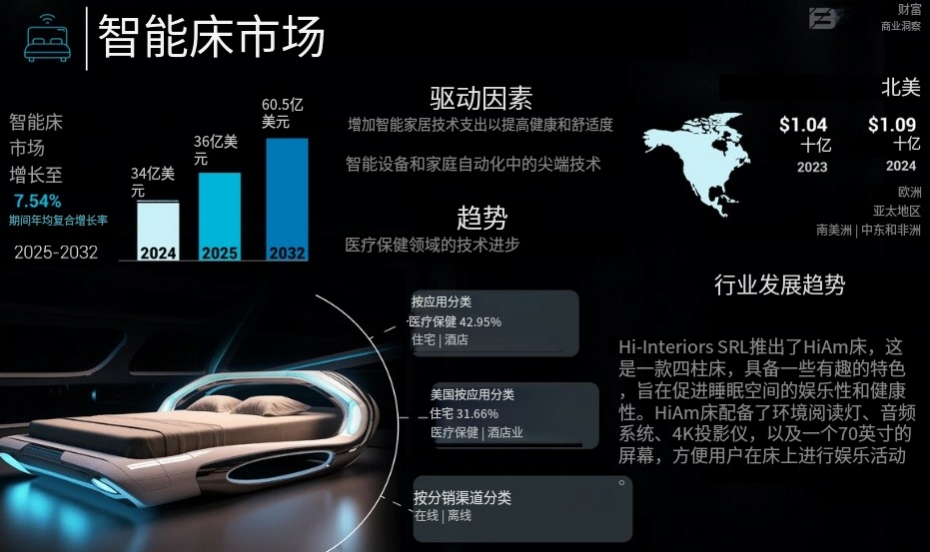
The sleep technology device market, where BedJet operates, is currently experiencing rapid growth. According to research data from Global Market Insights, the global sleep technology device market size is projected to be approximately $24.9 billion in 2024 and is expected to maintain a high compound annual growth rate in the coming years. Within the smart beds and bedding segment, a Fortune Business Insights report indicates that the smart bed market size is around $3.44 billion in 2024. Temperature-controlled smart bedding, as a significant component of this market, possesses substantial market capacity and growth potential.
Market Growth Drivers
Key drivers for market growth include: increased public awareness of the importance of sleep health, specific needs arising from an aging population (such as managing menopausal symptoms), the maturation of the smart home ecosystem, and a consumer trend towards willingness to pay a premium for improved sleep quality.
Competitive Landscape
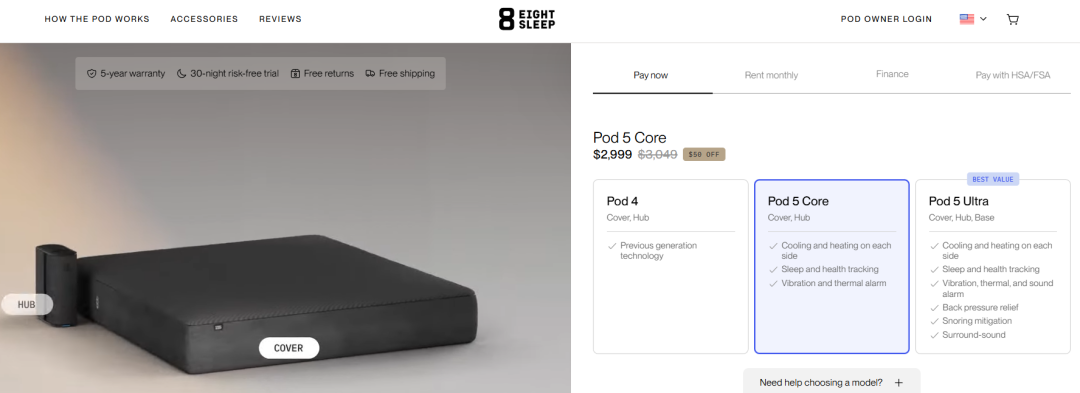
In terms of the competitive landscape, BedJet faces rivals across multiple dimensions. Eight Sleep's Pod series utilizes a water-circulating mattress cover combined with sleep tracking and a mobile application, positioning itself as a high-end, comprehensive solution typically priced in the thousands of dollars, emphasizing automatic temperature control linked to sleep stages and physiological data. Sleepme's ChiliPad and OOLER series also employ water circulation technology, boasting a long history and establishing themselves as mature brands in personal bed temperature control. Furthermore, traditional smart bed manufacturers like SleepNumber integrate temperature control as a module within their overall bed systems, dominating the high-end market through strong offline channels and brand influence.
BedJet's Competitive Advantages and Challenges
BedJet's competitive advantages lie in the rapid response experience provided by its air circulation technology, its relatively simple installation, broad compatibility with various mattress types, and its dual-zone solution that precisely addresses the pain point of partner temperature differences. However, the brand also faces challenges: different technological approaches (air vs. water circulation) each have pros and cons regarding long-term user experience, energy efficiency, and noise control. BedJet needs to demonstrate product reliability through continuous user reviews and after-sales data.
The brand's sleep science narrative requires more publicly verifiable clinical research support to build stronger differentiation in professional channel expansion and high-end market competition.