Ascentiz Exoskeleton Nears $2 Million on Kickstarter, Signaling New Consumer Market
Crowdfunding Analysis · · PledgeRadar Editorial
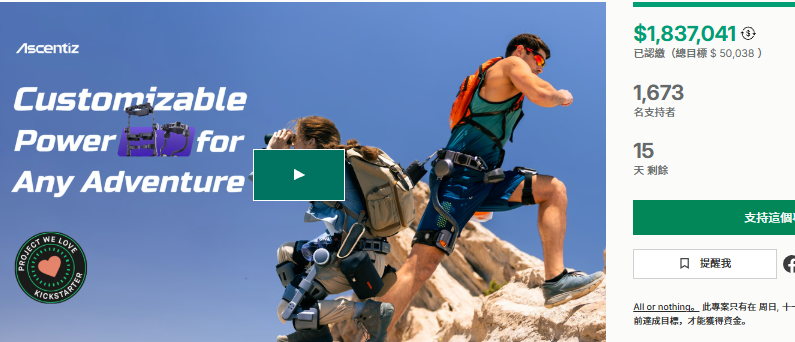
Launched in late September, the Ascentiz exoskeleton project on Kickstarter has achieved remarkable success, raising over $1.83 million from 1,672 backers. This marks the second exoskeleton project we've observed this year to reach multi-million dollar crowdfunding status. Regardless of the project's ultimate profitability, this level of market acceptance alone demonstrates the significant commercial viability and potential of such products.
Product Core Selling Points
The Ascentiz design reflects a strong market demand for lightweight, everyday-use exoskeleton products. The project anticipates its first batch of deliveries in December 2025.
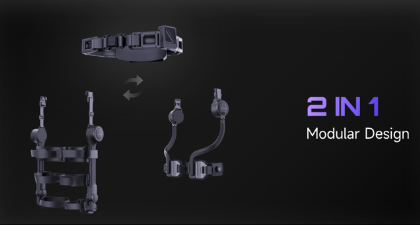
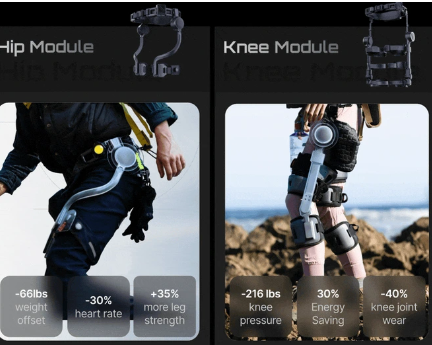
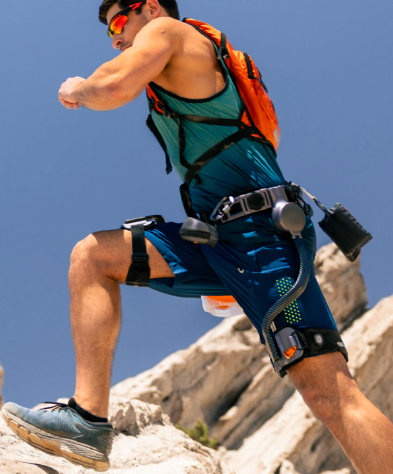
**Modular Joint Design:** The product disassembles the exoskeleton into independent joint modules and a connecting strap system. Users can flexibly select knee or hip joint modules based on their specific tasks, such as hiking, carrying loads, or daily assistance. This design not only reduces the cost of individual components but also simplifies maintenance, upgrades, and adaptation to various use cases, covering everything from light assistance to moderate load-bearing.
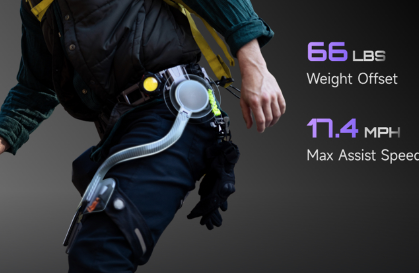
**Climbing Assist Performance:** The project claims to provide approximately 35% assistance when climbing uphill or ascending stairs, reducing lower limb burden and energy consumption. This metric is derived from power and metabolic tests conducted in a laboratory environment. However, real-world performance will be influenced by factors such as wearing method, gait adaptation, and load differences, requiring extensive user feedback for practical validation.
**AI Adaptive Motion Control:** Built-in sensors and software continuously detect the user's movement status, dynamically adjusting the assistance curve. It enhances thrust during accelerated climbing and reduces intervention when decelerating, preventing the unnatural sensation caused by mismatched assistance. This adaptive mechanism improves wearing comfort but demands high robustness and low response latency from the control algorithm.
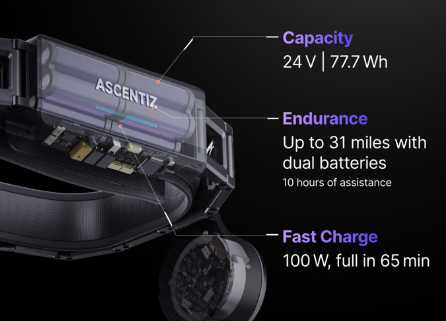
**Portability and Waist Mount:** The entire system is comparable in size and weight to an A4 sheet of paper and uses a waist-mounted design to reduce rigid constraints on the joints. This design significantly lowers the barrier to use, but the waist-mounting method is crucial for efficient force transmission and comfort. The compact size also implies a necessary trade-off between power output and battery life.
**Consumer Aesthetic Design:** Through diverse casings and surface patterns ("Patterns for Any Mood"), the product aims to reduce its industrial feel, making it more appealing to the general public. This helps transform the exoskeleton from a stereotypical industrial or medical device into a consumer electronic product, though it cannot replace rigorous validation of functionality and safety.
Ascentiz has conducted project launches and demonstrations in locations such as Seattle, USA. The team has showcased prototypes at international electronics and robotics exhibitions, including the Hong Kong Electronics Fair, and has received media coverage. Currently, Ascentiz primarily utilizes Kickstarter crowdfunding as its initial source of large-scale funding and market validation.

Market Analysis
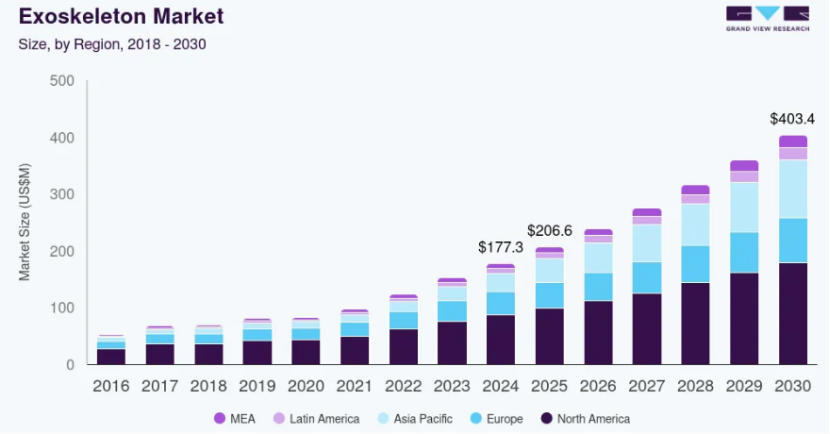
The global exoskeleton market is experiencing rapid growth. According to estimates from various market research firms, including MarketsandMarkets, the market size is projected to expand from its current hundreds of millions of dollars to several billion dollars by around 2030, maintaining a compound annual growth rate of over 20%. Driving factors include strengthened labor safety regulations, increased demand for rehabilitation and mobility assistance in aging societies, the need for human augmentation solutions in industrial automation, and the maturation of core technologies such as lightweight motors, sensors, and AI control.
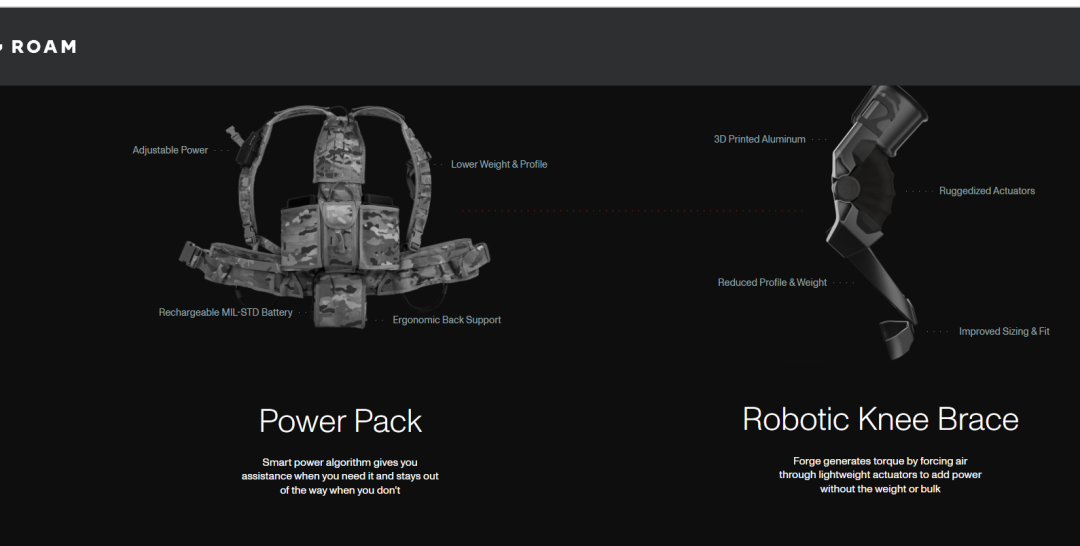
Market segmentation covers four major application areas: rehabilitation/medical, industrial/logistics, military/special operations, and consumer/outdoor assistance. Established players already dominate traditional markets, with companies like EksoBionics, Ottobock, CYBERDYNE, Comau, and Sarcos having built deep customer bases and certification advantages in the medical and industrial sectors. Simultaneously, a new wave of startups, including ROAM Robotics, Dephy, Levitate, Laevo, and Rex Bionics, are rapidly innovating in niche areas such as lightweight design, modularity, and specific body part assistance.
Ascentiz's differentiation strategy combines modularity, a consumer-friendly appearance, and AI-adaptive control, attempting to find a market entry point between outdoor adventurers and everyday assistance users. However, core challenges include production yield and cost control, independent verification of long-term durability, the time and investment required for medical device/safety certifications, and the commercial capability to negotiate with enterprise clients. Existing companies have already established commercial cases in specific niches like warehouse lumbar support. New entrants will need clear differentiating advantages or price competitiveness to stand out.
Based on current information and market conditions, the integration of modularity, lightweight design, and AI-adaptive control is pushing exoskeletons from specialized industrial equipment into a new phase of daily and task-specific wearables.

The integration of modularity, lightweight design, and AI-adaptive control is pushing exoskeletons from specialized industrial equipment into a new phase of daily and task-specific wearables.