Beni: All-Terrain Autonomous Follow-Cam Robot Surpasses $2.5M on Kickstarter
Campaign Teardown · · PledgeRadar Editorial

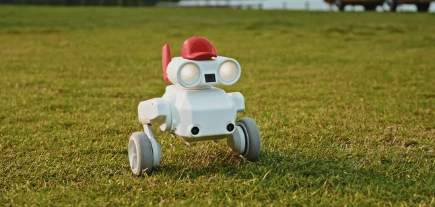
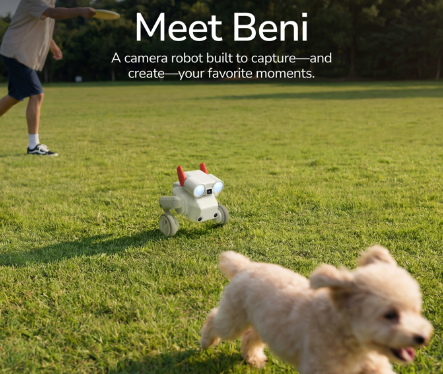
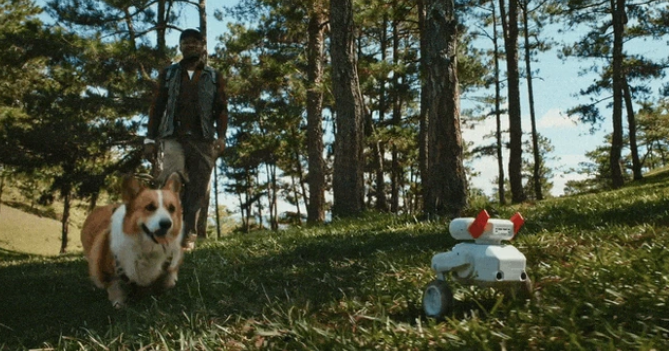
Beni is the first consumer-grade all-terrain autonomous follow-cam robot from Palo Alto robotics company Mondo Robotics. Featuring a four-wheel-drive chassis, a built-in 4K camera, and an AI vision tracking system, Beni autonomously follows users across complex terrains like grass, gravel, mud, and slopes, capturing stable 4K video. It boasts a top speed of 17.9 mph and can clear 10-inch obstacles, making it suitable for skateboarding, cycling, family outdoor activities, pet filming, and solo content creation.
Campaign Overview
Beni launched on Kickstarter on July 8, 2026, securing over $2.5 million from more than 3,000 backers in less than two weeks. The brand states that 30 real users have completed prototype testing. On the PR front, media outlets such as PetaPixel, NewAtlas, and Hackster.io published product reports within the first week of launch. While the creator account was only opened in May 2026 and lacks a platform delivery history, the project team's strong background suggests that delivery should not be an issue. The campaign's video production is particularly noteworthy, employing a narrative style that engages viewers, akin to watching a film, effectively building interest and desire.
Key Product Capabilities
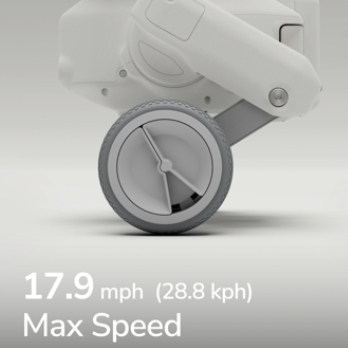
**17.9 mph All-Terrain Four-Wheel Drive:** Beni features an independent four-wheel-drive chassis and offers two interchangeable wheelsets: outdoor wheels (deeper tread for grass, gravel, mud) and indoor wheels (for smooth surfaces). Its top speed of 17.9 mph (approximately 28.8 km/h) allows it to keep pace with typical cycling and skateboarding speeds.
This speed enables Beni to genuinely keep up with action-oriented scenarios, rather than being limited to walking pace. PetaPixel noted Beni's compact size and low-to-the-ground operation provide a distinctly different perspective from drones. This ground-level viewpoint offers unique visual expression for skateboarding, pets, and children's activities, though it is entirely unsuitable for scenes requiring an overhead panoramic view. Potential buyers should have a clear understanding of this perspective limitation before purchase.
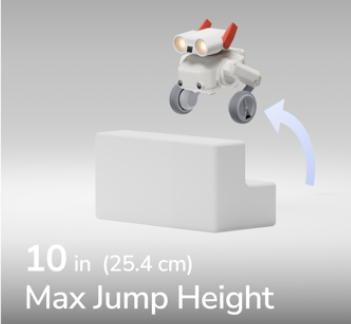
**10-inch Jump and Auto-Righting for Obstacle Traversal:** Beni can clear obstacles up to 10 inches (approximately 25 cm) high. It also features an auto-righting mechanism, allowing it to automatically re-orient itself and continue tracking after an accidental tip-over, eliminating the need for manual intervention.
The jumping capability allows Beni to navigate steps, curbs, tree roots, and small outdoor obstacles. Auto-righting addresses a common failure mode for ground robots, where users must interrupt their activity to retrieve a fallen device. These two features combined significantly enhance Beni's continuous operational reliability in real-world, unstructured outdoor terrains.
The long-term durability of the jumping mechanism and righting system will be a critical engineering dimension to validate during high-frequency use after mass delivery.
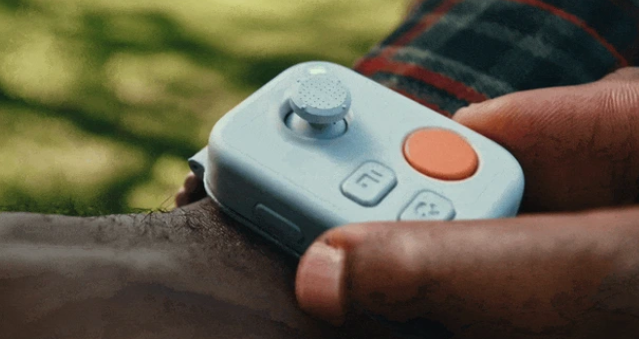
**AI Vision Autonomous Tracking with Motion Tracker:** Beni locks onto its tracking target using on-device AI vision algorithms, supplemented by an included motion tracker for auxiliary positioning. Once set up, the entire filming process requires no user interaction with a phone or remote control.
All tracking processing is completed locally on the device, meaning core functionality does not rely on an internet connection. A GizmoCrowd review mentioned that after setting the mode, Beni tracked and filmed entirely autonomously, without the need for a phone in hand. The robustness of tracking accuracy in crowded environments, when the target is obstructed, or during scene changes, as well as the stability of target retention within the frame during high-speed movement, are common scenarios where AI tracking systems reveal issues in real-world use and will require extensive user testing for quantification.

Imaging and Smart Editing
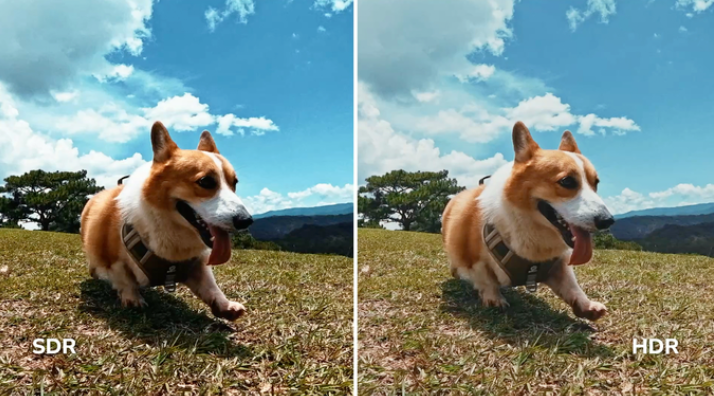
Beni integrates a 4K HDR camera, supporting wide-angle action camera-style shooting. Videos are stored directly on the 32GB internal flash memory or a user-provided microSD card, with all processing defaulting to local completion without cloud upload. The ground-level 4K HDR footage offers an immersive, first-person perspective in fast-paced action scenarios like running, cycling, and skateboarding, complementing the overhead view of drones.
The actual performance of HDR mode in extreme lighting conditions (backlight, strong shadows) and image stability during high-speed motion (whether through software stabilization or a hardware gimbal) are parameters not yet clearly specified in the public details.
**Optional AI Auto-Editing for Highlights:** An optional AI editing function (which appears to be cloud-based, processed securely via AWS, and requires explicit user authorization to activate) automatically identifies highlight clips from recorded footage and generates edited videos, eliminating the need for manual review and editing.
The optional nature and explicit authorization requirement demonstrate the brand's proactive stance on privacy, with local storage and processing as default and cloud features as user-selected add-ons. The generalization capability of the AI editing's highlight detection logic across different sports scenarios (e.g., skateboarding highlights vs. family picnics vs. pet chases) is one of the dimensions where user experience varies most in real-world testing, and it is also a highly attractive feature.

Power, Personality, and Ecosystem
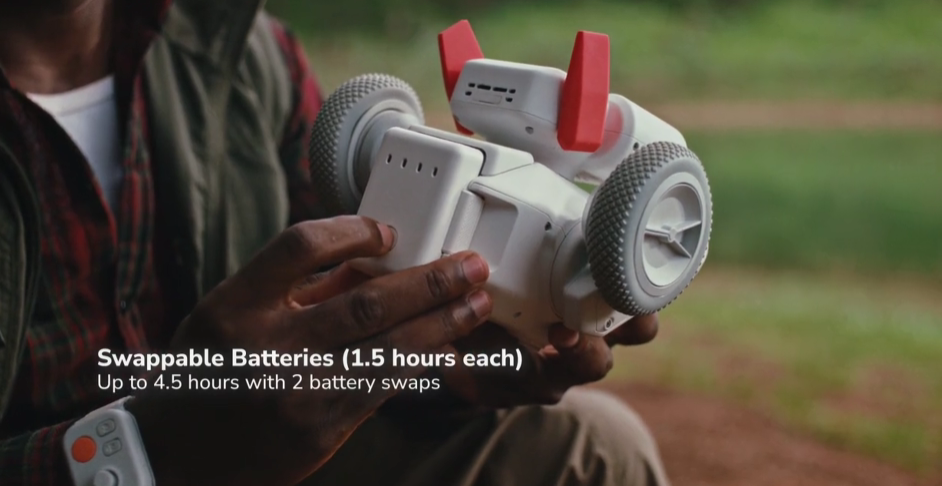
Each battery provides approximately 90 minutes of runtime and supports hot-swapping. Carrying spare batteries can extend total usage time significantly, potentially beyond 4.5 hours.
Beni also features variable-color expression eyes, a display screen that responds to gestures and conveys emotional states. This is a deliberate design choice by the brand to imbue the robot with personality, rather than being a purely functional element. The planned accessory ecosystem includes themed hats, ears, protective stickers, 3D-printable attachments, and future compatibility with FPV goggles, gamepad control, and SIM card-based remote connectivity. While the accessory system adds long-term user engagement value, the realization timeline and priority of roadmap features will depend on official announcements.
Company Background
Mondo Robotics is a robotics brand founded by former Tesla engineers, with operations in both China and the United States. Its Chinese entity is identified as Shenzhen Miaodong Technology, a startup robotics company. Founder Shuo Yang holds a Ph.D. in Robotics from Carnegie Mellon University and previously worked as an engineer at Tesla, also possessing experience at other renowned robotics companies. Robotics & Automation News reports that the team currently comprises approximately 150 engineers and designers with backgrounds spanning autonomous mobility and consumer electronics. This is Mondo Robotics' first Kickstarter crowdfunding campaign, with the creator account opened in May 2026. A long list of service providers indicates the brand's significant investment in this debut, which appears to be yielding impressive results.
Market Analysis and Risks
The consumer-grade autonomous follow-cam device market is a rapidly expanding sector, driven by drones in recent years and now extending to ground robots. The global drone market was valued at approximately $26.5 billion in 2024, projected to grow to about $49 billion by 2030, with a CAGR of around 10.7%. Consumer content creation drones represent one of its fastest-growing sub-segments. Ground-based autonomous follow-cam robots are a newer category, lacking specific authoritative market size data, but their demand stems from the same driving forces: the explosion in demand for single-person content creation (with continuous growth in global short video users) and the structural limitations of drones in indoor, low-altitude restricted areas, and close-range filming scenarios.
In terms of competition, mainstream solutions for consumer autonomous follow-cams are still predominantly drones, with DJI Mini series and DJI Neo dominating the market through extreme compactness and mature AI tracking. The DJI Osmo Action series, paired with third-party tracking gimbals, is another popular choice. Within the specific niche of ground-based follow-cam robots, there are no mature direct competitors. Brands like GoPro have released limited-edition followers, but these have either been discontinued or failed to scale. Early attempts like Pixy also did not sustain, and several domestic Chinese consumer robots, such as Loona (primarily a desktop interactive robot) and Enabot (focused on home companionship and pet owners), do not directly compete. Beni's combination of all-terrain four-wheel drive, 17.9 mph speed, 10-inch jump capability, 4K tracking, and on-device AI currently has no mature direct competitors, establishing a clear differentiated position.
The current market risk lies in Beni's inherent limitations of a ground-level perspective and low height. Action sports users with strong follow-cam needs might find a discrepancy between their expectations for perspective and the product's actual capabilities. Additionally, the official retail price of $799 directly competes with DJI Neo ($309) or DJI Mini 4 Pro ($759). How Beni will consistently persuade users to pay drone-level prices for a ground-level perspective appears to be a long-term key to its commercial success.
Ground-based autonomous tracking addresses real-world scenario needs that drones cannot cover. Beni, with its Carnegie Mellon robotics technology background and nearly $2 million in first-week crowdfunding, has proven the existence of this demand. However, whether this concept can truly establish itself and maintain a stable market position depends critically on whether the AI tracking accuracy and all-terrain durability promised for the October mass delivery can be consistently replicated for all backers.
Beni's ground-level perspective offers unique visual expression for skateboarding, pets, and children's activities, a distinct alternative to drone footage.