D1Milano x Peter Tarka Impossible Watch: A $500K Kickstarter Success with Unique Design
Campaign Teardown · · PledgeRadar Editorial
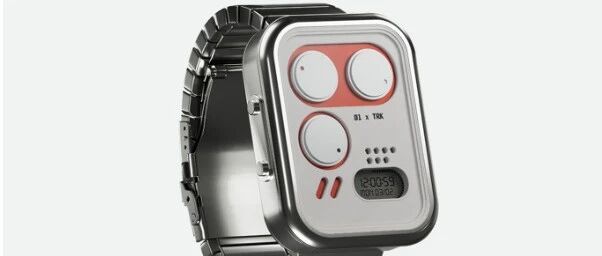
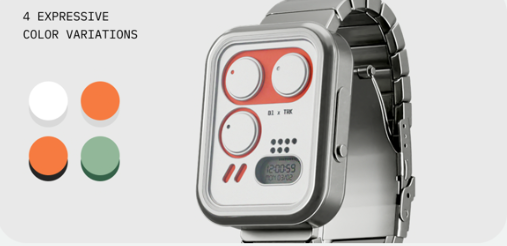
The D1Milano x Peter Tarka Impossible Watch is a limited-edition timepiece born from a collaboration between Milanese watch brand D1Milano and globally renowned 3D digital artist Peter Tarka. This project engineers a digital artwork, theoretically impossible to create in the physical world, into a wearable wrist accessory. It tells time through a hybrid display system featuring three rotating discs and a small LCD screen. The anodized aluminum alloy body comes in four distinct colorways, targeting consumers interested in design-driven wearables and digital art collectibles.
Campaign Performance and Market Reception
Launched on Kickstarter in mid-June 2026, the Impossible Watch secured nearly $500,000 within a month. This represents a strong performance for a design-focused hardware product, with current trends suggesting the final funding will settle just above the $500,000 mark. Early bird tiers have sold out, and current crowdfunding prices start from $379. This campaign marks D1Milano's first attempt to validate a design significantly different from its regular product line through crowdfunding. As noted by Worn&Wound editors, D1Milano, an established brand distributed in over 30 countries and 600 retailers globally, is likely using crowdfunding primarily for market experimentation. Designboom positions the watch as a hybrid between a collectible and a functional accessory. Supporters appear to fall into two main categories: design enthusiasts familiar with Peter Tarka's digital art community, and watch aficionados drawn to the timepiece's unique aesthetic.
Key Product Features
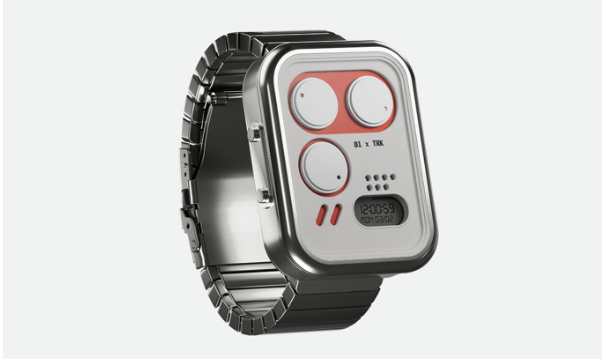
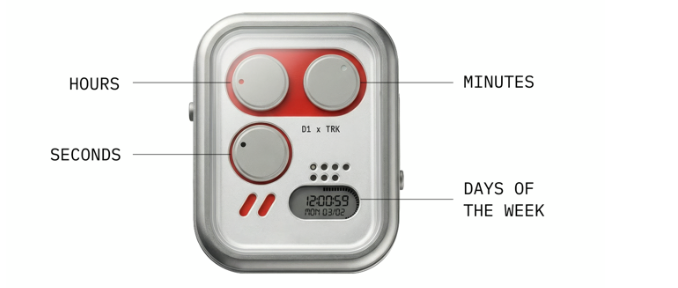
The Impossible Watch's core design replaces traditional hands with three large rotating discs. Each disc features a single point on its edge, which indicates the time as the disc rotates against corresponding markers. The upper-left disc displays hours, the upper-right shows minutes, and the lower-left indicates seconds.
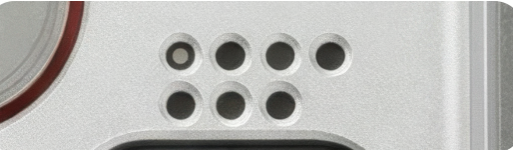
On the right side of the dial, two rows of circular apertures — four on the upper row and three on the lower — form a seven-point weekday indicator. These points progressively fill in as the week advances, with the first point illuminating on Monday and all seven lighting up by Sunday. This creates a text-free, purely visual mechanism for tracking the day of the week.
This design detail extends Tarka's digital art language into a functional mechanism, transforming calendar tracking into a daily evolving graphic. While all seven points illuminating on Sunday might be a pure design delight for watch connoisseurs, everyday users may require some time to adapt to this unconventional method of reading the day.
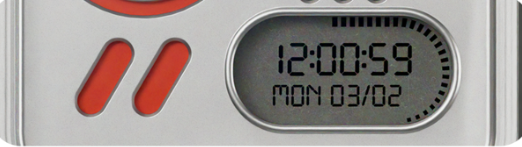
A small LCD screen is positioned in the lower-right corner of the dial, clearly displaying hours, minutes, seconds, day of the week, and date in a digital format. Essentially, it re-presents all the information from the main dial in the simplest possible way.
This is a pragmatic design decision: while the Impossible Watch's rotating disc display requires a learning curve, the LCD backup allows users to switch between appreciating the art and quickly checking the time. GearPatrol commented that once the novelty of the dial wears off, users can simply glance at the screen, calling it a 'frankly practical patch' and an implicit acknowledgment of the dial's design.
Both the watch case and bracelet are crafted from aluminum alloy, with an anodized finish enabling four distinct color options. Peter Tarka initially envisioned a stainless steel version, but the prototype proved too heavy. Tarka and D1Milano jointly decided to switch to aluminum alloy, which not only reduced the weight by 50% but also unlocked a wider range of color possibilities.
With a 36mm diameter, 46mm lug-to-lug length, and 12.55mm thickness, paired with an aluminum alloy bracelet, the overall wearing weight is exceptionally light. This offers significantly better everyday wrist comfort compared to steel watches of similar dimensions. However, aluminum alloy's scratch resistance is inferior to steel, meaning surface wear marks will be more noticeable after prolonged daily use – a material trade-off inherent in choosing aluminum.
Technical Specifications and Brand Legacy
The watch features a scratch-resistant sapphire crystal with blue AR coating and 50M water resistance, suitable for daily washing and swimming. It houses a custom-developed quartz movement specifically designed for this limited edition. Sapphire crystal and 50M water resistance are standard expectations for watches priced above $400, and D1Milano made no compromises here. The exclusive custom movement was a key commitment in the collaboration with Peter Tarka, differentiating it from the standard Miyota movements used in the brand's regular product line. Worn&Wound acknowledged its engineering rationale, recognizing it as a movement specifically developed to drive the three-disc rotating display.
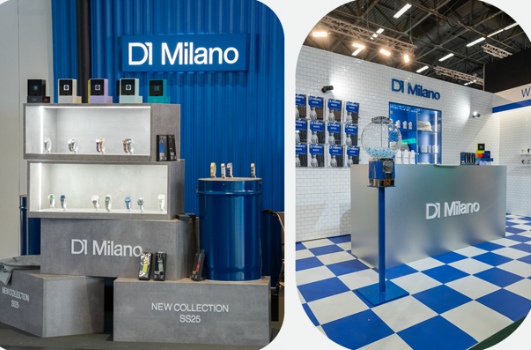
D1Milano was founded in 2013 during Milan Fashion Week, initially as a graduation thesis project from Bocconi University. In 2014, it joined Bocconi University's Speed MiUp incubator and received early investment. The brand's headquarters later moved to the Dubai Design District, now operating dual headquarters in Dubai and Hong Kong. It distributes in over 28 countries, with a presence in more than 600 retailers including Selfridges, Harvey Nichols, Lane Crawford, and Galeries Lafayette, and operates direct stores in Bahrain, Dubai, Japan, Lebanon, Panama, and Brazil.
The brand's annual revenue is estimated between $20 million and $50 million, and Forbes has listed it among Italy's top ten young fashion brands. Previous collaborations include partnerships with Korean fashion brand ULKIN in 2023, French customization studio MADParis in 2023, and Pan Am in 2025. The Impossible Watch represents D1Milano's most visually radical collaboration to date and its first product launch via Kickstarter rather than official brand channels.
Global Market Analysis
The global watch market, valued at approximately $63.65 billion in 2024, is projected to grow at a 4.4% CAGR to around $81.87 billion by 2030. Within this, design-led entry-level luxury watches have seen significant expansion in recent years, driven by Gen Z's entry into watch consumption. In the more specific niche of artist collaboration watches, examples like Swatch x MoMA, Casio x A-BathingApe, and the G-Shock Artist Series have demonstrated that when cultural communities of artists or designers, not directly associated with horology, are effectively engaged, a watch can become an outlet for a different type of consumer behavior.
D1Milano's direct competitors in its regular positioning include Swatch, the entry-level lines of Nomos Glashutte, and the Seiko Prospex series, brands that build barriers through price points or watchmaking heritage. The Impossible Watch, priced in the $379–$545 range, steps outside D1Milano's usual price bracket, entering a different evaluation framework. Its purchase decision is driven more by an appreciation for Peter Tarka's artistic language than by a rational comparison of watch functionalities.
This watch's competitors are not mechanical watches in the same price range, but rather any product in the $400–$500 price bracket that satisfies a collector's sense of cultural identity, whether it's a timepiece, limited-edition sneakers, or a print.
GearPatrol called the LCD screen a 'frankly practical patch' and an implicit acknowledgment of the dial's design.