Delivered, Inc.'s Breeze 2.0 Wearable Cooling System: A Kickstarter Campaign Teardown
Campaign Teardown · · PledgeRadar Editorial
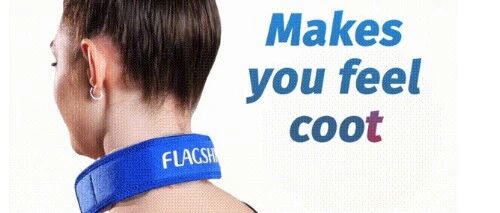
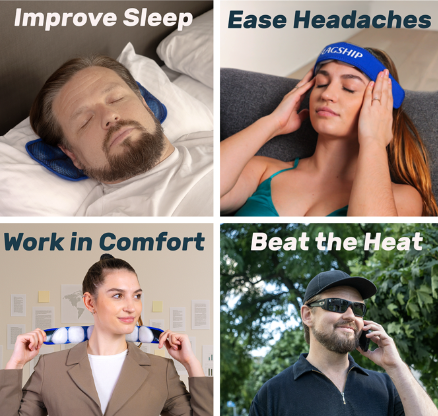
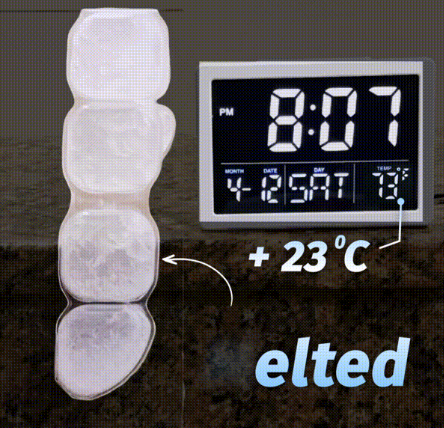
Breeze 2.0, the third-generation wearable phase change cooling system from Delivered, Inc., offers a unique approach to personal cooling. Utilizing precisely engineered phase change material (PCM), it automatically re-solidifies below 83°F (28°C) to restore its cooling capacity. When applied to the neck, wrist, or forehead, it slowly melts by absorbing body heat, providing a continuous, gentle cooling effect without electricity, refrigeration, or wetting the skin. The system is reusable and suitable for various scenarios, including outdoor activities like hiking and cycling, sleep assistance, headache relief, and everyday summer use. This marks Delivered, Inc.'s third product launch on Kickstarter, following successful campaigns for the first-generation Breeze, which raised $137,000 from 1,709 backers, and BreezeCooler, which secured $240,000 from 3,004 supporters, both successfully delivered. These prior successes undoubtedly provided significant trust for the current project. Despite receiving Kickstarter's 'Project We Love' badge, Breeze 2.0's funding stalled at around $110,000, falling short of expectations. Consumer motivations for such products often center on real-world needs like heat intolerance, lack of air conditioning access during travel, aversion to wet towels during exercise, specific needs in high-temperature environments like the California desert, and a desire for more portable alternatives to ice packs. Analysis of the comment section reveals a mix of curiosity and anticipation, with some backers admitting they decided to purchase after reviewing user feedback from the previous two generations. Others raised questions regarding the duration of the cooling effect and variations in performance across different body types.
Core Product Features
**83°F Precision Phase Change Engineering: A Body-Temperature-Driven, Room-Temperature-Recharged Closed-Loop Cooling Cycle**
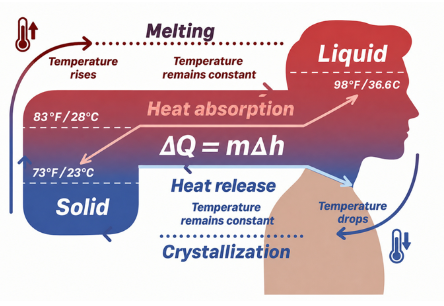
The core principle of Breeze 2.0 lies in precisely setting the PCM's phase change temperature at 83°F (28°C). This temperature is lower than human skin temperature but higher than most indoor and outdoor ambient temperatures. When in contact with the skin, the material absorbs heat and melts from a solid state, continuously drawing heat away from the skin surface during the phase change process, creating a sustained, gentle cooling sensation. When removed and placed in an environment below 83°F (such as a typical indoor room, car air conditioning, or natural cool breeze), the material re-solidifies, completing the recharge cycle without needing a refrigerator or freezer.
This fundamentally differentiates it from traditional ice packs or cold compresses that require freezing to -18°C. Any air environment cooler than 83°F allows Breeze to naturally restore its cooling capacity, making it a truly naturally circulating system. The actual cooling duration depends on skin temperature, ambient temperature, and contact area. The brand claims it can lower the perceived body temperature by approximately 15°F, but independent third-party measurement data has not yet been publicly released, representing an information gap to consider before purchase.
**Dry Touch + Interchangeable Spare Patches: Uninterrupted Continuous Cooling**
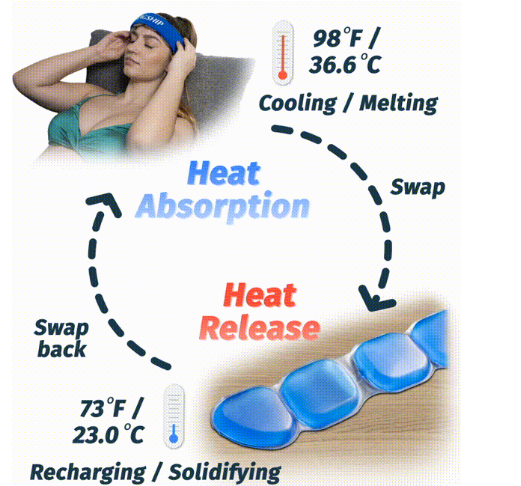
Breeze 2.0 maintains a dry, solid state when in contact with the skin, avoiding the dampness associated with wet towels or evaporative cooling solutions. This offers a tangible experiential advantage for users who dislike a wet-cold sensation or prolonged wear. The product includes two interchangeable patches; while one set absorbs heat and melts on the skin, the second set re-solidifies and recharges at natural room temperature. Theoretically, alternating between the two sets can achieve continuous, uninterrupted cooling coverage.
This dual-patch alternating solution directly addresses the usage gap where a single PCM product would require waiting for re-solidification after melting. It upgrades the product from a single-use tool to a continuously operating personal cooling system. The actual cycle rhythm of the two patches in different scenarios and temperatures will be a key dimension for real-world validation once used by a larger user base.
**Multi-Area Wear Adaptability: Neck, Wrist, Forehead, Pet Collar**
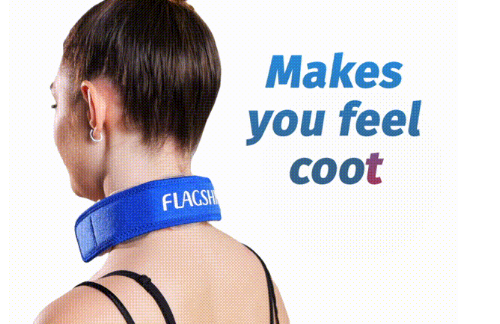
The product uses soft elastic straps to adapt to various wearing positions. Placement on the neck, close to the carotid artery, can most effectively influence perceived body temperature, as can the wrist, near the radial artery. Forehead application can provide auxiliary relief for headaches and migraines.
The brand also highlights pet use cases (collar + cooling patch), suitable for pet heat dissipation in hot environments, which expands the product's user base to pet owners. The carotid and radial artery areas are clinically supported effective cooling contact points, and the brand's use of this physical principle as a design basis, rather than mere marketing, demonstrates a degree of scientific rationale. Subjective influences on cooling perception due to different skin tones, body fat percentages, and skin thicknesses represent the largest variables in individual user experience.
**No Electricity, No Chemicals, No Noise: Entirely Passive Operation**
The entire cooling and recharging process is completely passive, requiring no batteries, chemical activators (unlike disposable chemical hot/cold packs), moving parts, or noise. This allows the product to be used in airplane seats, wilderness tents, during power outages, and in any scenario without a power source, also complying with airline carry-on standards.
While the product claims infinite reusability, its actual lifespan is affected by wear and tear on the patch material and outer fabric. The integrity of the material after frequent folding, stretching, and washing is a durability variable to monitor with long-term use.
Global Market Analysis
The personal cooling device market is rapidly expanding but highly fragmented in its statistical definitions. Depending on whether personal air conditioners, wearable fans, or cooling vests are included, 360iresearch estimates the market to grow at a 5.85% CAGR to approximately $639 million by 2032.
In terms of competitive landscape, the personal cooling market exhibits clear technological diversification. The TORRAS COOLiFY series and Fujitsu wearable air conditioners primarily use thermoelectric cooling technology for active cooling. The Sony Reon Pocket series also relies on thermoelectric technology integrated with sensors. Embr Labs Wave 2 influences perceived temperature through wrist temperature stimulation. Neck-worn fans (e.g., JISULIFE) primarily rely on airflow. A common dependency for all these mainstream solutions is electricity, with battery life being a core limitation for all active cooling products.
Within PCM (phase change material) solutions, professional fields (medical, industrial, military) already feature cooling vests and neck rings from brands like Ergodyne and Lakeland Industries, but these products typically require freezing for activation. Breeze 2.0, with its specific combination of no electricity, no freezing, and natural room-temperature recovery, currently lacks direct, large-scale consumer market competitors, establishing an objective differentiated position. The main market risks are: the actual cooling intensity of phase change materials is typically gentle, showing a significant perceived difference compared to active cooling devices. For users accustomed to air conditioning or electric cooling products, adapting to a gentle, continuous rather than immediate, significant cooling expectation is a psychological barrier to conversion. Additionally, an 83°F phase change temperature means that in certain extreme high-temperature environments (where the ambient temperature itself already exceeds 83°F), the product's recharging time will be significantly extended.
Passive, electricity-free phase change cooling represents a genuine need in a market where supply is still in its early stages. Breeze 2.0 has built a foundational trust through three generations of iteration and two successful deliveries. Its ability to gain traction within a larger user base will depend critically on whether the actual cooling amplitude and the promise of continuous use with alternating sets can be consistently replicated across diverse climatic environments and user body types.
The actual cooling intensity of phase change materials is typically gentle, showing a significant perceived difference compared to active cooling devices.