Design Goes Global: How a Ceramic Tile Raised $1M, Bringing Plant Walls Indoors
Campaign Teardown · · PledgeRadar Editorial
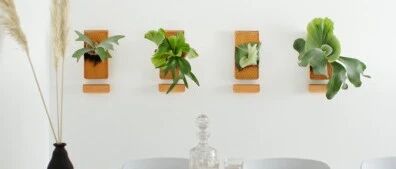
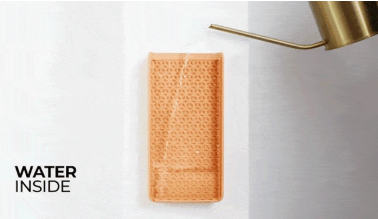
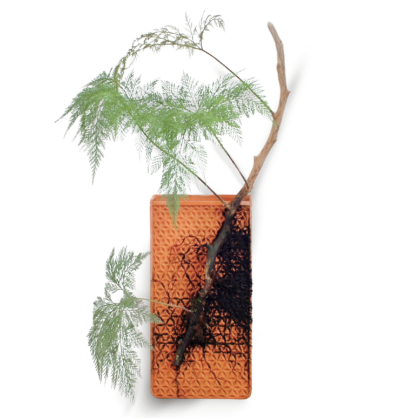
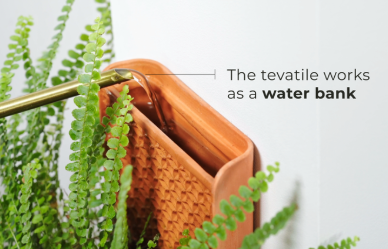
Tile by tevaplanter® is an innovative soilless planting system that reimagines the self-watering planter as a wall tile. Measuring approximately 28×14×4cm, its core component is a porous ceramic Tile with an internal water reservoir. Users simply add water to the interior, which then slowly permeates through the ceramic material to the front surface, where plant roots directly attach and absorb moisture. Eschewing traditional pots, soil, and drainage holes, Tile mimics the natural growth of mosses, ferns, and orchids found clinging to rocks and tree trunks in tropical rainforests. A single Tile can be wall-mounted or displayed with a base, and multiple units can expand horizontally or vertically to create an entire living plant wall.
A Million-Dollar Crowdfunding Success
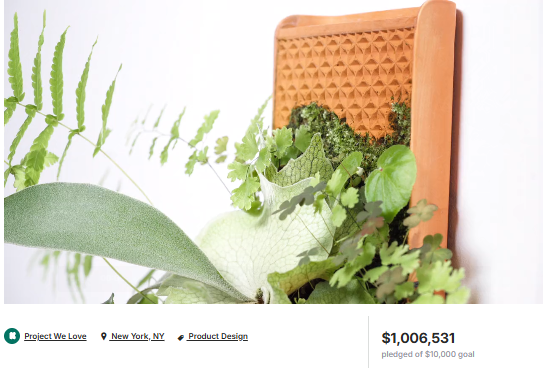
Tile launched on Kickstarter on October 8, 2024, concluding its 30-day campaign on November 7. With an initial goal of just $10,000, the project ultimately garnered $1,000,000 from 7,367 backers, exceeding its target by approximately 100 times. Third-party crowdfunding tracking data indicates the project averaged about $33,600 in daily funding throughout its lifecycle, with an average pledge amount of $136.66. The lowest early bird price on Kickstarter for a single Tile was $59, while the current price on the brand's official website remains $60.
Tile quickly captured the attention of design and lifestyle media. MyModernMet described it as a product bridging the gap between a planter and living art, highlighting how the entire growth process—from seed germination and root extension to leaf development—is openly visible. GearDiary focused on how the porous ceramic mitigates common indoor planting issues of over or under-watering. Its true appeal wasn't added electronic features, but transforming the growth process, usually hidden within a pot, directly into a visual element of home decor.
However, Tile does not offer truly zero-maintenance plant care. Plants still require appropriate light, humidity, and nutrients; liquid fertilizers must be sprayed onto the exposed roots, not poured directly into the reservoir. The official guidance also explicitly states that better growth results are typically achieved in high-humidity terrarium environments. It is best suited for mosses, ferns, orchids, aroids, and other shallow-rooted, high-humidity plants, and is not universally applicable to all common indoor plants.
Core Product Innovations
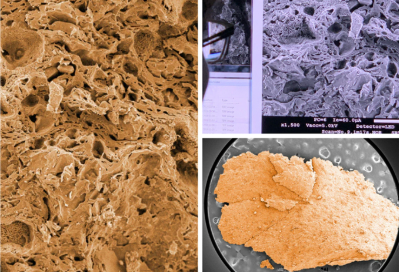
The most critical technology behind Tile isn't a mechanical water pump, but the ceramic material itself. The product features an internal water reservoir, and the specially formulated ceramic possesses both structural integrity and specific porosity and hygroscopic properties, allowing water to slowly diffuse from the interior to the front surface.
Once plant roots adhere directly to the surface, they can absorb water and air according to their own needs.
Traditional planters require users to judge when to water, and overwatering can lead to prolonged root oxygen deprivation. Tile, conversely, transforms a single watering event into a continuous, slow diffusion process. The entire system operates without pumps, sensors, batteries, or app connectivity, relying purely on material science for passive water delivery.
The primary limitation of traditional planters is that most of the growth process occurs beneath the soil. Tile ingeniously reverses this structure.
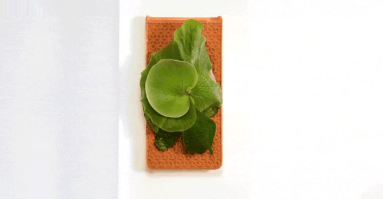
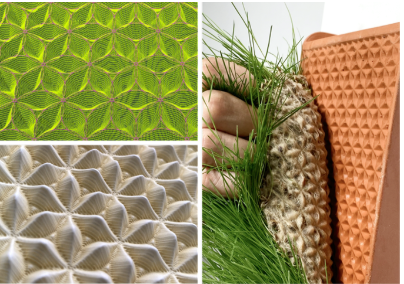
After seeds, moss, or plants are secured to the ceramic's front surface, roots gradually attach along the surface texture, seeking moisture. The entire process, from germination and rooting to leaf expansion, becomes directly observable. Plants are thus not merely contained in a vessel but gradually form their own unique shapes on a three-dimensional surface.
This also marks Tile's distinct product differentiation compared to ordinary self-watering pots. Consumers are not just purchasing a tool for growing plants; they are acquiring a constantly evolving, living decoration.
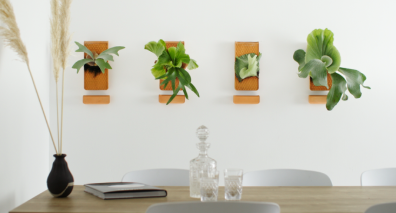
With a thickness of only about 4cm, and dimensions of 14cm wide by 28cm high, Tile is inherently designed for vertical spaces. A single Tile can be wall-mounted or placed on a tabletop; multiple units can be combined vertically or horizontally.
Two vertical Tiles can share a single WallBase, while horizontal or more complex arrangements may require additional bases depending on the layout.
Traditional plant walls often involve complex frameworks, irrigation piping, water tanks, and even professional installation. Tile breaks this down into standardized, small modules, enabling users to start with one piece and gradually expand.
This modularity explains why multi-packs—such as 2-pack, 4-pack, and 8-pack sets—became significant crowdfunding tiers. The appeal wasn't merely a bulk discount, but rather the amplification of the user's ability to build a plant wall.
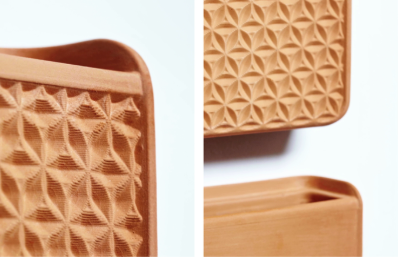
The textured surface of Tile is not purely for aesthetic design; the team utilized parametric design to repeatedly refine the ceramic's geometric structure. This process had to simultaneously address three challenges: ensuring seeds could settle, maintaining adequate surface moisture, and allowing plant roots to grip the ceramic for continued growth.
To achieve this, the team developed numerous prototypes, testing them with various seeds and plants, and continuously refining the surface algorithms and structures.
In essence, while Tile visually resembles an architectural decorative tile, its texture actually performs some of the functions traditionally handled by planting media.
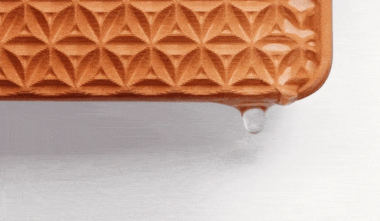
Mounting a continuously seeping ceramic product on a wall presents a significant practical challenge: protecting the wall itself. Tile's front surface is designed to be permeable, while its back is treated with a transparent waterproof seal. This ensures moisture primarily diffuses towards the plant side, with any excess water draining downwards into the WallBase, rather than directly onto the wall surface.
This structural design transforms Tile from an experimental plant carrier into a viable home product. The brand has also developed an ecosystem around Tile, including the WallBase, TableBase, Terrarium, and 180°GrowLight, gradually forming a complete vertical planting solution.
As early as 2020, the team launched the first-generation terraplanter, which also featured plants growing directly on the exterior surface of porous ceramic. That project ultimately attracted over 50,000 backers and raised $6.39 million, becoming one of Kickstarter's most iconic home design projects of its year. When Tile launched, the team disclosed that they had cumulatively produced and shipped over 100,000 planters and established three production bases. This indicates that Tile is more of an extension of an already validated core material technology, expanding the product form from a 360° vase to a vertical wall system.
However, tevaplanter's historical delivery record has not been swift. Feedback from long-term users indicates that the first-generation product experienced wait times of several years. From the brand's history, ceramic production, yield rates, and scalable supply chain have consistently been the biggest variables impacting delivery for this product.
Market Opportunity and Strategic Positioning
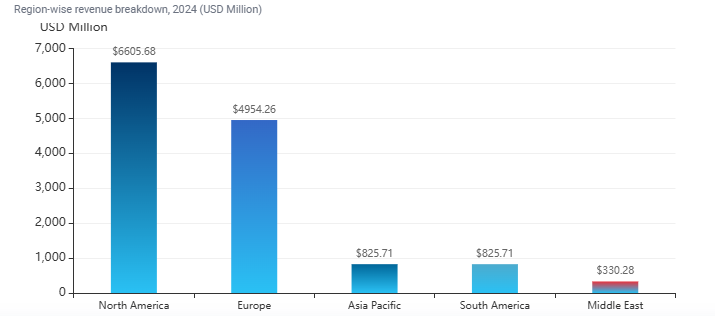
Tile's explosive success wasn't solely due to its self-watering function. The global indoor plant market is estimated at approximately $20.68 billion in 2024. Concurrently, indoor greenery is increasingly intertwined with home design, compact urban living spaces, and Biophilic Design—the concept of connecting people with nature. Another market segment more closely aligned with Tile, the vertical garden market, is valued at approximately $1.4 billion globally in 2024, with projections to reach $2.4 billion by 2030.
Tile strategically positions itself at the intersection of three consumer demands: indoor plants, home decor, and garden decoration. Consequently, it doesn't need to compete with ordinary planters costing a dozen dollars. A single ceramic Tile, priced around $60, is not inexpensive, but for those willing to invest in designer home goods, orchid or moss landscapes, or to create a plant wall, the price remains within an acceptable range. Moreover, once consumers begin purchasing multiple Tiles, it further drives sales of complementary products like the WallBase, TableBase, GrowLight, and Terrarium.
This evolution is evident in the current product line: Tile has transitioned from a single crowdfunding item to a modular product ecosystem built around the concept of a plant wall.
Key Takeaways for Founders
Reflecting on this million-dollar crowdfunding campaign, Tile's most valuable lesson isn't that it reinvented the flowerpot. Instead, it's how the team successfully deconstructed the traditionally complex and difficult-to-standardize plant wall into a product that ordinary consumers could understand, purchase, and progressively expand.
A single Tile functions as a planter, but multiple Tiles transform into an integrated part of a home space. This is precisely what enabled it to create a sense of a new product category within a highly mature gardening segment.
Its true appeal wasn't added electronic features, but transforming the growth process, usually hidden within a pot, directly into a visual element of home decor.