DogVibe Smart Pet Training System Raises $290K in 10 Days on Kickstarter
Campaign Teardown · · PledgeRadar Editorial
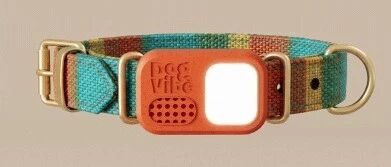
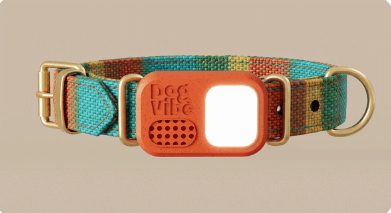
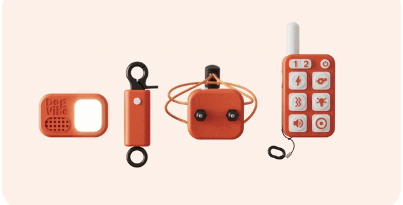
DogVibe is a smart training system designed for daily dog training and outdoor recall. It integrates leash training, recall, bark feedback, and close-range boundary training into a single hardware system, utilizing an electronic collar, a leash sensing module, a long-range remote control, and a mobile app.
Initial Campaign Performance and Strategy
DogVibe launched on Kickstarter on September 29, 2026, securing over $290,000 in just 10 days, with an average pledge of approximately $331 per backer. Reaching the $270,000 mark within about a week is a respectable achievement for a new pet hardware brand.
Its marketing strategy is straightforward: rather than positioning itself as merely a smart collar, DogVibe addresses common dog ownership challenges such as pulling on the leash, poor recall, excessive barking, and running off-leash. By offering a comprehensive system to solve these issues, it aims to reduce the consumer's cognitive load. The brand also explicitly states that DogVibe is not a "QuickFix" but a tool to be used as part of a structured training process.
The DogVibe FAQ acknowledges that it is technically a "Shock Collar," though the static stimulation module is fully removable. Users can opt to use only the sound, vibration, leash sensing, and proximity functions. However, the American Veterinary Society of Animal Behavior (AVSAB) continues to oppose aversive training methods, including electronic collars, advocating for reward-based training as superior for animal welfare and effectiveness. This fundamental disagreement could directly impact DogVibe's future acceptance among professional trainers and certain segments of pet owners.
Key Product Features
The Leash Module, installed between the collar and leash, detects when a dog begins to pull. This allows for preset feedback to facilitate loose-leash walking training.
A key differentiator from standard electronic collars is that feedback isn't solely dependent on the owner's timing. While traditional training requires manual correction after a dog has already pulled, DogVibe attempts to make leash pulling an event detectable by hardware.
The actual effectiveness, however, will depend on the sensor's ability to accurately distinguish genuine pulling from sudden turns or normal leash tension. There are currently no independent mass production tests to verify its false positive rate.

Dynamic Proximity Boundary
DogVibe's Proximity Mode operates without GPS. The Long-Range Remote serves as a mobile central point, and the collar can provide appropriate feedback when the dog moves beyond a user-defined distance.
This design differs from GPS fence systems like Halo, which typically establish a fixed geographical area. DogVibe is better suited for scenarios such as hiking, camping, or park visits, where the training boundary moves with the owner.
It's important to note that DogVibe is not a locator. If a dog genuinely gets lost, users cannot track its real-time location on a map, unlike with devices from brands such as Fi, Tractive, or Halo.
Flexible Control Options
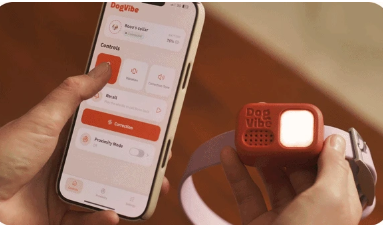
The entire system supports both a mobile app and a dedicated Long-Range Remote, eliminating the need for owners to use their phone for every training session. One app can manage up to four collars, and each collar can be paired with up to four remotes, making it suitable for multi-person household training.
Compared to standard e-collars that only offer a remote, this structure facilitates easier management of training workflows, parameter settings, and multiple dogs. Conversely, compared to purely app-controlled systems, the physical remote ensures quicker operation in outdoor environments.
Advanced Stimulation and Bark Detection
The removable Static Module offers over 100 levels of stimulation. The official claim is not to achieve stronger stimulation, but to allow users to find the lowest effective level that the dog can just perceive. When the Static Module is not in use, sound, vibration, leash training, and proximity functions can still operate independently.
From a product design perspective, 100 finely-tuned levels are indeed easier to adjust than the few strength settings found on lower-priced shock collars. However, it is crucial to separate the ability for fine-grained adjustment from professional consensus on training methods. The AVSAB still does not endorse electronic stimulation collars for dog training, making the Static Module DogVibe's most significant market controversy.
The DogVibe Collar can detect dog barking and provide feedback according to the owner's settings, eliminating the need to purchase a separate bark collar. Brands like Dogtra offer standalone smart bark collars for around $125, while DogVibe integrates this functionality with recall, leash, and outdoor training in one system.
The true test in mass production will be the accuracy of its bark identification. If the system cannot differentiate between the target dog's barks, barks from other nearby dogs, or vibrations from movement, the automatic feedback itself could become a training interference.


Founder Experience and Market Outlook
DogVibe is a small U.S. pet technology company, with its LinkedIn profile indicating a team size of approximately 2-10 individuals. The core public figure in the founding team is Miles Pepper. While DogVibe itself is a new brand without a prior Kickstarter history, Miles Pepper is not new to consumer hardware crowdfunding.
He previously co-founded FinalStraw, which raised approximately $1.89 million from over 30,000 backers on Kickstarter in 2018, and successfully managed production and backer fulfillment. In 2020, he co-launched Sanikind, a refillable sanitizer spray bottle, raising about $317,000 on Kickstarter. His personal profile indicates a combined crowdfunding total exceeding $2.25 million, with long-term involvement in product design, DFM (Design for Manufacturability), supply chain, and global e-commerce delivery.
This background suggests that while DogVibe is a new brand, its founder possesses practical experience in crowdfunding, manufacturing, and fulfillment. However, pet training hardware involves complexities such as wireless communication, waterproofing, mobile apps, sensors, and animal behavior, which are more intricate than reusable straws or spray bottles. Therefore, previous consumer product delivery experience does not directly equate to DogVibe having completed the same level of product validation.
GrandView Research projects the global pet wearable market to grow from $3.8 billion in 2026 to $11.4 billion by 2033, with a Compound Annual Growth Rate (CAGR) of approximately 16.8% from 2026-2033. Smart collars remain a significant category, with growth primarily driven by advancements in pet safety, health monitoring, and the proliferation of connected devices.
DogVibe, however, enters the more controversial "Training Collar" niche. Traditional brands like Dogtra and Educator already serve a mature base of professional trainers, while Halo combines GPS fencing, location management, and feedback into a single collar. DogVibe has chosen a different path, opting out of GPS and health monitoring, to concentrate on integrating leash, recall, bark, and close-range boundary training.
Its advantages include feature integration and a no-subscription model. Yet, significant market risks persist: first, its $330 price point places it within the range of established brands, meaning a new brand must persuade consumers through experience rather than just specifications. Second, the Static Module is entangled in ongoing animal welfare controversies. Third, the project's current IP68 rating is still in the planned certification phase, and the app, sensor judgment, and mass production reliability all lack long-term real-world testing.
DogVibe's ultimate challenge is to prove whether its auto-sensing and instant feedback system can be more accurate than an owner manually using a remote, while also ensuring users are willing to consistently adhere to the same training methodology long-term.
DogVibe is not a QuickFix, but a tool to be used in conjunction with a training process.