DUSQ: India's First Global Sleep Regulation System Raises $930K in 10 Days on Kickstarter
Campaign Teardown · · PledgeRadar Editorial
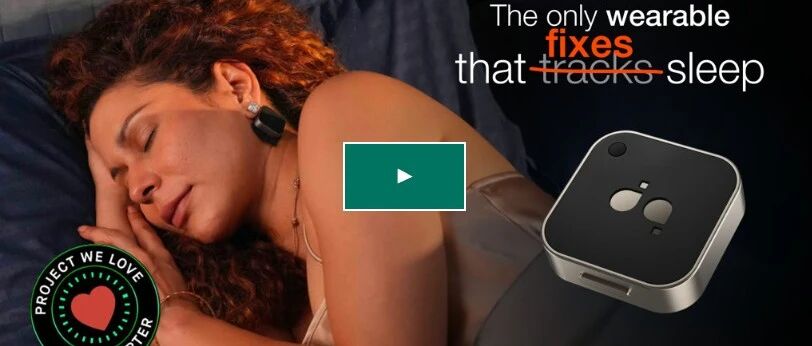
DUSQ, developed by New Delhi-based sleep technology company DUSQ, is introduced as the world's first sleep regulation system. It employs patented EDA (electrodermal activity) sensors embedded in an ear-worn patch to continuously monitor the autonomic nervous system. Upon detecting sleep fragmentation or micro-awakenings, DUSQ actively applies non-invasive vagal and vestibular nerve stimulation to guide users back into deep, restorative sleep, rather than merely presenting a data report the following morning like traditional sleep tracking devices. This system is designed for high-intensity professionals whose sleep data appears normal, yet they still wake up feeling fatigued.
Campaign Overview and Initial Success
DUSQ launched on Kickstarter on June 9, 2026, securing $930,000 within 10 days, with fundraising projected to easily surpass $1 million. This marks DUSQ's debut crowdfunding campaign as a consumer hardware brand. While the company's previous product, InnerGize, gained national exposure through India's Shark Tank program, DUSQ is an entirely new hardware product following a brand transformation, and as such, the DUSQ brand has no prior delivery record.
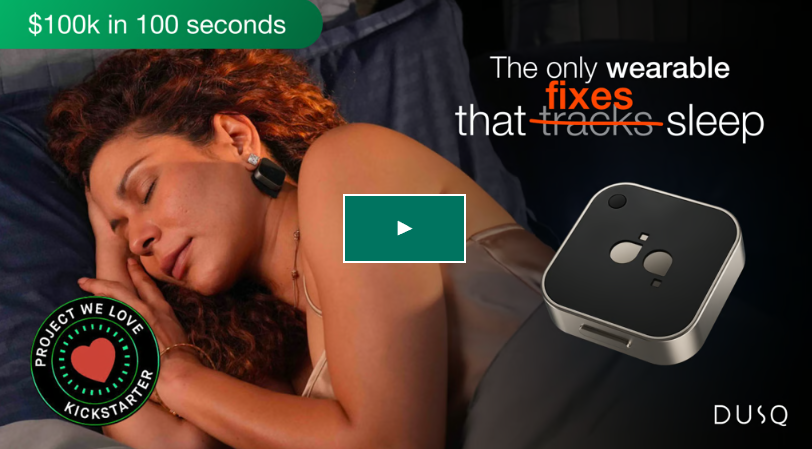
Patented Technology: Real-time Sleep Intervention
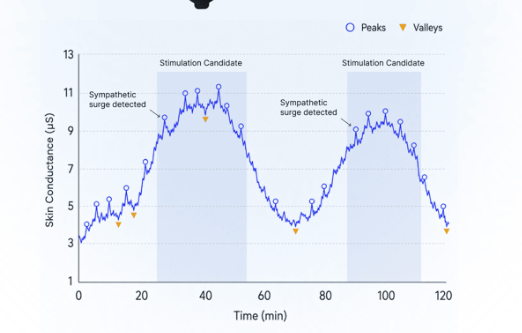
DUSQ's core innovation lies in its patented EDA sensor patch, which continuously monitors changes in the skin's electrical properties. This allows it to identify subtle fluctuations in the autonomic nervous system, from full awakenings at 3 AM to micro-awakenings that users may not consciously perceive but which significantly impact next-day alertness.
The fundamental principle behind this sensing strategy is that while traditional sleep trackers (using heart rate or motion sensors) capture external manifestations of sleep, EDA signals more directly reflect sympathetic nervous system activation, theoretically enabling earlier detection of compromised sleep quality. The accuracy of this system in distinguishing genuine awakenings from meaningless noise hinges on the EDA sensors' signal stability and skin contact reliability during long-term wear.
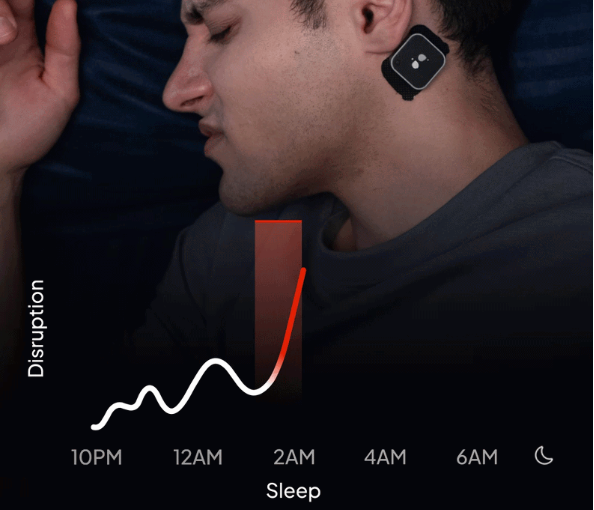
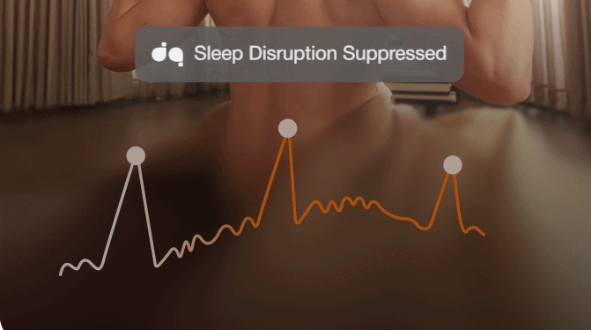
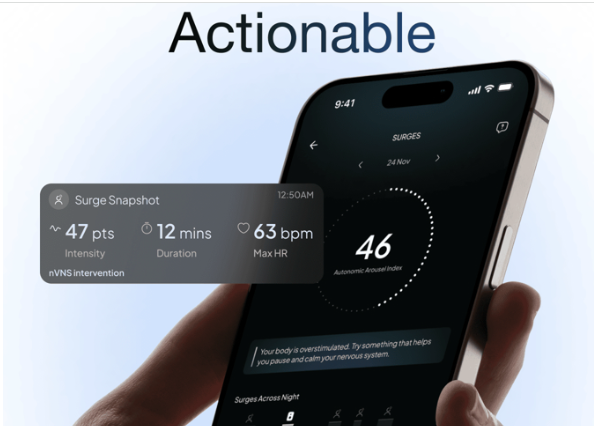
When the system detects signals indicating threatened sleep, it doesn't just log the interruption into a data report. Instead, it actively guides the user back into deep sleep by applying non-invasive stimulation to the vestibular and vagal nerves, thereby calming the autonomic nervous system.
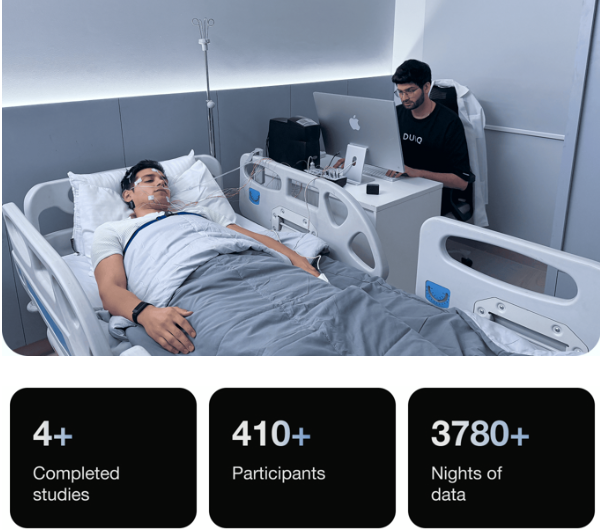
This patented stimulation protocol responds instantly to detected interruptions, gently and non-invasively nudging the user into a deeper, more restorative sleep state. This real-time detection and immediate intervention closed-loop system is DUSQ's most fundamental differentiator from nearly all other sleep devices on the market, which primarily offer measurement and post-facto reporting. The company claims its sleep laboratory tests, using polysomnography (PSG), show users gain an average of 28 minutes more restorative sleep per night with the device.
It is important to note that this data currently originates from the company's internal laboratory tests, and independent third-party clinical validation and peer-reviewed papers have not yet been publicly released. This remains a key prerequisite for evaluating the efficacy of this core function.
The SQ Metric and Company Vision
DUSQ introduces a core concept called SQ (SleepQuotient), which differs from traditional sleep scores that offer a single assessment of "how well you slept last night." SQ tracks the body's recovery capacity trend over time. This metric directly addresses the company's critique of the current industry landscape, where many high-functioning professionals, despite rigorous sleep hygiene and consistent use of tracking devices, still wake up feeling subpar. DUSQ posits that this indicates a ceiling on information alone, with the root problem often being an autonomic nervous system stuck in stress mode throughout the night.
The long-term reference value of the SQ metric will depend on its underlying algorithmic model's ability to generalize across diverse user groups (age, baseline health, stress levels), requiring continuous validation with large-scale real-world user data.
DUSQ was co-founded in New Delhi in 2023 by Siddhant Bhargava, Shalmali Kadu, and Mitansh Khurana. The company's predecessor, InnerGize, was a wearable device focused on stress monitoring that gained national exposure after appearing on India's Shark Tank. While early products validated strong consumer demand, the team discovered that stress was often a symptom, with sleep being the root issue. This led to a two-year research period, analyzing over 50 million physiological data points, culminating in a regulatory model that connects autonomic nervous system signaling and neuro-downregulation mechanisms with sleep fragmentation. The company opted for a long research cycle over premature scaling, ultimately leading to the DUSQ brand's rebranding. The company continues to conduct structured experiments in its proprietary sleep laboratory.
Safety Profile and Market Constraints
DUSQ explicitly states that the device is not suitable for individuals with sleep apnea (which is a mechanical issue or abnormal brain signal for breathing, distinct from DUSQ's focus on an autonomic nervous system stuck in stress mode). Users of CPAP devices should continue their treatment, with DUSQ potentially serving as an auxiliary tool but not a replacement. Furthermore, the device is contraindicated for individuals with pacemakers, implantable cardiac defibrillators, deep brain stimulators, cochlear implants, vagus nerve stimulation implants, or metal implants in the head or neck. Patients with epilepsy or seizure disorders (unless under medical supervision), pregnant women, and minors are also listed as contraindications. While clearly listing contraindications demonstrates responsible product safety disclosure, it also means a significant portion of potential users with sleep issues (especially older adults with a history of heart conditions or implants) are inherently excluded. This is a practical constraint that must be considered when assessing the market size for such neurostimulation hardware.
Market Opportunity and Competitive Landscape
The overall sleep technology device market is experiencing rapid growth, valued at approximately $24.85 billion in 2024 and projected to reach around $134.6 billion by 2034, with a CAGR of approximately 18.5%. This represents the broader market DUSQ aims to penetrate. DUSQ's core technology, non-invasive vagus nerve stimulation (nVNS), operates within a more specific, rapidly expanding sub-market. The global non-invasive vagus nerve stimulation device market was valued at approximately $1.2 billion in 2024 and is expected to grow to about $3.1 billion by 2032, with a CAGR of approximately 12.5%. North America is anticipated to be the fastest-growing region, accounting for about 38.7% of the market share. The broader vagus nerve stimulation market (including implantable devices) was valued at approximately $10.67 billion in 2024 and is projected to increase to about $23.73 billion by 2031, with a CAGR of approximately 10.5%. Growth drivers primarily stem from the continuous maturation of non-invasive neuromodulation technologies, increasing consumer awareness driven by accumulating clinical evidence, and rising demand for alternatives to drug-dependent sleep interventions.
In terms of the competitive landscape, the consumer sleep tracking device market is currently dominated by brands like Oura, Apple Watch, and Fitbit. These devices primarily operate on a wear-monitor-report-next-day model, offering no real-time active intervention capabilities. In the narrower segment of active neurostimulation, Apollo Neuro (formerly Apollo Wearable) is one of the most clinically validated competitors, with 17 completed and 12 ongoing clinical trials. Research indicates it can lead to an approximately 11% increase in heart rate variability and improved deep sleep. However, Apollo follows a continuous daytime wear, passively cumulative effect approach, recommending at least 3 hours of daily use, which differs from DUSQ's night-time real-time detection and instantaneous response intervention model. Other devices like Sensate and Pulsetto are more focused on anxiety and stress management scenarios. DUSQ's specific combination of real-time detection of sleep fragmentation and instantaneous intervention currently lacks a direct consumer-grade competitor in the market, establishing a clear differentiated positioning.
Currently, market risks include the fact that DUSQ's internal laboratory PSG test data has not yet undergone independent peer review, meaning the claimed effect of an additional 28 minutes of restorative sleep per night is entirely based on company-provided data. Simultaneously, the relatively broad range of medical contraindications, coupled with a starting price of $339, significantly higher than mass-market sleep tracking devices, collectively defines a relatively narrow and precise target user group for early product penetration.
Outlook: From Measurement to Regulation
Sleep technology is evolving from mere measurement to active regulation. DUSQ, with its real-time stimulation intervention targeting the vagal and vestibular nerves, positions itself at the forefront of this evolutionary curve. Whether it can truly fulfill this positioning will depend critically on independent clinical data supporting the company's own laboratory findings regarding increased restorative sleep duration, and whether the device's detection accuracy can be maintained at the same level in real-world home sleep environments after mass production.
DUSQ is at the forefront of sleep tech's evolution from measurement to active regulation.