XFoil eFoil Campaign Raises $280K on Kickstarter, But Risks Loom
Crowdfunding Analysis · · PledgeRadar Editorial
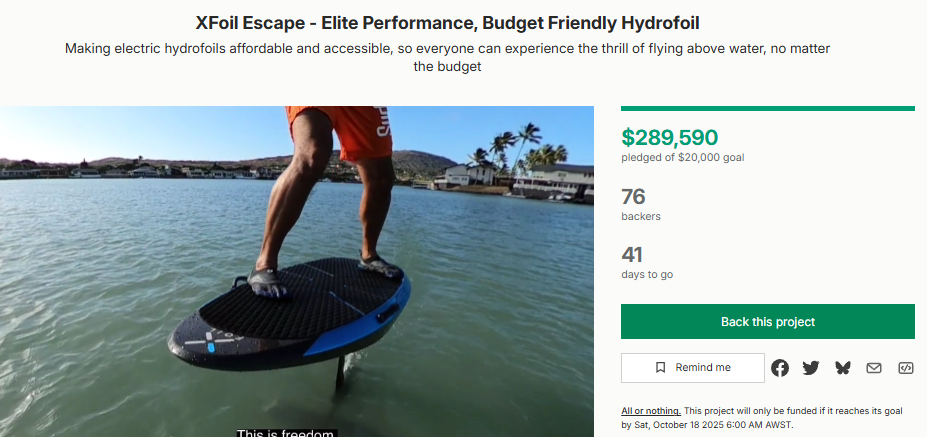
The XFoil eFoil campaign launched on Kickstarter, quickly securing $280,000 from 76 backers on its first day. The project positions itself as the world's first eFoil priced under $3,000, a claim heavily emphasized across its official website and promotional materials to highlight its exceptional value. An eFoil, simply put, is a motorized surfboard with a hydrofoil underneath. As it gains speed, the hydrofoil lifts the board and rider above the water, creating a sensation of flying. However, crowdfunding success does not automatically guarantee product delivery. The campaign explicitly states that backers are responsible for additional costs like shipping and customs duties. Furthermore, discussions within eFoil communities on platforms like Reddit have surfaced concerns regarding PLX/XFoil's previous crowdfunding projects, citing delayed deliveries and user complaints, suggesting a high probability of similar issues with this campaign.
XFoil's Core Value Proposition
The XFoil's most significant marketing highlight is its breakthrough price point, positioning it as the first eFoil under $3,000. This aims to democratize the sport, shifting the target market from luxury enthusiasts to a more accessible price range for the general public.
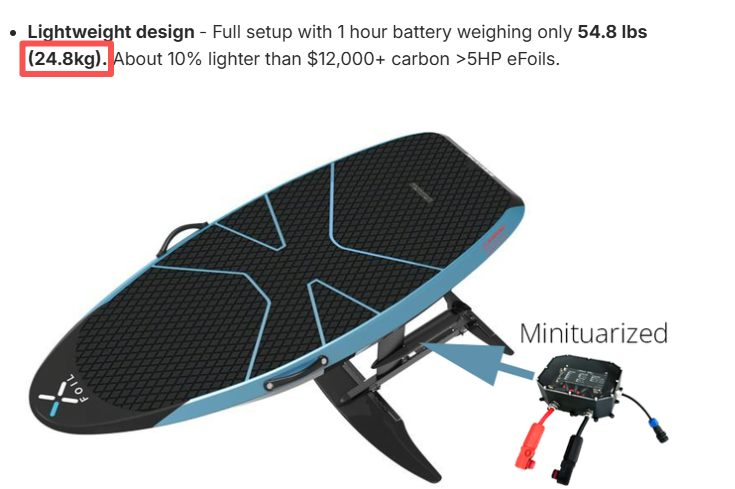
Engineered for optimal weight, the complete unit (including a 1-hour battery) weighs approximately 54.8 lbs (24.8 kg), making it about 10% lighter than some carbon fiber models priced over $12,000. Key electronic components, such as the ESC, are 75% miniaturized and directly integrated into the motor housing. It utilizes a solid-state cooling system, eliminating complex components like water pumps and liquid cooling, which effectively reduces costs and potential points of failure.
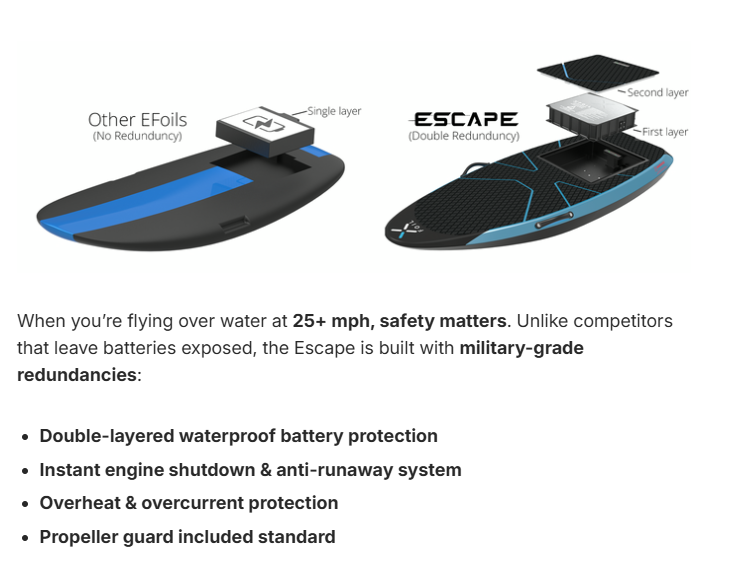
The XFoil incorporates 'military-grade' safety redundancy features, including a dual-layer battery waterproofing design, an uncontrolled power-off and anti-rotation system, and overheat/overcurrent protection. A propeller guard is also standard.
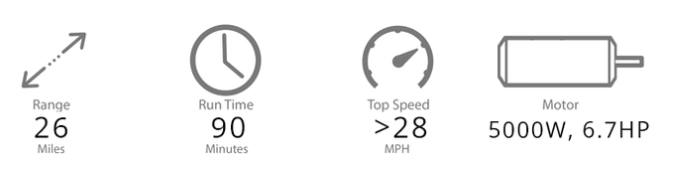
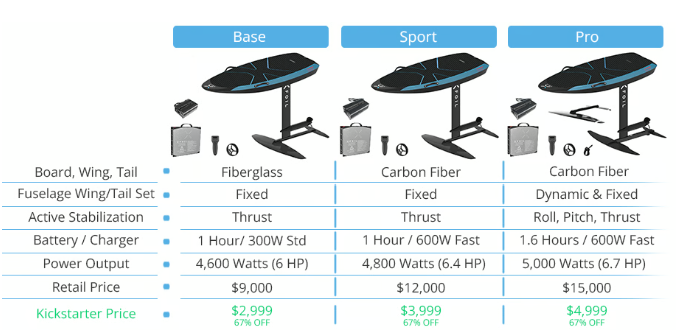
The Gen2 battery offers an impressive range of approximately 96 minutes under ideal conditions. Official demonstrations showcase its strong performance in Hawaiian eFoil competitions. The product strategy includes tiered configurations—Base, Sport, and Pro—offering differentiated features like dynamic wings and AI assistance to cater to both entry-level and advanced users.
The Team Behind XFoil
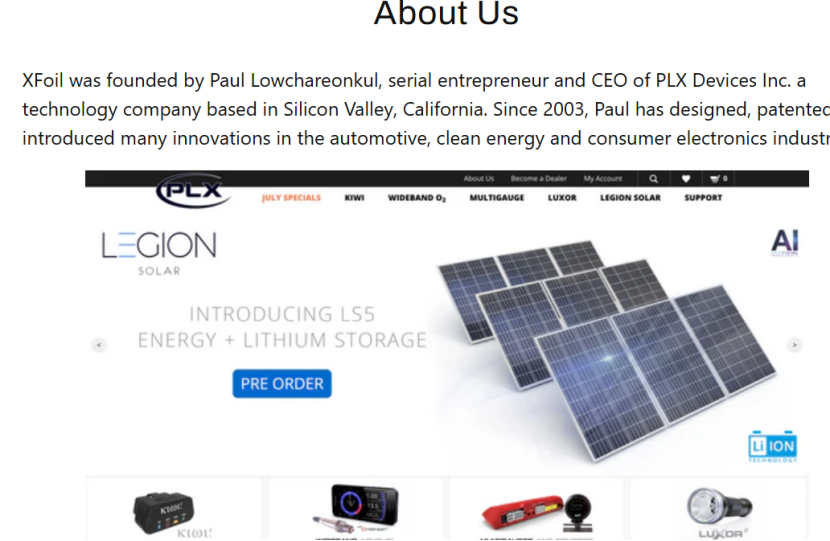
The XFoil brand was initiated by Paul Lowchareonkul, founder and CEO of PLX Devices, a Silicon Valley-based hardware and consumer electronics startup with a background in engineering and product development.
The brand's positioning emphasizes a unique blend of 'Silicon Valley engineering and Hawaiian watersports.' Officially, PLX Devices claims to have raised over $15 million and garnered support from more than 34,000 backers since 2013. The company has also hosted events in Hawaii, securing media coverage from local outlets like CivilBeat and KHON2, which helps build product credibility.
However, as noted earlier, the community has raised questions regarding delays and user complaints from its historical pre-sale projects.
Market Landscape and Competition
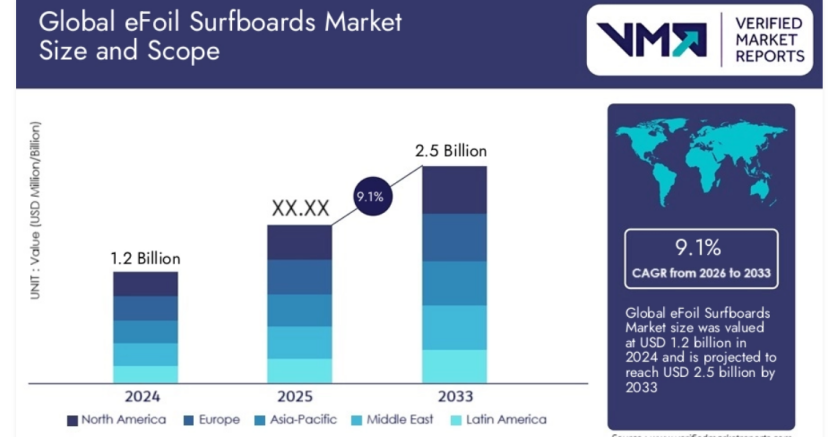
The current eFoil market is relatively niche but experiencing rapid growth. While reports vary—some estimate the hydrofoil surfboard market at $230 million in 2024, others peg the eFoil market specifically at $1.2 billion in 2024, with a projected compound annual growth rate of approximately 9% from 2026-2033—the market is generally in its early adoption phase, dominated by high-end products and rental experiences.
In terms of competition, established brands like LiftFoils, Fliteboard, and Waydoo are recognized as 'industry benchmarks' in media reviews, known for their premium performance, reliability, and comprehensive after-sales service. More recently, several brands have attempted to penetrate the mid-to-low-end market. However, technical stability, supply chain reliability, and after-sales support remain critical factors for user decision-making.
Market growth is primarily driven by three factors: the experience economy and tourism recovery boosting rental businesses, leading to increased equipment purchases by resorts and training centers; decreasing costs for batteries, motors, and carbon fiber manufacturing, alongside integrated electronic technologies, lowering product entry barriers; and the significant role of social media dissemination and competitive events in popularizing the sport. XFoil aims to capitalize on this market expansion by leveraging its price advantage to enter the mass market. However, its core challenge lies in whether it can maintain product quality and service levels while sustaining a low price point.
Crowdfunding success does not automatically guarantee product delivery.